

100 founding signatories from retail, manufacturing and waste management commit to a decade of coordinated action as regulatory reform and volatile oil markets raise the stakes for packaging.
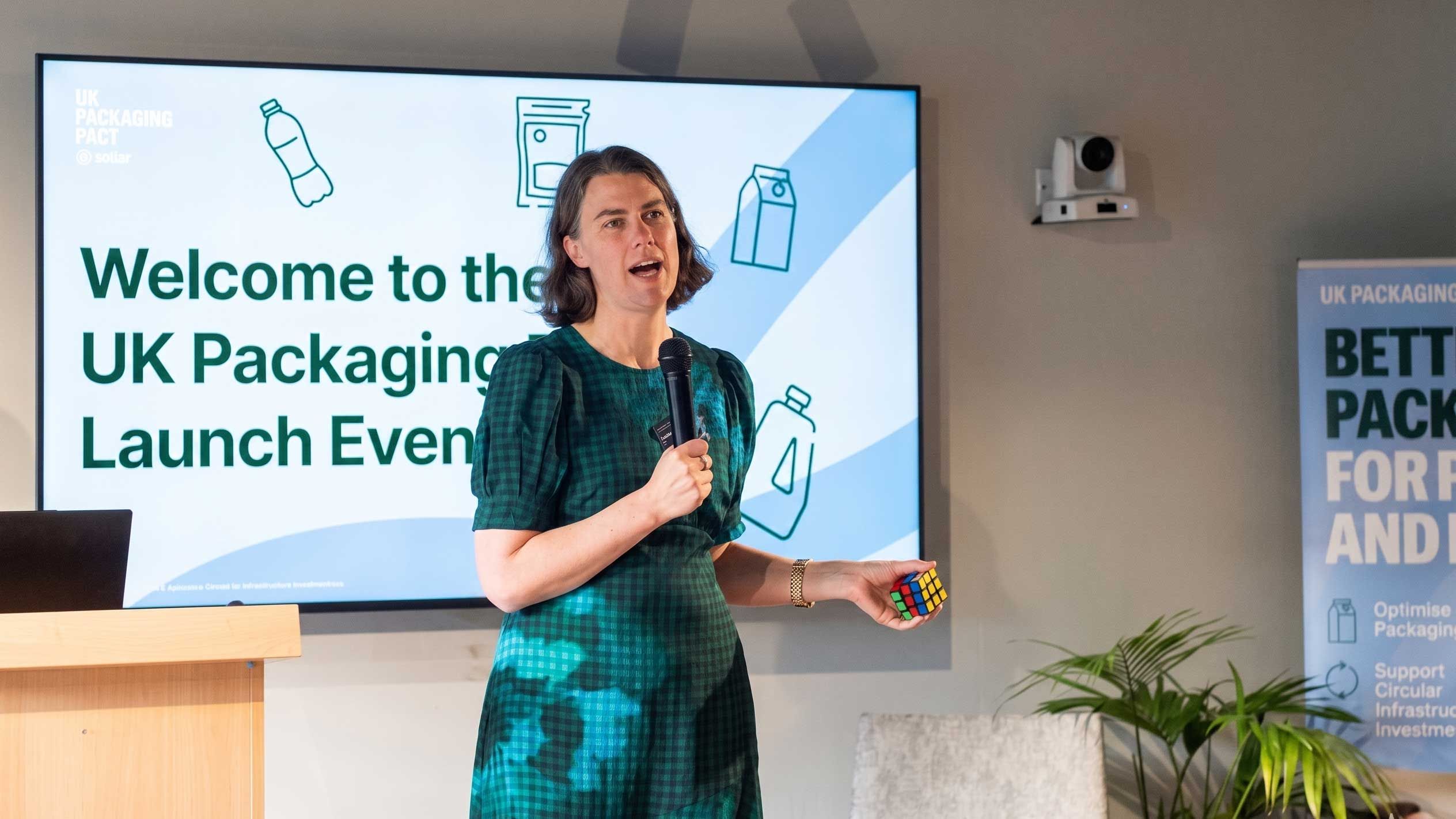
WRAP, the Waste and Resources Action Programme, launched the UK Packaging Pact on Tuesday at Sustainable Ventures in London, with 100 founding signatories committing to a ten-year programme to transform how packaging is designed, used and recovered across all materials.
The Pact succeeds the UK Plastics Pact, which WRAP launched in 2018 and which had eliminated 99.9 per cent of the problematic plastic items it targeted by its penultimate progress report. It extends beyond plastics to glass, paper, card, metal and bio-based materials, bringing every packaging material placed on the UK market into a single framework running to 2035.
The launch follows the World Bank's What a Waste 3.0 report, which found waste generation is outpacing population growth and the capacity of local systems to cope, with a business-as-usual trajectory pointing to 3.86 billion tonnes a year by 2050. WRAP also cites the IEA's Oil Market Report, which attributes growing price volatility to geopolitical instability rather than cyclical supply patterns, making virgin plastic resin a costly and increasingly unpredictable input for single-use packaging.
Catherine David, chief executive of WRAP, said the Pact provides something regulation alone cannot. "The UK Packaging Pact is a unique, complete system approach to unlocking packaging transitions across the value chain. No other programme brings together the key players needed to deliver the enormous changes we must make. Policies are essential, but they alone cannot deliver and the Packaging Pact will deliver the practical change necessary through a flexible framework allowing signatories to focus on the actions most important to them."
The Pact has four goals. On packaging, the focus is material reduction, removing problematic formats, right-weighting and raising recycled content. Reuse and refill is a second goal, with emphasis on interoperable systems that let refillable packaging work across retailers rather than in isolated brand schemes. Third is infrastructure investment. The Pact will use its cross-sector membership to identify bottlenecks in collections and processing and build the evidence base needed to attract capital. Data harmonisation is the fourth, pushing for standardised reporting that reduces the compliance burden EPR has placed on business.
In its first year the programme will establish governance structures and work on material reduction opportunities, the evolution of the recyclability assessment methodology for packaging EPR, and solutions for non-recyclable multi-material films. It also gives industry a direct route into how EPR, the Deposit Return Scheme and Simpler Recycling are implemented in practice.
Founding signatories include major retailers Aldi, ASDA, Co-op, Lidl GB, Marks and Spencer, Sainsbury's and Tesco, alongside brand owners including Danone UK, Haleon, Innocent Drinks and Unilever UK and Ireland. Among the recyclers and waste managers are Biffa, SUEZ Recycling and Recovery UK, Valpak and Veolia. Defra and DAERA are listed as government supporters, with backing also from the British Retail Consortium, the Food and Drink Federation and the Bio-based and Biodegradable Industries Association.
Helen Fenwick, senior corporate affairs manager at Unilever UK and Ireland, described the Pact as "an invaluable forum for businesses, government and the wider value chain to collaborate on practical solutions to reduce packaging waste and increase circularity, while supporting delivery of our plastics goals."


Get our weekly digest
resource.co article ai

How will the government and DMOs address the challenges of including glass in DRS while ensuring a level playing field across the UK?
There's no easy solution to include glass in the DRS while maintaining a level playing field. Potential approaches include a phased introduction of glass, potentially with higher deposits to reflect its logistical challenges. The government and DMOs could incentivise innovation in glass packaging design and subsidise dedicated return points for glass-handling. Exemptions for smaller businesses unable to handle glass might also be necessary. Any successful solution will likely blend several approaches. It must address the differing priorities of devolved administrations, balance environmental benefits with logistical and cost implications, and be supported by robust consumer education campaigns emphasizing the importance of glass recycling.