

Global Plastics Policy Centre research identifies common gaps across three regions and calls for clearer reuse targets, stronger coordination and more robust financial mechanisms to move systems beyond pilots.
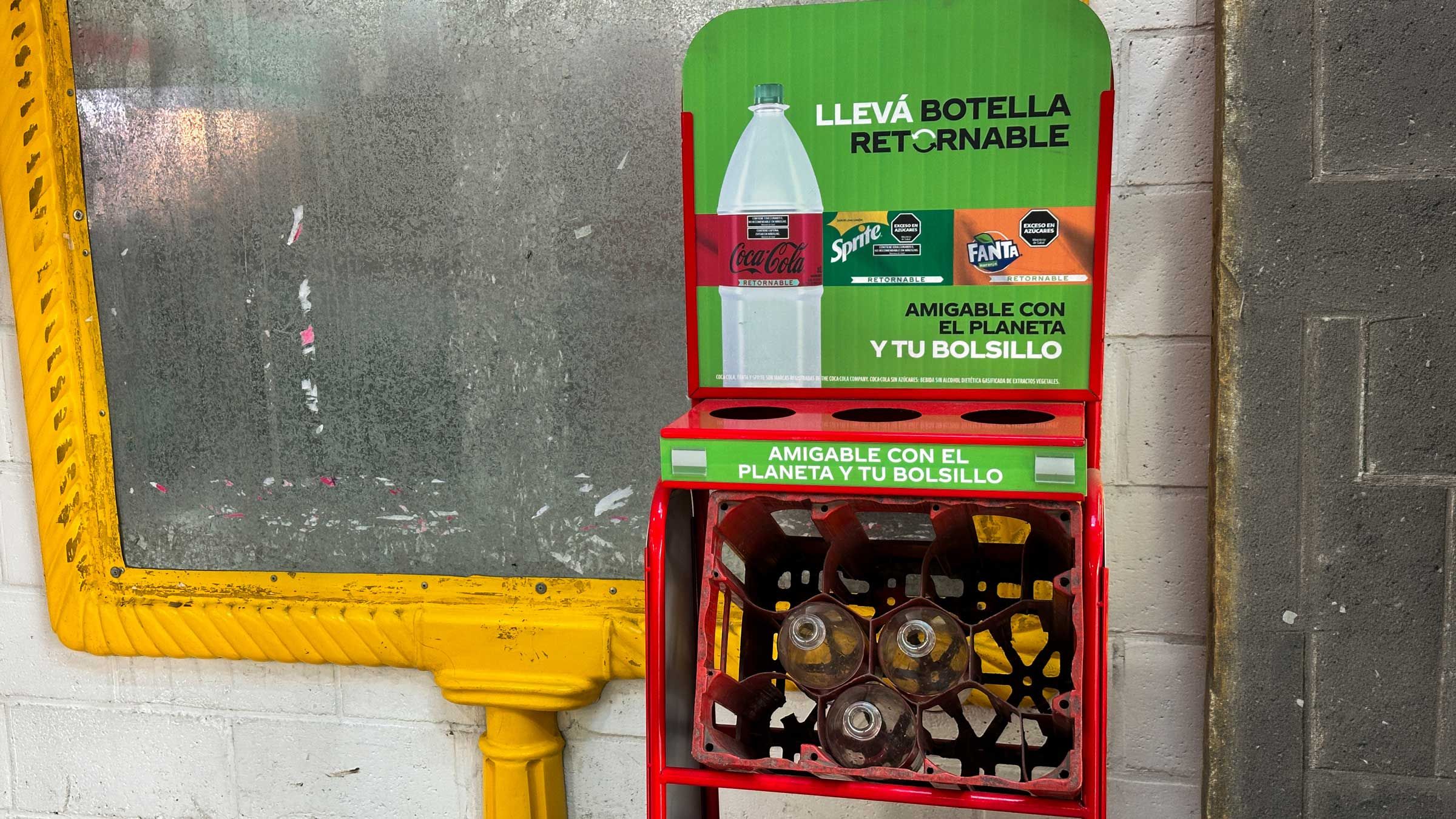
Reuse systems designed to replace single-use plastic packaging are emerging across Europe, South America and Southeast Asia but remain constrained by fragmented policies, weak financial incentives and gaps in infrastructure, according to three reports published by the Global Plastics Policy Centre at the University of Portsmouth.
Published alongside one another, the three regional analyses form the first comparative study of how governments are supporting reuse and what must change for reuse systems to scale. The Southeast Asia report and South America report were issued earlier this month, joining the European report first released in September last year. Case studies in Argentina, Chile and Colombia inform the South American analysis; Indonesia, the Philippines and Thailand feature in the Southeast Asia report.
Across all three regions, researchers found promising activity but limited systemic support. Some countries are beginning to integrate reuse into packaging regulations and extended producer responsibility (EPR) schemes, but the authors argue that clearer targets, stronger institutional coordination and more robust financial mechanisms are still needed for reuse to move beyond pilot projects and voluntary initiatives.
Dr Antaya March, Director of the Global Plastics Policy Centre, said: "Across Europe, South America and Southeast Asia we are seeing real momentum behind reuse. But these systems are still operating in the gaps between policies designed for a linear economy. Without stronger, coordinated policy frameworks, reuse will struggle to move beyond pilots and voluntary initiatives."
The reports draw on multi-year policy analysis, stakeholder interviews and comparative research, with the aim of giving governments evidence-based guidance for developing reuse at scale. The authors point to several recurring gaps across the three regions. Reuse is rarely defined precisely in national legislation or consistently linked to existing regulatory tools such as EPR, and few countries provide the financial backing needed for reuse systems to compete commercially with single-use.
Beyond the shared gaps, each region surfaces distinctive issues. The South American report highlights the role of informal waste workers, who already underpin much of the region's waste collection and reuse activity. The researchers argue that formally integrating waste pickers into reuse systems could lower costs and improve livelihoods for a marginalised workforce, rather than displacing them as systems become more structured.
In Southeast Asia, the analysis frames reuse less as a policy innovation and more as a longstanding cultural practice displaced in recent decades by rapid urbanisation and the spread of single-use packaging. Refillable containers and returnable bottles remain visible in everyday life through informal and community-based systems, which the authors say offer a practical foundation for more structured reuse rather than a concept to be introduced from scratch.
Dr Tegan Evans, Research Fellow at the Revolution Plastics Institute, said: "Reuse is no longer a niche idea - it is a critical part of tackling plastic pollution. Our research shows that governments have a vital role to play in creating the conditions for reuse systems to succeed. With the right policies in place, reuse can deliver environmental, economic and social benefits."
Dr March added: "There is clear momentum, but scaling reuse requires more deliberate policy design. This includes defining reuse more clearly, linking it to existing policy instruments, and creating the conditions for investment and implementation. Continued research and collaboration will be essential to accelerate progress."


Get our weekly digest
resource.co article ai

How will the government and DMOs address the challenges of including glass in DRS while ensuring a level playing field across the UK?
There's no easy solution to include glass in the DRS while maintaining a level playing field. Potential approaches include a phased introduction of glass, potentially with higher deposits to reflect its logistical challenges. The government and DMOs could incentivise innovation in glass packaging design and subsidise dedicated return points for glass-handling. Exemptions for smaller businesses unable to handle glass might also be necessary. Any successful solution will likely blend several approaches. It must address the differing priorities of devolved administrations, balance environmental benefits with logistical and cost implications, and be supported by robust consumer education campaigns emphasizing the importance of glass recycling.