

Wastebuster's Recycle to Read programme has expands into 167 Tesco stores, where broken hard plastic toys will be mechanically recycled and schools earn book vouchers.
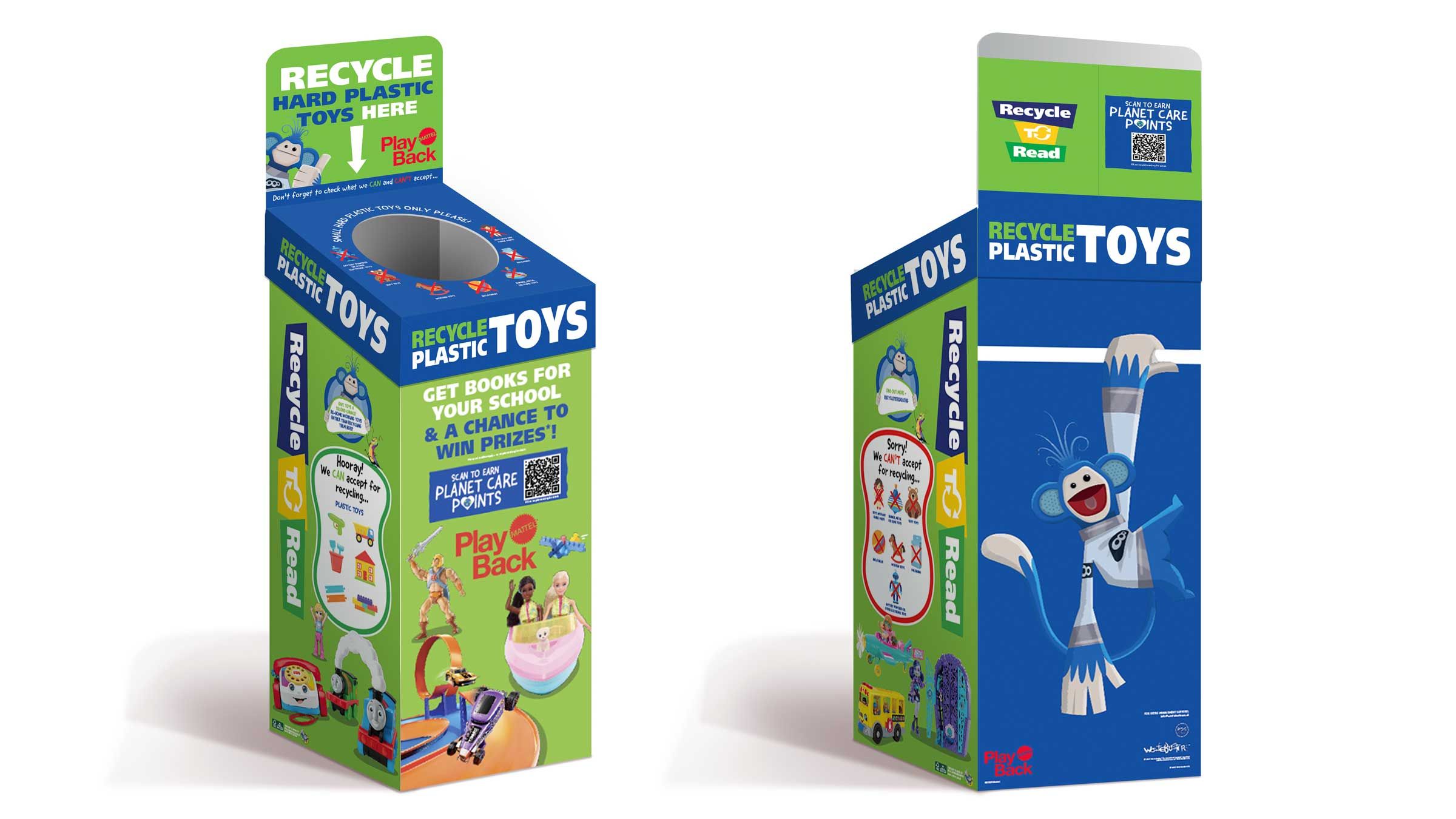
Collection bins for broken hard plastic toys have been placed in 167 Tesco stores across the UK, expanding Wastebuster's Recycle to Read programme to national retail. The rollout, developed with Products of Change, a global membership organisation for sustainable consumer products, was timed to coincide today with Earth Day (22 April).
Broken hard plastic toys - cracked buckets, damaged figurines, plastic cars - have limited recycling options in the UK, with most ending up in residual waste.
Items accepted by the scheme must be hard plastic, from any brand, clean, dry and small enough to fit inside a shoebox. Toys with batteries or electronics are meant to be excluded, with encouragement to use the 'Recycle your Electricals' locator to find a suitable drop-off point.
According to Wastebuster, the collected toys will be shredded and separated by type using water density and magnetic methods, with recovered plastics converted into recycled feedstock.
After drop off, families scan a QR code on the collection bin to register their visit online, nominating a school to receive one Planet Care Point. Points accumulate on a leaderboard at recycletoread.org, with the 200 highest-scoring schools by July receiving book vouchers redeemable against a HarperCollins-managed catalogue.
One in seven UK schools has no library and around one in ten children do not own a book of their own, according to the National Literacy Trust. Schools can also earn 50 bonus points by organising toy swap or sale events and submitting photographic evidence.
Mattel is supporting the programme through its Mattel PlayBack collection initiative. The British Toy and Hobby Association (BTHA) is providing industry guidance on manufacturer engagement and toy safety standards for second-hand donations. Roland Earl, Director General of the BTHA, said the trade body had been examining end-of-life options independently before backing the scheme. “We have been looking into options for recycling toys at their end of life so are pleased to offer our support as the campaign works towards building new UK infrastructure for recycling plastic toys,” he said.
Wastebuster, a not-for-profit environmental education organisation, developed the programme with Products of Change in 2021. Its campaign platform reaches more than 18,000 UK schools, covering around 40 per cent of UK primary schools. The Tesco rollout is accompanied by an open call for further toy industry partners.
“Recycle to Read supports families in learning about the environmental benefits of toy rehoming and recycling, while rewarding them with books for taking part,” said Katy Newnham, founder of Wastebuster.
The programme runs alongside an international research initiative examining circular economy solutions for the toy sector, with industry guidelines on toy design for circularity among the expected outputs. The first school book reward day is 8 July 2026.


Get our weekly digest
resource.co article ai

How will the government and DMOs address the challenges of including glass in DRS while ensuring a level playing field across the UK?
There's no easy solution to include glass in the DRS while maintaining a level playing field. Potential approaches include a phased introduction of glass, potentially with higher deposits to reflect its logistical challenges. The government and DMOs could incentivise innovation in glass packaging design and subsidise dedicated return points for glass-handling. Exemptions for smaller businesses unable to handle glass might also be necessary. Any successful solution will likely blend several approaches. It must address the differing priorities of devolved administrations, balance environmental benefits with logistical and cost implications, and be supported by robust consumer education campaigns emphasizing the importance of glass recycling.