

Everyday Plastic's third nationwide count puts the incineration share of UK household plastic at 59 per cent and calls for a 2030 ban on packaging for uncut produce.
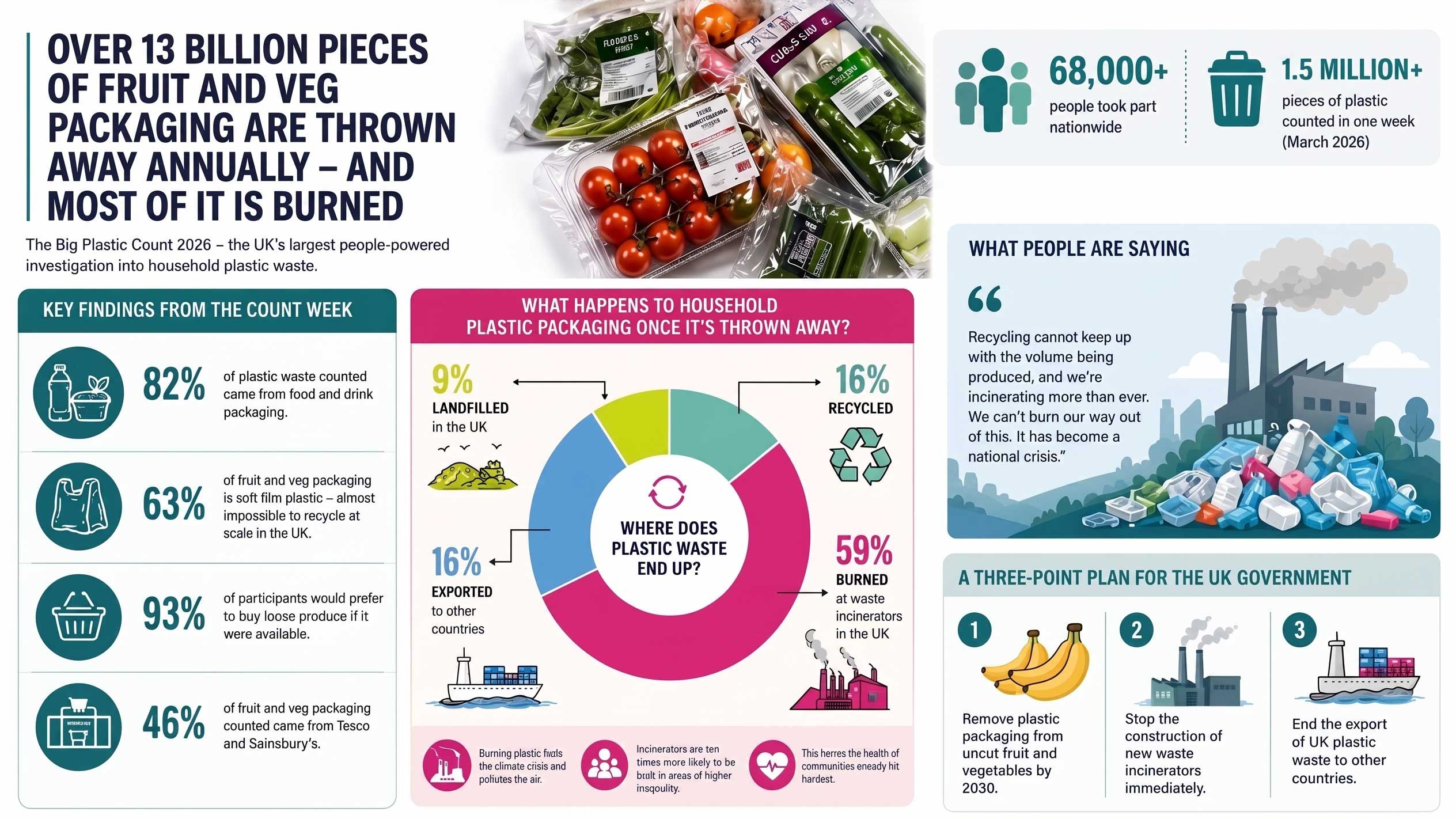
UK households discard an estimated 13 billion pieces of plastic fruit and vegetable packaging a year, and about two-thirds of it is sent for incineration rather than recycling, according to results of The Big Plastic Count 2026 published on Wednesday by the charity Everyday Plastic.
The citizen science project asked more than 68,000 participants to count every piece of plastic packaging they threw away during one week in March. Over 1.5 million pieces were logged, a sample the charity extrapolates to around 82 billion pieces of plastic packaging leaving UK households each year, with food and drink making up 82 per cent of the total.
Applying national fate data from plastics recycling charity RECOUP to the count, Everyday Plastic calculates that 59 per cent of UK household plastic is incinerated, 16 per cent recycled, 16 per cent exported and 9 per cent landfilled. The incineration share stood at 46 per cent in the charity's 2022 count.
Fruit and vegetable packaging was the single largest category at 16 per cent of pieces recorded, ahead of snacks at 15 per cent and plastic bottles at 11 per cent. Of the fruit and veg packaging, 63 per cent was soft film plastic, which is not processed at scale by UK household collection systems. Tesco and Sainsbury's together accounted for 46 per cent of fruit and veg packaging among the 19,717 participants who specified where they shopped.
An accompanying survey of 6,574 participants found 93 per cent would prefer to buy loose produce if it were available.
Everyday Plastic is calling on the government to ban plastic packaging on uncut fruit and vegetables by 2030, halt the construction of new waste incinerators, and introduce a phased ban on the export of UK plastic waste. The charity argues that the voluntary UK Plastics Pact has demonstrated the limits of industry-led action on packaging, and that retailers themselves have called for mandatory rules to create a level playing field.
Research from the Waste and Resources Action Programme (WRAP), cited in the report, estimates that selling apples, bananas and potatoes loose would cut UK food waste by around 60,000 tonnes a year. A separate WRAP analysis published in December 2025 put potential annual consumer savings at around £360 million.
"The Big Plastic Count has again shown that plastic production is out of control, with billions of pieces of plastic being thrown away every week," said Daniel Webb, founder of Everyday Plastic. "Recycling cannot keep up with the volume being produced, and we're incinerating more than ever. We can't burn our way out of this."
On incineration, the charity points to what it describes as UK overcapacity and the decision to bring energy from waste plants into the UK Emissions Trading Scheme from 2028. It wants the Environment Agency to revoke permits for incinerators that have not yet been built and to refuse new ones. On exports, the report references a joint letter sent to environment minister Emma Reynolds in October 2025, signed by Everyday Plastic and 53 other NGOs, calling for a phased end to plastic waste shipments abroad.
The Big Plastic Count first ran in 2022 and was repeated in 2024, both in partnership with Greenpeace UK. Funding for the 2026 edition comes from The National Lottery Community Fund, with research partners Global Learning London, Disability Rights UK and Keele University. A fourth count is scheduled for March 2027.


Get our weekly digest
resource.co article ai

How will the government and DMOs address the challenges of including glass in DRS while ensuring a level playing field across the UK?
There's no easy solution to include glass in the DRS while maintaining a level playing field. Potential approaches include a phased introduction of glass, potentially with higher deposits to reflect its logistical challenges. The government and DMOs could incentivise innovation in glass packaging design and subsidise dedicated return points for glass-handling. Exemptions for smaller businesses unable to handle glass might also be necessary. Any successful solution will likely blend several approaches. It must address the differing priorities of devolved administrations, balance environmental benefits with logistical and cost implications, and be supported by robust consumer education campaigns emphasizing the importance of glass recycling.