

Revenue-neutral levy mechanism between Member States as part of Circular Economy Act would reduce both landfill and incineration, reducing sector's greenhouse gas emissions
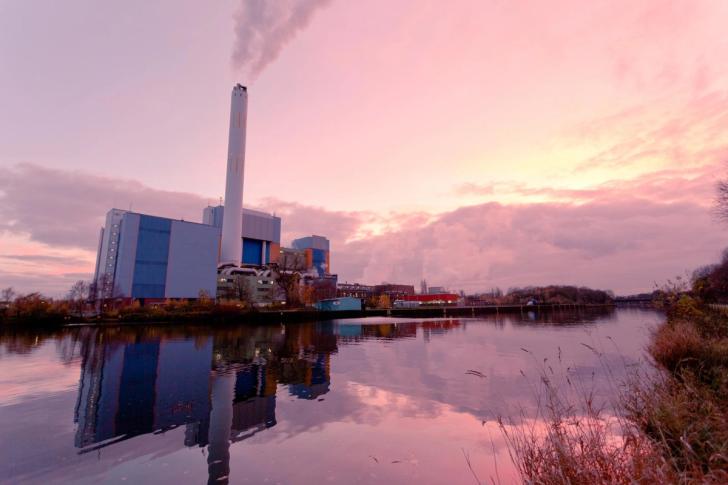
A revenue-neutral cap-and-trade mechanism for residual waste could reduce the EU's reliance on both landfill and incineration through levies redistributed between Member States, according to proposals presented by Zero Waste Europe (ZWE).
The system would allocate per capita residual waste quotas to each Member State, with countries exceeding their limits paying levies that would be transferred to better-performing nations.
ZWE, a non-profit waste reduction advocacy group, published the policy briefing today (9 October) as the European Commission prepares legislation for a Circular Economy Act, scheduled for adoption in 2026. The Commission launched its public consultation on 1 August, with the feedback period running until 6 November 2025.
The report, Cap-and-trade on residuals: Proposals for a Circular Economy Act, examines policy mechanisms to reduce residual waste management across the EU. Residual waste management includes waste sent to landfill, incineration, co-incineration and other disposal methods. According to Eurostat data, the EU-27 landfilled 136 million tonnes of domestically generated waste in 2022, equivalent to 305 kg per person, whilst 131 million tonnes underwent incineration or energy recovery processes.
The organisation states that residual waste in the EU-27 averaged 244 kg per person in 2023 for municipal waste. The report estimates that a cap-and-trade system could reduce this figure to around 150 kg per person by 2035.
Dr Dominic Hogg, the report's author and director of environmental consultancy Equanimator, said: "Today, the majority of landfill waste in the EU-27 consists of major mineral wastes. Setting these aside, roughly equal amounts of residuals are sent for incineration and to landfills. If Member States implement existing law and ensure that no waste is landfilled without prior sorting and biostabilisation, we should aim to target a reduction in all residual waste, not just landfilling."
Trading mechanism
The proposal centres on a "passive trading" model between Member States rather than active allowance trading between individual facilities. Under this approach, each Member State would receive a per capita allocation for residual waste. Countries exceeding their allocated cap would pay a levy, whilst Member States performing better than the cap would receive redistributed funds.
The system aims to be revenue-neutral, with levies collected from underperforming states transferred to those achieving lower residual waste generation. As Member States converge towards compliance, the net transfers would diminish whilst maintaining pressure on lagging countries to improve.
The report addresses the challenge that mineral wastes account for more than 80 per cent of landfilled waste in the EU-27. This includes construction and demolition waste, mining waste, soils and dredging spoils. Including them in the same cap-and-trade scheme as municipal waste would risk having these high-volume, low-cost materials dominate the system, potentially limiting its effectiveness addressing household and commercial waste.
To address this it advocates a two-track approach. Major mineral wastes would be managed through a separate mechanism using landfill levies and harmonised rules under Article 24 of the Waste Framework Directive. The cap-and-trade system would focus on municipal and non-mineral wastes, where data quality continues to improve and EU recycling targets already require reliable reporting from Member States.
Janek Vahk, Zero Pollution Policy Manager at Zero Waste Europe, said: "Europe's circular economy won't be built by simply banning landfill, it will be built by cutting residual waste at the source. A cap-and-trade system for residuals would move us beyond waste displacement and make waste prevention the real measure of progress."
The report draws on experience from the UK's Landfill Allowances Trading Scheme for biodegradable municipal waste, introduced to help meet the EU Landfill Directive. However, the UK scheme quickly became redundant as escalating landfill tax rates effectively superseded the allowance system's economic incentive.
In England, data from the Department for Environment, Food and Rural Affairs shows a continued shift from landfill to incineration in residual waste management. Between 2019 and 2023, municipal residual waste sent to landfill decreased by 18.8 per cent whilst incineration increased by 20.9 per cent. By 2023, incineration handled 63.1 per cent of England's municipal residual waste, up from 51.7 per cent in 2019.
The report argues that such shifts demonstrate the limitations of policies narrowly focused on landfill reduction. Without supporting measures aligned with circular economy objectives, waste management can simply transfer from one disposal method to another rather than moving up the waste hierarchy.
The proposal comes as the European Commission considers various policy options under its Circular Economy Act consultation, including options to ban landfilling, tax policies for both landfill and incineration, and market-based instruments such as cap-and-trade systems for landfill.
Residual waste management represents a growing source of greenhouse gas emissions in Europe, with landfills producing methane and incineration emitting carbon dioxide and nitrogen oxides. Recognising issues with the latter, the European Parliament approved the inclusion of Energy from Waste facilities reporting in the EU Emissions Trading System, with a transitional monitoring period before costs are expected to begin in 2028.
The briefing states that reliable data on residual waste flows and further harmonisation of reporting remain essential for implementing such schemes. The approach also involves revenue transfers between Member States, which the report acknowledges as politically sensitive but argues should be viewed within the context of existing recycling obligations.


Get our weekly digest
resource.co article ai

How will the government and DMOs address the challenges of including glass in DRS while ensuring a level playing field across the UK?
There's no easy solution to include glass in the DRS while maintaining a level playing field. Potential approaches include a phased introduction of glass, potentially with higher deposits to reflect its logistical challenges. The government and DMOs could incentivise innovation in glass packaging design and subsidise dedicated return points for glass-handling. Exemptions for smaller businesses unable to handle glass might also be necessary. Any successful solution will likely blend several approaches. It must address the differing priorities of devolved administrations, balance environmental benefits with logistical and cost implications, and be supported by robust consumer education campaigns emphasizing the importance of glass recycling.