

Today (1 February), Xampla has announced a partnership with chemical company Croda International to begin trials into plastic-free seed coating. The project, supported by the UK Government and the National Institute of Agricultural Botany, will see a £640,000 investment into the company’s biodegradable coating.
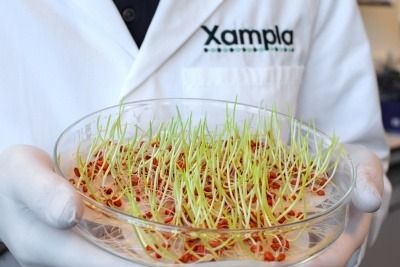
Used throughout agriculture, coatings protect seeds from pests, diseases, and increase germination to improve crop yield. However, they are often formed from non-biodegradable petroleum-derived polymers, polluting soil with microplastics.
Expected to be completed in a year, the proposed biodegradable alternative aims to achieve the same level of efficiency as traditional coatings without threatening the health of soils.
Xampla’s Chief Executive Simon Hombersley stated: “Working with Croda International is an enormous opportunity to show how we can deploy our entirely natural replacement for traditional seed coatings that often contain microplastics.
“Croda has been working on this problem for some years, seeking to reduce the impact of microplastic on agricultural soils, and not without success. It is by working with big hitters of this kind that we can really move the market and bring about change quickly.”
Erik-Jan Bartels, Managing Director of the Incotec Seed Enhancement business at Croda International, added: “We are excited to be working with Xampla on this development. Our purpose is to use smart science to improve lives, and this project does exactly that.
“Microplastics in agriculture in total account for ten per cent of the world’s microplastics problem, and within that seed coatings account for one per cent but that makes it no less important to change the industry, as we have been doing now for some time.
“Seed coatings are a high-growth part of our business and we are determined that growth should come from sustainable, plant-based alternatives.”
Last year, the UN Food and Agriculture Organization (FAO) released a report warning against the use of plastics within the agricultural industry. Highlighting their widespread presence in agricultural soils, the report found that microplastics threaten yield sizes and pose significant harm to the environment and to human health.
Based on these findings, the report recommended a ban on non-biodegradable polymers in coatings to avoid the microplastic pollution in soil in favour of biodegradable alternatives. Further research into the use of microplastics within agriculture was also advised.
In 2019, the European Chemicals Agency (ECHA) proposed a wide-ranging ban on microplastics across the EU in an attempt to decrease plastic pollution in the environment. Its implementation, the body states, could see a 500,000 tonne decrease in plastic particles entering the environment over 20 years.


Get our weekly digest
resource.co article ai

How will the government and DMOs address the challenges of including glass in DRS while ensuring a level playing field across the UK?
There's no easy solution to include glass in the DRS while maintaining a level playing field. Potential approaches include a phased introduction of glass, potentially with higher deposits to reflect its logistical challenges. The government and DMOs could incentivise innovation in glass packaging design and subsidise dedicated return points for glass-handling. Exemptions for smaller businesses unable to handle glass might also be necessary. Any successful solution will likely blend several approaches. It must address the differing priorities of devolved administrations, balance environmental benefits with logistical and cost implications, and be supported by robust consumer education campaigns emphasizing the importance of glass recycling.