

Addition to the online tool from WRAP's Recycle Now campaign charts hundreds of refill stores across the UK, backed by survey data showing strong consumer appetite for packaging-free shopping.
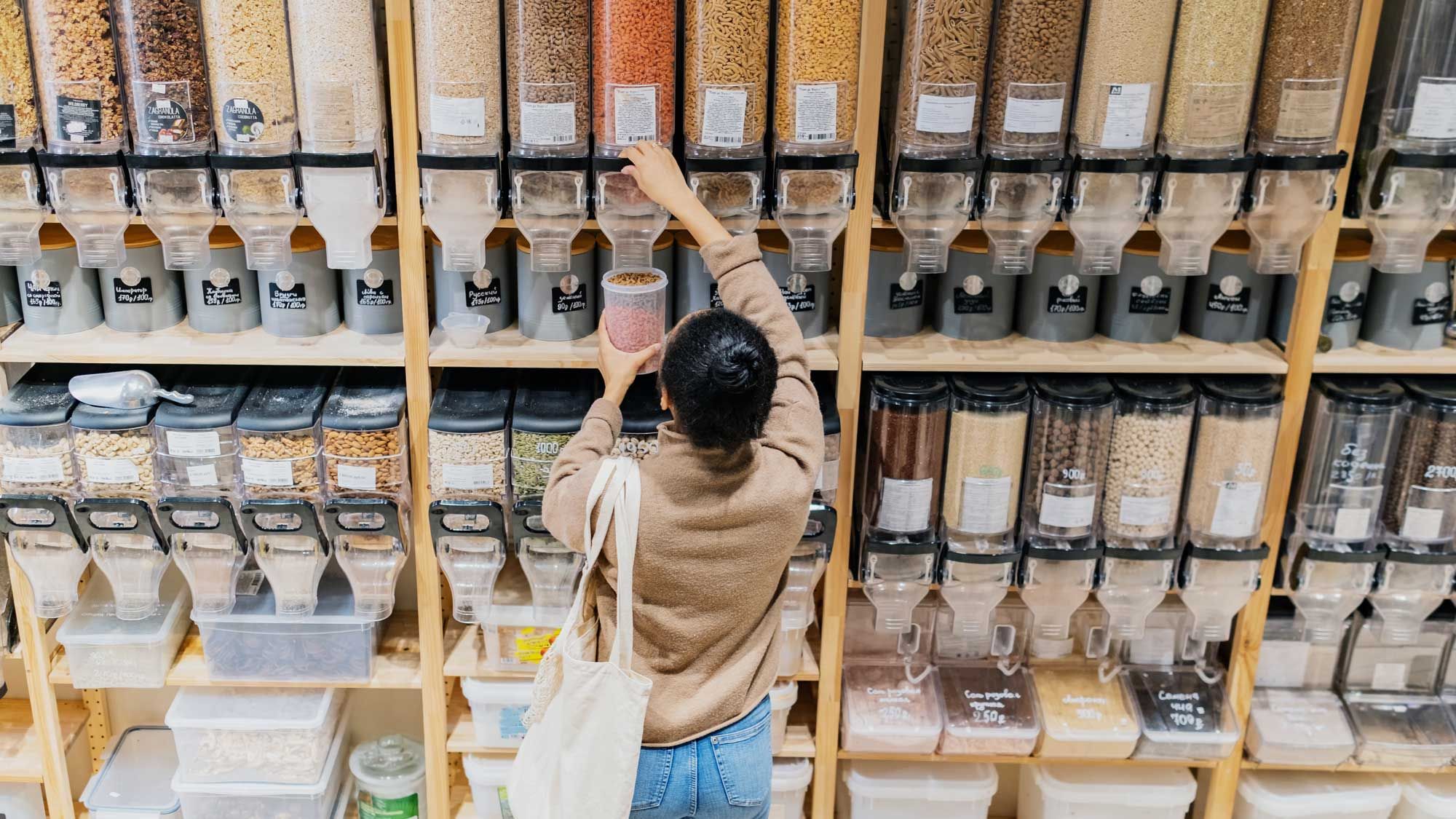
The Waste and Resources Action Programme (WRAP) has launched a Refill Locator as part of its established Recycling Locator, mapping 675 packaging-free shops across the UK in partnership with six refill brands. The tool allows shoppers to search for refill stores within a 25-mile radius of their postcode and find where returnable options are available for home delivery.
Currently, London has the highest concentration of refill shops with 63 locations on the app, followed by Bristol with 27, Oxford with 22, and Brighton & Hove with 21. Gloucester and York each have 19, with Bath on 16, Exeter 15, Swansea 14 and Bournemouth on 13.
The launch is supported by data from the Recycle Now citizen recycling tracker, published during Recycle Week 2025, which found that 89 per cent of people interviewed would be motivated to try in-store refill shopping, with 87 per cent willing to try online refill options. Reducing single-use packaging was a primary motivation cited by respondents.
"We're starting to see greater movement on reuse across the industry," said Lowelle Bryan, Senior Specialist at WRAP, which runs the Recycle Now campaign. "For example, last year nine of the UK's largest grocery retailers pledged to examine how reusable packaging could be implemented across their stores and online. To support these industry efforts, we must also inform citizens about the benefits of reuse, to drive up demand."
In July 2025, Aldi, Asda, Co-op, Lidl GB, Morrisons, Ocado Retail, Sainsbury's, Tesco and Waitrose signed a joint Statement of Intent to explore interoperable prefill systems across their stores and online operations, with WRAP acting as secretariat. Research from Go Unpackaged cited in the pledge found that shifting to 30 per cent reuse could save producers £136 million annually in packaging EPR costs and cut CO2 emissions by 95 per cent for products in scope.
Shifting attitudes
Age plays a role in how consumers engage with refill. A quarter of those aged 18-34 said they had taken their own packaging to a refill store in recent years, compared with eight per cent of those aged 55 and over. Interest among those who have not yet tried it runs high in both groups, with 42 per cent of 18-34 year olds keen to start and 56 per cent of over-55s willing to give it a go.
More women than men are open to refill shopping (55 per cent versus 47 per cent), though more men have already done so in recent years - 15 per cent compared with 13 per cent of women. The tracker also recorded everyday packaging-avoidance habits already embedded in routines: 56 per cent of respondents use bars of soap, 51 per cent regularly refill reusable coffee or water bottles, 35 per cent buy concentrated cleaning products and 25 per cent have used a dry shampoo or conditioner bar.
The Big Plastic Count 2024, run by Greenpeace and Everyday Plastic, calculated that if every UK home refilled just one item each week, it would remove 1.4 billion single-use packaging items from the waste stream annually. But independent refill retailers compete against a single-use system optimised over decades for low cost and high convenience, and the standardised prefill approach being developed by WRAP and the nine grocery retailers is still some way off.
Store owners giving advice to consumers say the biggest barrier is the first visit. Patrick Cermak, co-owner of The Source Bulk Foods, which operates seven stores across London, said the key is not to overthink it. "Start small and aim to refill one or two items. On your next visit it'll feel more natural and rewarding," he said.
Anwen Bowers, Managing Director of Zero Green in Bristol, agreed, suggesting washing-up liquid as an easy first swap. Her shop's most popular product is its peanut butter machine, where customers grind their own - and she said the ability to buy small quantities of unfamiliar products removes the risk of committing to something new.
The range available often surprises first-time visitors. Jessica Rimoch of Jarr Market, which has shops in Stoke Newington and Herne Hill, said customers do not expect to find superfoods, protein powders and specialist ingredients "at a fraction of the cost" of packaged equivalents.
"The sector hasn't had the easiest time of late and by supporting these businesses, and the innovations coming into our larger high street stores, we can help them become permanent fixtures and reduce packaging waste," Bryan added.
WRAP is inviting refill shops not yet on the Recycle Now map to get in touch to be added to the Refill Locator.


Get our weekly digest
resource.co article ai

How will the government and DMOs address the challenges of including glass in DRS while ensuring a level playing field across the UK?
There's no easy solution to include glass in the DRS while maintaining a level playing field. Potential approaches include a phased introduction of glass, potentially with higher deposits to reflect its logistical challenges. The government and DMOs could incentivise innovation in glass packaging design and subsidise dedicated return points for glass-handling. Exemptions for smaller businesses unable to handle glass might also be necessary. Any successful solution will likely blend several approaches. It must address the differing priorities of devolved administrations, balance environmental benefits with logistical and cost implications, and be supported by robust consumer education campaigns emphasizing the importance of glass recycling.