

Circular economy and sustainability leaders feature in the King's New Year Honours, with WRAP Chair Sebastian Munden receiving a CBE alongside recognition for founders of organisations tackling office waste reuse and food redistribution.
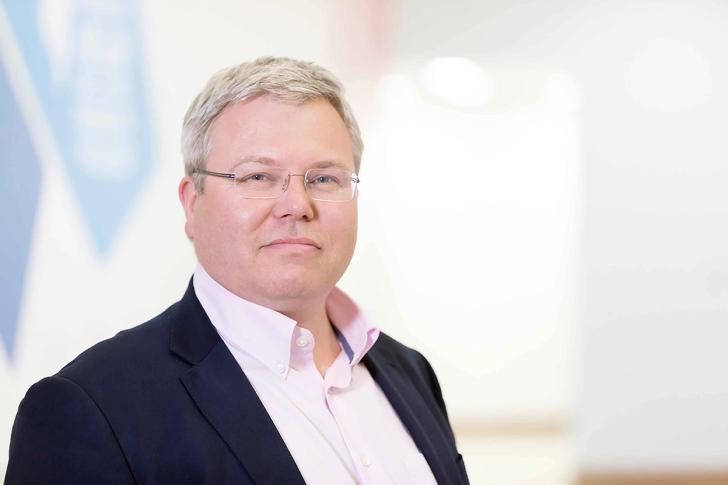
Sebastian Munden, Chair of the Waste and Resources Action Network, has been awarded a CBE in the King’s New Year Honours for services to business and the circular economy.
Munden, who also chairs Ad Net Zero, the advertising industry's climate action programme, joined WRAP in 2022 following more than 30 years at Unilever, where he served as chief executive of Unilever UK & Ireland until 2022.
"This is an incredible honour," said Munden. "I'd like to pay tribute to my former colleagues at Unilever for over three decades of developing new products together, without whose inspiring partnership none of this would have been possible. And to my current colleagues at WRAP and Ad Net Zero working with businesses to make the circular economy an everyday reality across many different sectors."
Munden also serves as the independent Chair of the advisory steering group for Pack UK, the scheme administrator for UK household packaging recycling under Extended Producer Responsibility. The group, representing industry sectors, all home nations and local authorities, has been providing input to Pack UK during the scheme's set-up phase.
UK Plastics Pact and industry leadership
During his time at Unilever, Munden oversaw the company becoming a founding signatory to the UK Plastics Pact in 2018 and a co-founder of the Flexible Plastic Fund. The UK Plastics Pact, developed by WRAP in partnership with the Ellen MacArthur Foundation, brought together more than 100 signatories from retailers, producers and reprocessors to work towards reducing single-use plastics and keeping materials in use for longer.
"It's also recognition for all those in the grocery industry working to create a better packaging system, and for the practical contribution of businesses alongside national and local governments in the way change is implemented," Munden said.
Catherine David, CEO of WRAP, said the recognition reflects the value of sustained, collaborative leadership: "Sebastian has been instrumental in reshaping how businesses think and act, helping move the circular economy from the margins to the mainstream and demonstrating how business, government and industry can work together to deliver meaningful change at scale."
David added: "He's an inspirational leader to work with, bringing deep business experience, creativity and humility to tackling some of the biggest challenges of our time. He has a rare ability to think across sectors and disciplines to generate new solutions to old problems, and a clear belief in making big businesses better and better businesses bigger."
WRAP's global expansion
Munden noted that the circular economy is growing in value faster than the economy as a whole. "It's a joy to work alongside so many people who want to innovate a better future that's also better business," he said.
As Chair, Munden has helped WRAP establish WRAP Americas, WRAP EU and a more global approach. The organisation works to bridge governments, businesses and society to reshape production and consumption patterns for food, textiles and manufactured products.
Munden is co-author of "Sustainable Advertising: how advertising can support a better future", written with Matt Bourn, which was shortlisted in the 2025 Business Book Awards. He has also served on policy and steering groups for The Food & Drink Federation, The Institute of Grocery Distribution, The Inclusive Economy Partnership run by the Cabinet Office, and Movement to Work, and chaired a policy review on the Future of the Local Economy for the British Chambers of Commerce.
Other circular economy honours
Elsewhere in the New Year Honours, Michael Alan Cooper, founding director of Waste to Wonder Network, has been awarded an OBE for services to charity and sustainability. The social enterprise, established in 2003 and headquartered in Swindon, provides ethical office clearance services, redistributing redundant furniture and equipment to schools and charities worldwide rather than sending items to landfill.
To date, the organisation reports redistributing more than £45 million worth of office furniture and equipment to over 1,200 schools in 27 countries. The operation diverts approximately 97 per cent of cleared goods to reuse, with only three per cent recycled and no material sent to landfill. The organisation has been recognised with multiple awards including the Green World Awards and UK Social Enterprise Awards.
Lianne Simpson, founder and director of Diamond Hampers in Huntingdon, has received an MBE for services to tackling food waste and the community of Cambridgeshire. Simpson founded the charitable social enterprise in 2020, initially operating from her garage before expanding to include three premises in Huntingdon town centre.
Diamond Hampers redirects surplus food from supermarkets to provide emergency food hampers and affordable food through its shop, The Pantry. The organisation reports saving approximately 25 tonnes of food waste from landfill each month. In 2024, the charity provided more than 42,000 meals through emergency parcels and saved 500,000 meals from waste, according to its own figures. Simpson previously received the Prime Minister's Points of Light Award in 2024 and was named a Coronation Champion by King Charles III in 2023.


Get our weekly digest
resource.co article ai

How will the government and DMOs address the challenges of including glass in DRS while ensuring a level playing field across the UK?
There's no easy solution to include glass in the DRS while maintaining a level playing field. Potential approaches include a phased introduction of glass, potentially with higher deposits to reflect its logistical challenges. The government and DMOs could incentivise innovation in glass packaging design and subsidise dedicated return points for glass-handling. Exemptions for smaller businesses unable to handle glass might also be necessary. Any successful solution will likely blend several approaches. It must address the differing priorities of devolved administrations, balance environmental benefits with logistical and cost implications, and be supported by robust consumer education campaigns emphasizing the importance of glass recycling.