

A Welsh trial has successfully turned difficult to recycle items into everyday products with existing end markets, such as decking, food waste caddies and medical containers.
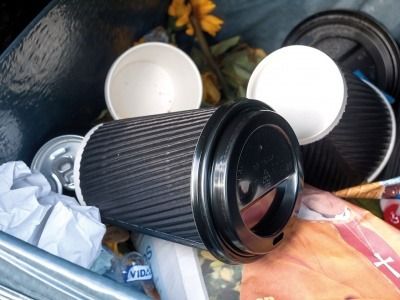
Funded by the Welsh Government in partnership with WRAP Cymru, the two-year supply chain project brought together several companies, including environmental consultant Nextek and composite decking manufacturer Ecodek. In a world-first, the pair combined coffee cups and metallised films, such as those used for crisp packets, to make composite decking.
The 100 per cent recycled decking contains 200 coffee cups per square meter, meaning that the project has the potential to recycle a substantial quantity of the post-consumer single-use plastic coffee cups that currently go to landfill, or incineration. Ecodeck is also offering a takeback scheme to ensure that the decking is recycled into new items at the end of its life.
Around 3.2 billion fibre-composite cups were placed onto the UK market in 2019, with half a million being disposed of daily in the UK – only 0.25 per cent of which are recycled, according to WRAP’s fibre-composite packaging report.
Claire Shrewsbury, Director of Insights and Innovation and Director for Wales WRAP, said: “These projects provide a unique offering which supports locally manufactured and remanufactured products made from recycled Welsh raw materials.
“They support the growth of local businesses, and help Welsh people get the maximum value from these products. Not only that but these incredible projects are all working toward the same goal to help tackle climate change and create a circular economy for these difficult to recycle materials. We hope to see more projects like these appearing throughout the UK”.
William Hogg, Managing Director at Ecodek, also commented: “Ecodek are delighted to have been part of this exciting project to develop a new closed-loop recycling opportunity for these frequently used materials which has the potential to substantially reduce the amount of waste going to landfill”.
Professor Edward Kosior, founder of Nextek, added: “Our research into paper-plastic composites has led to the development of a unique compound that utilises the disposable cups’ potential as a valuable recycled material.
“This compound has the potential to be used for multiple applications, from waterproof decking and furniture to providing structurally strong materials on a much bigger scale and its durability, strength and versatility could easily match wood as a building material, in fact in many instances it would surpass it. This has the potential to transform the way we view waste as we learn to tap into and harvest our urban forest”.
A second project, which worked with Frontier Plastics Ltd at its’ South Wales site, was a trial that involved the manufacture of medical sharps containers and inner safety shields from 100 per cent recycled polypropylene (rPP). The rPP was also incorporated into the manufacture of an indoor food waste and compost caddy, manufactured by Addis Housewares Ltd.
Industry standards have been updated to recognise and encourage the incorporating of recycled content into sharps containers, with the project’s inner safety shields set to be rolled out across many parts of the NHS.


Get our weekly digest
resource.co article ai

How will the government and DMOs address the challenges of including glass in DRS while ensuring a level playing field across the UK?
There's no easy solution to include glass in the DRS while maintaining a level playing field. Potential approaches include a phased introduction of glass, potentially with higher deposits to reflect its logistical challenges. The government and DMOs could incentivise innovation in glass packaging design and subsidise dedicated return points for glass-handling. Exemptions for smaller businesses unable to handle glass might also be necessary. Any successful solution will likely blend several approaches. It must address the differing priorities of devolved administrations, balance environmental benefits with logistical and cost implications, and be supported by robust consumer education campaigns emphasizing the importance of glass recycling.