

The Welsh Government has unveiled its ‘Beyond recycling’ strategy today (2 March), aimed at making the circular economy a reality in Wales.
“In publishing this Strategy, we are setting out our commitment to action as a Government to use the powers and levers that we have to the fullest extent to accelerate our transition to a circular, low carbon economy,” commented Minister for Environment, Energy and Rural Affairs Lesley Griffiths.
The plan unveils a number of targets for the next three decades, designed to work towards Wales becoming a net-zero carbon nation by 2050.
This includes a commitment to changing public-sector procurement in Wales, currently worth £6.7 billion per year, with low-carbon, resource-efficient businesses given priority in future tenders that use money from the public purse.
In the last year, the Welsh Government has increased funding for circular economy projects from £6.5 million to £43 million.
The strategy is structured around six core themes, each with a set of target actions.
Driving innovation in materials use
The Strategy outlines a commitment towards reducing the carbon footprint of supply chains, as well as purchasing lower carbon products and sees this as an opportunity to promote innovative business systems.
There is expected to be a focus towards sourcing more sustainable, local and low carbon materials such as timber, whilst moving away from those with higher carbon footprints.
The Strategy considers prioritising the use of sustainable and low carbon material in construction across Wales, which will be applied to public sector construction through the Innovative House and 21st Century Schools programmes, as well as the construction of new schools.
This work is expected to include the introduction of embedded carbon footprint technical standards.
Upscaling prevention and re-use
The Welsh Government is committed to reducing the amount of waste produced by households, businesses and the public sector.
One key goal is to halve avoidable food waste by 2025 and to reduce by 60 per cent by 2030. This is to be achieved through supporting consumers and retailers and considering whether additional mandatory Consumer Information Obligations, which inform customers about recycling on packaging, for food waste reduction are necessary.
The Strategy’s focus on reuse also calls for work alongside other UK nations to improve legislation around waste electrical and electronic equipment (WEEE), after the UK missed its annual targets for the fourth consecutive year recently.
Building on our recycling record
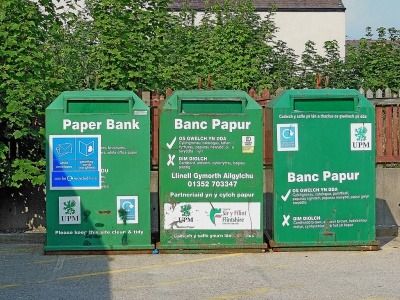
With a recycling rate of 65.1 per cent in 2019-2020, Wales already has the third best recycling rate in the world. The Beyond Recycling Strategy sets out a target of a 70 per cent recycling rate by 2025, alongside the longer term goal of making Wales a zero-waste nation by 2050.
This would mean any discarded materials are recycled and re-circulated within the Welsh economy, with virtually no loss of materials from the recycling system.
To work towards this goal, the Strategy cites the need to work with local authorities and key partners to develop recycling targets and to develop additional infrastructure to collect and recycle household materials not currently widely recycled, such as wood, plastic film and textiles.
Other focuses will include the introduction of a deposit return scheme, which the Environment Audit Committee is currently considering.
Investing in infrastructure
The Welsh Government has pledged a commitment to investing in infrastructure designed to reduce, re-use, repair, re-purpose, remanufacture, re-engineer and recycle products and materials.
With the aim of taking recycling one step further and increasing the re-usage of materials collected, the strategy suggests the development of regional ‘eco-park’ hubs and town centre hubs which will develop repair and reuse activity.
It also cites local business activity as an opportunity to unlock new economic opportunities and green job growth.
Enabling community and business action
The Strategy advises that individuals, communities, businesses and the public sector will require increased support to drive the move towards a circular economy.
Highlighting the ambition in Beyond Recycling as an opportunity to support towns and local businesses, the Strategy calls for the development of local repair and re-use hubs, refill points and zero waste retails offers.
It also cites Wales’ Circular Economy Fund, which encourages businesses to increase the recycled content in their products, as key for investing in and supporting community initiatives which encourage sharing, redistribution, repair, re-use and remanufacture.
Aligning Government levers
The Strategy considers key areas of funding, legislation, taxation and procurement that the Government can implement to support its aims.
Actions such as introducing a ban and restriction on commonly littered single-use plastic items, legislating that key recyclables are banned from energy recovery facilities or landfill and prioritising the purchasing of resource efficient products with low carbon footprints are all to be considered.
The Welsh Government has also outlined a commitment to working with the UK Government to explore whether the introduction of an incineration tax would help support the move to a circular economy.
Looking ahead
The Beyond Recycling strategy has been designed to make resource efficiency part of Welsh culture and to help the country maximise its economic potential.
The Strategy acknowledges the ongoing effects of Covid-19, Brexit and Climate Change and considers a move towards a circular economy the key foundation for a green and just recovery, which will help tackle levels of inequality as well as drive towards better economic outcomes across Wales.
“Our aim in bringing forward this Strategy has not just been to set out our ambition over the course of the next decade but to accelerate action.” Griffiths added.
“That is why after publishing the Strategy for consultation, we committed to taking action from the outset, recognising the urgent response needed to the climate emergency and related biodiversity crisis.”
“Taking the next steps on our pathway towards a zero waste, low carbon economy has never been more important; but as a country our progress to date has already shown our ability to deliver.”


Get our weekly digest
resource.co article ai

How will the government and DMOs address the challenges of including glass in DRS while ensuring a level playing field across the UK?
There's no easy solution to include glass in the DRS while maintaining a level playing field. Potential approaches include a phased introduction of glass, potentially with higher deposits to reflect its logistical challenges. The government and DMOs could incentivise innovation in glass packaging design and subsidise dedicated return points for glass-handling. Exemptions for smaller businesses unable to handle glass might also be necessary. Any successful solution will likely blend several approaches. It must address the differing priorities of devolved administrations, balance environmental benefits with logistical and cost implications, and be supported by robust consumer education campaigns emphasizing the importance of glass recycling.