

NGO WasteAid has announced a new grant in partnership with Partners Group Impact (PG Impact) – expanding its Cameroon programme and potentially empowering marginalised communities to recover the value of waste through recycling and waste management.
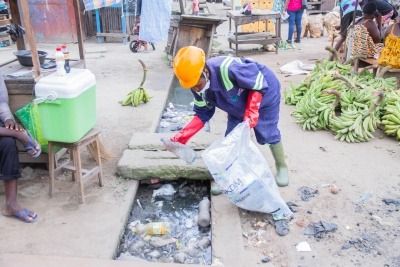
WasteAid has presented the programme as an opportunity to build on its previous work in Cameroon, now aiming to build a Plastic Recycling Facility (PRF) in the local area of Douala. This could influence the diversion of waste from landfills, as well as providing training for 30 youths from low-income communities to collect, clean and process plastic waste. Support will be offered by the project to link these individuals with off-takers, to attain income while increasing the plastic feedstock available locally.
WasteAid highlights that the benefits of the PRF will ‘far outlive the life of the project’. For instance, giving participants the opportunity for long-term employment in the waste sector as well as educating people about sustainable solutions to the waste crisis.
It is estimated that an annual minimum of 72 MT of plastic waste will be removed from the community and processed through the PRF. According to both WasteAid and PG Impact, the PRF will therefore contribute to reducing pollution of the Douala Estuary, which contains extensive mangrove forests – this is due to its potential to divert plastic from landfills and reduce the need to burn plastic waste.
Ceris Turner-Bailes, CEO of WasteAid, said: “We’re so pleased to announce this further element within our Cameroon Programme that has been made possible through the support received from Partners Group.
“We hope that this will be just the start of a fantastic partnership which we know will have such a positive impact in the countries and communities where we work. Together we will work to support communities to tackle the waste crisis as well as improving livelihoods, through waste recovery and circular economy innovation.”


Get our weekly digest
resource.co article ai

How will the government and DMOs address the challenges of including glass in DRS while ensuring a level playing field across the UK?
There's no easy solution to include glass in the DRS while maintaining a level playing field. Potential approaches include a phased introduction of glass, potentially with higher deposits to reflect its logistical challenges. The government and DMOs could incentivise innovation in glass packaging design and subsidise dedicated return points for glass-handling. Exemptions for smaller businesses unable to handle glass might also be necessary. Any successful solution will likely blend several approaches. It must address the differing priorities of devolved administrations, balance environmental benefits with logistical and cost implications, and be supported by robust consumer education campaigns emphasizing the importance of glass recycling.