

In West Dunbartonshire sits a plot of land waiting for ground to be broken on a recently confirmed waste to hydrogen plant. Operated by Peel NRE, the £20 million facility will use Powerhouse Energy Plc’s (AIM:PHE) technology to convert non-recyclable plastic waste into electricity and hydrogen.
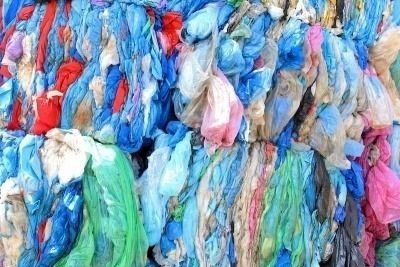
A novel venture in renewable energy, waste-to-hydrogen is a practice now entertained by a number of big operators. Put simply, it is the heating and treatment of waste materials to produce pure hydrogen gas usable for energy. Techniques vary, but the premise remains commonplace – to productively dispose of non-recyclable waste while increasing the use and availability of hydrogen energy via a low carbon and low-cost process.
Advanced Thermal Conversion Technology
AIM:PHE’s technique employs Advanced Thermal Conversion Technology, in which unrecyclable plastics are shredded into small, similarly sized pieces and fed into a chamber, ready to heat them to very high temperatures. The plastic then melts and vaporises into a mixture of gases, from which molecules are reformed to create a synthetic gas (syngas) composed of methane, hydrogen, and carbon monoxide. The syngas is collected and used to generate hydrogen and electricity.
Much of the produced hydrogen is planned for use in a hydrogen refuelling station on the same site as the plant, operated by Element2, with the capacity to power an estimated 40 HGVs, 500 buses, and 2,500 cars per day.
However, a small portion of the produced syngas is kept behind to heat the Thermal Conversion Chamber, meaning the process is completely self-sustaining.
With a similar plant in development near Chester, the project will be the second in plans for up to 70 waste-to-hydrogen facilities in the UK, collectively with the ability to fuel around five million buses.
Microwave Catalysis
Further south, researchers at the Universities of Oxford and Cardiff have recently shared insight into a new microwave catalysis project. In partnership with CarbonMeta Technologies, the approach uses specialist microwave catalysts to heat materials like plastics, construction waste, and food waste, to separate hydrogen and carbon in any hydrocarbons found in the feedstock.
The hydrocarbons are processed with microwave radiation, in which the catalyst absorbs the radiation and focuses it on the bonds holding the hydrocarbons together. Once these bonds become unstable, the hydrogen is released as a gas while the carbon is left solid.
From the processed plastics comes Turquoise Hydrogen, termed as such for its similarities to hydrogen produced from natural gas and biogas. It is created here in solid form, preventing the release of CO2 if it were to come as a gas.
With plans for a commercial plant processing five tonnes of plastic to produce 250 kilograms of hydrogen per day in 2023, CarbonMeta Technologies is now focused on an assessment project in Spain. The project, building on previous work done in the UK, will investigate which combinations of plastics waste can generate the most substantial yields.
Any plastics can be used in the process, shares CarbonMeta Technologies, including HDPE, LDPE, PET, PLA, polystyrene, and even goliath BOPP plastic films. While some of these materials may be better off recycled for repurposed materials, hard-to-recycle plastics can be easily processed into hydrogen and carbon nanomaterials.
These nanomaterials, including graphite, graphene, and carbon nanotubes found in ‘amorphous’ carbon, will also be marketable, proving further the industry value the process holds.
Speaking to Resource, the partnership adds: “The future looks particularly bright; the beauty of our innovation is that it provides both turquoise hydrogen from plastics waste as well as equally important carbon nanomaterials as a co-product. This is all about the rise and rise of hydrogen in our future energy mix.”
Plasma-assisted gasification
Researchers and engineers at Boson Energy in Luxembourg have taken this one step further, formulating a technology which leaves behind secondary materials profitable enough for the project to run at zero, or even sub-zero, cost.
The process – plasma-assisted gasification – sees reactors heated to 1500ºC and above, by electric-powered plasma torches. Shredded waste is introduced into the reactor, which is much cooler at the top than at the bottom, and travels through zones of increasing heat, each with its own function.
At the top, waste is dried and heated, before pyrolysis – decomposition by heat without oxygen – takes place further down to produce a pyrolytic gas mixture (hydrogen, carbon monoxide, and light hydrocarbons). The remaining matter is then gasified by steam, which is then combined with the pyrolytic gas to create a syngas, a mixture of hydrogen and carbon monoxide. The syngas exits the reactor and further hydrogen is produced by steam reforming and water gas shift processes. Finally, the gases are separated using pressure swing adsorption.
Alongside the pure hydrogen, the resulting CO2 can be used to replace fossil CO2 in profitable and sustainable ways. Most commonly, it is used in food manufacturing, to make carbonated drinks, food packaging, and in greenhouses, and can also be used to cure cement and other construction materials, in which the CO2 is captured and cannot escape.
What’s left over in the reactor once these gases have been captured, primarily ash and slag, is then heated into a molten state. This is then cooled and solidifies into an inert glassy rock the firm is calling ‘IMBY’ rock.
With a plant in Israel having proven performance of the core technology at commercial scale, Boson is currently developing an initial set of 10 commercial projects across Europe, with several more planned. 10 projects have qualified for the European Clean Hydrogen Alliance’s (ECH2A) project pipeline, which includes over 750 projects contributing to the European Commission's Hydrogen Strategy.
It is clear, then, how waste-to-hydrogen aligns with legislative targets. Regarding Boson’s ambitions, these facilities will help towards the EU’s goal of producing one million tonnes of renewable hydrogen by 2024, followed by 10 tonnes by 2030.
Likewise, such projects are promising industry advances in light of the Governments’ Hydrogen Strategies and overall climate targets. Launched in April of last year, the Hydrogen Strategy aims to guide the country’s economy and hydrogen sector to achieve a 10GW low-carbon hydrogen production capacity by 2030, with at least half of this being electrolytic hydrogen.
This goal is accompanied by secondary aims to position the UK at the helm of the global hydrogen market for wider strategic advantages, while cutting costs and securing long-term value for money for consumers.
Additionally, the Energy Security strategy, with a notable focus on growing the UK hydrogen industry, aims to return the UK back to energy independence as it weens itself off fossil fuels onto newer renewable energy sources – sites like those soon to be found in West Dunbartonshire are making this a more likely reality.
The initiative aims to design new business models for hydrogen transport and storage infrastructure by 2025 to support the growth of the sector. This is paired with a hydrogen certification scheme, expected in the same year, to demonstrate high-grade British hydrogen for export and ensure any imported hydrogen meets the same standards met by British companies. Ultimately, it sees hydrogen as pivotal to its overall net-zero ambitions looming in 2050.
CarbonMeta Technologies and Professor Peter Edwards, who led the team of researchers at the University of Oxford, emphasise the close alliance between their project goals and those of the Government. As the trials begin to be scaled up, the team hopes to meet Hydrogen and net-zero goals sooner.
That these leading projects focus primarily on the use of non-recyclable waste leaves open the question of how expansive the potential feedstock for these processes can get. What must now be asked is how expansive the pool of potential feedstock for these technologies can be. So far, the aforementioned projects are able to process non-recyclable plastics, organic waste, construction waste, and waxes. While usage of these materials already would skirt tonnes of residual waste away from landfill, there is always room for more.


Get our weekly digest
resource.co article ai

How will the government and DMOs address the challenges of including glass in DRS while ensuring a level playing field across the UK?
There's no easy solution to include glass in the DRS while maintaining a level playing field. Potential approaches include a phased introduction of glass, potentially with higher deposits to reflect its logistical challenges. The government and DMOs could incentivise innovation in glass packaging design and subsidise dedicated return points for glass-handling. Exemptions for smaller businesses unable to handle glass might also be necessary. Any successful solution will likely blend several approaches. It must address the differing priorities of devolved administrations, balance environmental benefits with logistical and cost implications, and be supported by robust consumer education campaigns emphasizing the importance of glass recycling.