

UK Government grants Welsh DRS an exclusion from Internal Market Act market access principles, allowing glass bottles to be included alongside plastic and metal containers from October 2027, with a four-year transition period before deposits apply to glass.
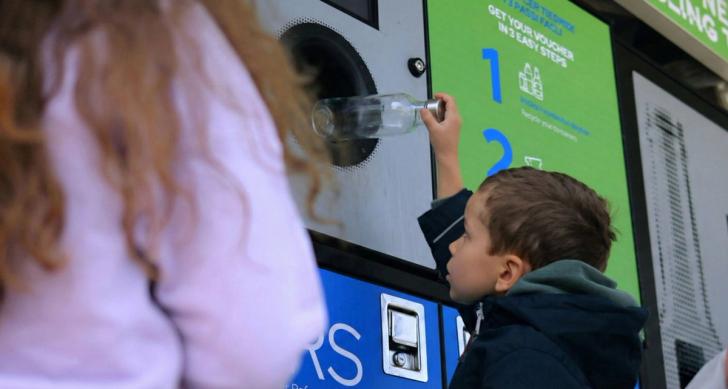
The UK Government has granted the Welsh Government an exclusion from the UK Internal Market Act (UKIM Act) to include single-use glass bottles in its deposit return scheme, enabling Wales to proceed with a scheme that diverges from the glass-free approach adopted by England, Scotland and Northern Ireland.
The exclusion, published by Defra on 12 February, comes with conditions. Wales must launch its DRS for plastic and metal drinks containers on 1 October 2027 as planned, ensure its scheme for those materials meets key interoperability criteria with the UK-wide system, and extend its proposed transitional period for glass to October 2031. During this transition, glass containers will carry a zero-pence deposit with no labelling requirements or targets.
The interoperability conditions require Wales to maintain a single registration and reporting system with the rest of the UK, processes for reciprocal takeback of material across nations, consistent logos and the same deposit level for plastic and metal containers.
The decision makes Wales the only UK nation to include glass in its deposit return scheme. England and Northern Ireland confirmed glass would be excluded in October 2024, with Scotland aligning with this after its own protracted DRS difficulties. Of 56 deposit return schemes operating worldwide, 49 include glass.
Deputy First Minister Huw Irranca-Davies described the decision as a milestone for Wales's circular economy ambitions. In a written statement to the Senedd, he confirmed that the Deposit Return Scheme for Drinks Containers (Wales) Regulations 2026 had been laid before parliament. The scheme will cover PET plastic bottles, aluminium and steel cans, and glass bottles between 150ml and three litres.
Wales withdrew from the joint UK DRS process in November 2024, with Irranca-Davies citing concerns that the UK-wide approach would not serve Welsh interests, particularly on glass inclusion and the transition to reuse. Wales currently holds the second-highest household recycling rate in the world, recording 68.4 per cent in 2024/25.
Industry reaction
The British Soft Drinks Association (BSDA) offered cautious support. "This is a big step forward in establishing a UK-wide deposit return scheme, enabling a unified approach for aluminium cans and plastic bottles, although granting an exclusion for single-use glass means challenges remain," said Andy Bagnall, the BSDA's director general.
Retailers raised concerns about operational impacts. Andrew Opie, director of food and sustainability at the British Retail Consortium (BRC), said the clarity on the Welsh DRS was "long awaited and welcome" but warned that including glass without a deposit creates difficulties. He noted that proposals to include single-use glass without a deposit would add costs and create potential fraud risks.
James Lowman, chief executive of the Association of Convenience Stores (ACS), said the decision to include glass containers in Wales would result in additional costs and operational burdens for local shops, and confusion for customers who would have no incentive to return glass containers to shops until 2031.
Reuse exclusion not granted
While the UK Government approved the glass exclusion, it did not agree to a separate UKIM Act exclusion for Wales's reuse proposals. The UK response published by Defra states that Welsh reuse policy remains under development, and any future exclusion request will be considered through the Resources and Waste Common Framework.
Wales has previously consulted on mandatory reuse targets for drinks containers, with options ranging from five per cent to 50 per cent of containers placed on the market at milestone years between 2031 and 2040.
The UK Government said it intends to support Wales's ambitions on reuse and is committed to working with the Welsh Government and industry as the policy develops. Both governments have agreed to establish a joint taskforce on DRS implementation under the Resources and Waste Common Framework, involving the devolved governments and relevant deposit management organisations.
The decision contrasts with the outcome for Scotland's DRS, where glass inclusion was effectively blocked. The UK Government granted Scotland only a temporary UKIM Act exclusion in 2023 that did not cover glass, contributing to delays that ultimately saw the original scheme administrator, Circularity Scotland, enter administration.
Scotland has since aligned its DRS with England and Northern Ireland, excluding glass. Wales's successful application for a glass exclusion represents a notable shift in stance.
The Welsh Government is currently accepting applications for a deposit management organisation to run the scheme, with a successful applicant expected to be appointed from March 2026 following Senedd approval of the regulations.


Get our weekly digest
resource.co article ai

How will the government and DMOs address the challenges of including glass in DRS while ensuring a level playing field across the UK?
There's no easy solution to include glass in the DRS while maintaining a level playing field. Potential approaches include a phased introduction of glass, potentially with higher deposits to reflect its logistical challenges. The government and DMOs could incentivise innovation in glass packaging design and subsidise dedicated return points for glass-handling. Exemptions for smaller businesses unable to handle glass might also be necessary. Any successful solution will likely blend several approaches. It must address the differing priorities of devolved administrations, balance environmental benefits with logistical and cost implications, and be supported by robust consumer education campaigns emphasizing the importance of glass recycling.