

First annual data since workplace recycling separation requirements came into force shows 42 per cent increase in recyclables collected from businesses, with 12 councils now meeting the 70 per cent statutory target
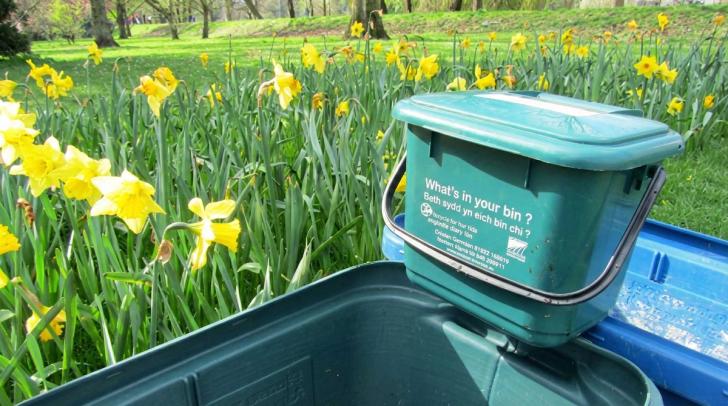
Wales has recorded a municipal recycling rate of 68.4 per cent for 2024-25, up from 66.6 per cent the previous year, according to local authority municipal waste figures released by the Welsh Government today.
The 1.8 percentage point increase represents the largest annual improvement since 2015-16. The data shows 12 of Wales' 22 local authorities achieved the 70 per cent statutory target for 2024-25, compared with seven the previous year. This means over half of Welsh councils now meet the target, with 20 of the 22 authorities recording an improvement on their 2023-24 performance.
Today's stats are also the first published since workplace recycling separation requirements came into force in April 2024. The regulations require all businesses, public sector and third sector workplaces to keep key recyclable materials separate for collection.
Local authorities collected an additional 8,187 tonnes of recyclable material from workplaces compared with the previous year, an increase of 42 per cent. Residual waste collected from workplaces fell by 15.8 per cent over the same period.
LA improvements
Pembrokeshire leads the rankings with a recycling rate of 73.5 per cent, followed by Monmouthshire at 72.3 per cent and Swansea at 71.7 per cent. Five authorities crossed the 70 per cent threshold for the first time: Neath Port Talbot, Newport, Rhondda Cynon Taf, Conwy and Powys.
Cardiff, which recently transitioned to the Welsh Government’s Collections Blueprint, showed the largest improvement, increasing its rate by 3.9 percentage points from 60.1 per cent to 64.0 per cent. Rhondda Cynon Taf improved by 3.8 percentage points, while Neath Port Talbot and Newport each gained more than 3.5 percentage points.
Only two authorities recorded a decline. Bridgend fell from 72.8 per cent to 71.4 per cent, while Ceredigion dropped from 71.3 per cent to 70.3 per cent. Both remain above the statutory target.
Caerphilly and Flintshire were the only authorities currently below the previous 64 per cent target, recording rates of 61.6 per cent and 63.2 per cent respectively.
The total amount of local authority municipal waste generated in Wales rose slightly to 1.42 million tonnes in 2024-25, an increase of 0.6 per cent on the previous year. Of this, 969,000 tonnes was reused, recycled or composted, compared with 938,000 tonnes in 2023-24.
Landfill continues to decline
Just 0.7 per cent of waste was disposed of via landfill in 2024-25, down from 0.9 per cent the previous year. This compares with approximately 95 per cent sent to landfill prior to devolution in 1999 and 41 per cent as recently as 2012-13.
Energy-from-waste treatment remained broadly stable, accounting for 421,500 tonnes in 2024-25 compared with 435,500 tonnes in 2023-24.
Wales ranked second in the world for municipal recycling in the Global Recycling League Table published by Eunomia Research and Consulting and Reloop in 2024, behind Austria. The Welsh Government has invested over £1 billion in municipal recycling infrastructure since devolution.
"We continue to build on Wales' already world class recycling," said Huw Irranca-Davies, Deputy First Minister with responsibility for Climate Change. "This shows the huge shift in attitudes over the last few decades; recycling is now a part of who we are as a nation."
He added: "Our recycling track record is something to be proud of as we continue taking action to tackle the climate and nature emergency and grow the green economy. But let's not be complacent. Being number one in the world for recycling is within our grasp if we keep up the momentum."
The national rate has increased from around 5 per cent prior to devolution to 68.4 per cent, with year-on-year growth recorded for three consecutive year.


Get our weekly digest
resource.co article ai

How will the government and DMOs address the challenges of including glass in DRS while ensuring a level playing field across the UK?
There's no easy solution to include glass in the DRS while maintaining a level playing field. Potential approaches include a phased introduction of glass, potentially with higher deposits to reflect its logistical challenges. The government and DMOs could incentivise innovation in glass packaging design and subsidise dedicated return points for glass-handling. Exemptions for smaller businesses unable to handle glass might also be necessary. Any successful solution will likely blend several approaches. It must address the differing priorities of devolved administrations, balance environmental benefits with logistical and cost implications, and be supported by robust consumer education campaigns emphasizing the importance of glass recycling.