

Welsh Government consultation presents three fee models that could require packaging producers to fund litter and public bin waste management from 2027-28, as Wales diverges from England on pEPR scope.
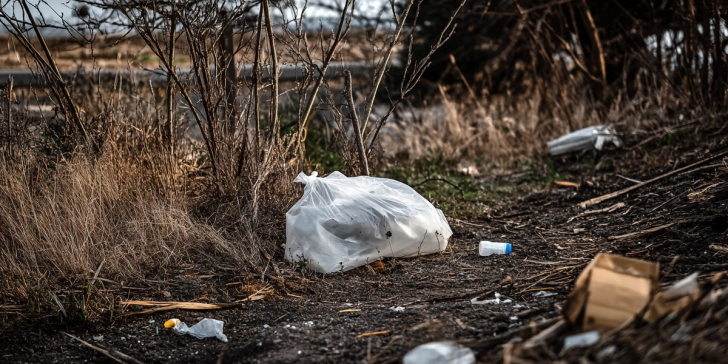
The Welsh Government has launched a 12-week consultation on extending the packaging Extended Producer Responsibility (pEPR) scheme to cover the cost of managing littered and street-binned packaging waste in Wales. The consultation, open until 24 April 2026, presents three options for how producers could be required to fund approximately £15 million per year in estimated costs currently borne by Welsh local authorities.
The move represents a policy divergence from England and Northern Ireland, which withdrew from a shared commitment to include litter costs in pEPR when the four-nations government response was published in March 2022. Wales and Scotland have since maintained their intention to proceed, with Wales now the first to publish detailed proposals.
The current pEPR scheme, which came into force on 1 January 2025 and is administered by PackUK, covers only household packaging waste. Welsh local authorities are due to receive £88.7 million in year one (2025-26) through the scheme. However, the costs of managing packaging that ends up in public bins or as ground litter are excluded from those payments.
Three fee options
The consultation document sets out three approaches for levying litter-related fees on producers.
Option A proposes a flat-rate fee applied equally to all producers per tonne of packaging placed on the market. The Welsh Government describes this as the simplest and least costly to administer, but acknowledges it does not differentiate between packaging commonly found as litter and packaging that rarely is.
Option B would restrict fees to producers whose packaging appears on a "commonly littered" list. This approach is more targeted but more complex, and research by WRAP suggests only around 64 per cent of collected litter by weight consists of items currently on the list, meaning roughly a third of management costs would go unrecovered.
Option C, a hybrid model, would apply higher fees to producers of commonly littered items and a lower rate to all other producers. The consultation describes this as the most complex to administer but the approach most likely to achieve full cost recovery while distributing costs proportionately.
The consultation estimates that approximately two-thirds of the costs relate to clearing packaging dropped as ground litter, with the remaining third arising from collecting and disposing of packaging placed in public street bins.
Regulatory divergence
The proposals raise practical questions for producers selling across the UK. Packaging tonnage data is currently reported UK-wide, with no requirement to break it down by nation of sale. The consultation proposes either allocating costs based on Wales's share of the UK population, or requiring producers to provide nation-of-sale data directly.
"Whether or not Wales (and potentially Scotland) decide to go ahead with these additional costs to producers, the effects of further regulatory misalignment on other aspects of compliance should be carefully considered – particularly concerning packaging data collection and submission," said Louisa Goodfellow, Policy Manager at Ecosurety, a packaging compliance scheme.
"Obligated producers are already contending with the now mandatory Recyclability Assessment Methodology and the significant additional data burden that entails, plus imminent data requirements needed to comply with the UK Deposit Return Scheme next year – made more complex if Wales include glass in a separate scheme."
Wales is separately progressing its own Deposit Return Scheme with glass inclusion and a reuse-focused approach, having opened applications for a Deposit Management Organisation in November 2025. The UK-wide DRS, covering England, Northern Ireland and Scotland, is scheduled to launch in October 2027 without glass.
Any changes to pEPR to include litter costs would be introduced from year three of the scheme (2027-28) at earliest, using powers under the Environment Act 2021. Beyond local authorities, the consultation recognises that other organisations also bear costs for managing littered packaging on land they are responsible for — such as those maintaining trunk roads, waterways and public spaces — and proposes a separate "bidding pot" administered by PackUK to provide funding for these bodies and for community litter-picking groups.
Keep Britain Tidy, which estimates the UK-wide cost of managing littered packaging at up to £384 million per year for local authorities alone, is campaigning for England and Northern Ireland to follow the Welsh and Scottish approach. Scotland has signalled similar intent to include litter in pEPR but has not yet published equivalent proposals.
The consultation was announced in a written statement by Huw Irranca-Davies, Deputy First Minister and Cabinet Secretary for Climate Change and Rural Affairs, who confirmed this has been long-standing Welsh Government policy dating to a 2021 consultation.


Get our weekly digest
resource.co article ai

How will the government and DMOs address the challenges of including glass in DRS while ensuring a level playing field across the UK?
There's no easy solution to include glass in the DRS while maintaining a level playing field. Potential approaches include a phased introduction of glass, potentially with higher deposits to reflect its logistical challenges. The government and DMOs could incentivise innovation in glass packaging design and subsidise dedicated return points for glass-handling. Exemptions for smaller businesses unable to handle glass might also be necessary. Any successful solution will likely blend several approaches. It must address the differing priorities of devolved administrations, balance environmental benefits with logistical and cost implications, and be supported by robust consumer education campaigns emphasizing the importance of glass recycling.