

Viridor has today (20 January) announced the sale of its Crayford Materials Recycling Facility (MRF). The plant near Dartford, Kent has been sold to N+P Group, a Netherlands-based international producer and trader of waste-derived fuels and recyclables.
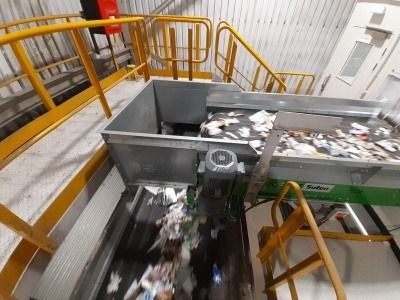
Operations at the Crayford facility will continue as normal under the new ownership, with staff transferred to N+P Group. All of Crayford’s key customers and suppliers have been informed of the change.
Crayford MRF processes and recycles both municipal and commercial dry mixed materials, including paper, card, plastic bottles, cans and glass. The plant receives around c.330,000 tonnes of commingled recyclate from 27 local authorities.
Michael French, Chief Commercial Officer at Viridor said: “We are delighted that N+P are the new owners of Crayford MRF. With this sale, we will be able to continue Viridor’s strategy of growing the core areas of our business, including our Energy Recovery and Polymers Reprocessing, while pushing ahead with our plans to be net-zero by 2040.”
“We wish to thank the team at Crayford MRF for their hard work over recent years. We are determined to ensure a smooth transition and assist N+P Group in driving their business forward. We wish everyone at Crayford MRF the very best for the future, and we also wish to thank Crayford’s customers for their support over recent years.”
Stijn Jennissen, Chief Commercial Officer at N+P, added: “We are delighted to be expanding N+P’s UK footprint and continuing to help Londoners contribute to the global energy transition by using their waste in the most efficient and circular way. By adding the Crayford location to our Group we continue to grow our business and we hope to benefit from the experienced and dedicated team which has been a big part of the location’s success.”


Get our weekly digest
resource.co article ai

How will the government and DMOs address the challenges of including glass in DRS while ensuring a level playing field across the UK?
There's no easy solution to include glass in the DRS while maintaining a level playing field. Potential approaches include a phased introduction of glass, potentially with higher deposits to reflect its logistical challenges. The government and DMOs could incentivise innovation in glass packaging design and subsidise dedicated return points for glass-handling. Exemptions for smaller businesses unable to handle glass might also be necessary. Any successful solution will likely blend several approaches. It must address the differing priorities of devolved administrations, balance environmental benefits with logistical and cost implications, and be supported by robust consumer education campaigns emphasizing the importance of glass recycling.