

Veolia has today (10 January) announced its first electric vehicle battery recycling facility in the UK, which it says will have the capacity to process 20 per cent of the UK’s end-of-life electric vehicle batteries by 2024.
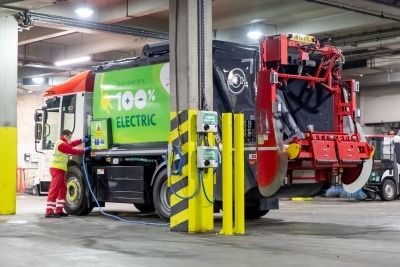
Many of the materials required for battery manufacturing rely on traditional water and energy-intensive processes, with an estimated 500,000 gallons of water required to extract one tonne of lithium using this type of mining. Veolia’s facility will instead extract the required raw materials from end-of-life batteries, which the company states could reduce water consumption, as well as cutting greenhouse gas emissions from battery production by up to 50 per cent.
Veolia states that the new facility, situated in Minworth, West Midlands, is a ‘first step’ for the company in its development of recycling technology and treatment capacity within the UK, with an anticipated 350,000 tonnes of end-of-life electric vehicle batteries predicted to be in the country by 2043.
The plant will initially discharge and dismantle batteries before the mechanical and chemical separation recycling processes will be completed. Veolia has additionally stated that it will utilise its network to establish a ‘full circular economy solution’ in the next five years to produce battery precursors in Europe.
Gavin Graveson, Veolia Senior Executive Vice-President, Northern Europe Zone said: “This is an important first step on the UK’s journey to create an ethical and sustainable supply chain for batteries that will be increasingly necessary as we transition to a greener economy.
“We will not reach carbon neutrality without increasing our investment and development of new technologies and recycling opportunities. As the demand for electric vehicles increases, we will need this facility - and more like it in the UK - to ensure we don’t hit a resource crisis in the next decade.
“Alongside other projects across the globe, bringing Veolia’s expertise to the UK recognises the size of the national market and appetite to recycle locally and responsibly. Urban mining is essential if we are to protect raw materials and will, in turn, create a new, high-skilled industry.”
Research by the Green Alliance has previously pointed to the potential of electric vehicle battery recycling, estimating that, if the 1,400 tonnes of lithium and 800 tonnes of cobalt contained within the UK’s fleet of electric vehicles (as of 2019) were all recovered and recycled, there would be enough acquired raw material to produce 222,000 car batteries, equating to ten per cent of projected new sales in 2035.
In its report, entitled ‘Critical point: securing the raw materials needed for the UK's green transition’, the group urged the UK Government to adopt a comprehensive circular economy policy for electric vehicle batteries in order to encourage investment in reprocessing.


Get our weekly digest
resource.co article ai

How will the government and DMOs address the challenges of including glass in DRS while ensuring a level playing field across the UK?
There's no easy solution to include glass in the DRS while maintaining a level playing field. Potential approaches include a phased introduction of glass, potentially with higher deposits to reflect its logistical challenges. The government and DMOs could incentivise innovation in glass packaging design and subsidise dedicated return points for glass-handling. Exemptions for smaller businesses unable to handle glass might also be necessary. Any successful solution will likely blend several approaches. It must address the differing priorities of devolved administrations, balance environmental benefits with logistical and cost implications, and be supported by robust consumer education campaigns emphasizing the importance of glass recycling.