

Veolia has announced a single line recycling trial in Wales, inviting local businesses to participate in the project to push the country towards its net-zero carbon target.
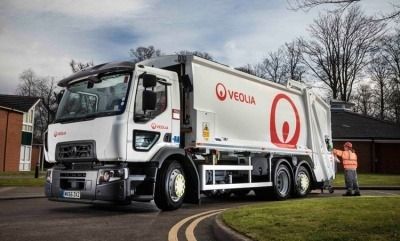
Legislative changes in Wales will require organisations to separate waste into paper and card, metal and plastic, glass and food, with Veolia stating that its trial will ‘optimise operational efficiency’ ahead of this shift.
The trial will see Veolia target single line separation will be targetted for all non-domestic producers of waste, the waste management company providing all necessary internal bins and recycling bags for participating businesses.
To ensure compliance with new legislation, any organisation that does not separate its waste in this way will be liable to penalties, and waste companies will be unable to collect bins if waste is not segregated correctly.
Veolia states that its collection services and specialist recycling and treatment infrastructure will allow it to support customers with ‘even further source-segregation including textiles, electrical and electronic equipment, and hazardous materials.’
Keith McGurk, Managing Director – Commercial at Veolia, said: "In Wales, the amount of waste recycled has risen from five per cent in the late 1990s to 65 per cent in 2020, which is strong progress. But there are still valuable resources in mixed recycling that fail to meet the quality needed for recycling due to contamination.
"The solution is single-source recycling. If we can collect, transport and treat waste as a single stream we can increase the amount that can be recycled. This preserves natural resources and cuts carbon, marking another important step towards the net-zero carbon goal and a real circular economy."


Get our weekly digest
resource.co article ai

How will the government and DMOs address the challenges of including glass in DRS while ensuring a level playing field across the UK?
There's no easy solution to include glass in the DRS while maintaining a level playing field. Potential approaches include a phased introduction of glass, potentially with higher deposits to reflect its logistical challenges. The government and DMOs could incentivise innovation in glass packaging design and subsidise dedicated return points for glass-handling. Exemptions for smaller businesses unable to handle glass might also be necessary. Any successful solution will likely blend several approaches. It must address the differing priorities of devolved administrations, balance environmental benefits with logistical and cost implications, and be supported by robust consumer education campaigns emphasizing the importance of glass recycling.