

Recent statistics from the National Packaging Waste Database show that the UK achieved the highest volume of plastic packaging recycling on record in Q2 this year. According to Valpak, these figures give promise that the UK is on track to hit record levels of plastic packaging recycling for the entire year.
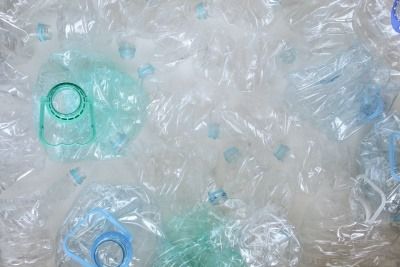
The compliance firm suggests that the country could hit over 600,000 tonnes of plastic reprocessed if current volumes are maintained. Plastic packaging recycling has been on the rise since 2016, Valpak notes, but saw a ‘significant jump’ in 2021, reaching 593,000 tonnes.
The company highlights the ‘significant achievement’ of the UK potentially reaching its 600,000-tonne figure for 2022, which will represent a 33 per cent increase from 2019.
What’s driving domestic reprocessing rates?
In 2021, the UK reprocessing market outstripped exports for the first time. In Valpak’s view, one of the central drivers of domestic reprocessing of plastic packaging is ‘advent of new UK legislation for plastic packaging waste (EPR, Plastic Packaging Tax)’. ‘A wider focus on the potential issues around plastic waste exports and ongoing logistical challenges caused by the pandemic’ also played a significant role.
Despite these factors having ‘played their part’ in the increase, Valpak told Resource that ‘it was the loss of end markets such as China, combined with 2019’s increase in the UK packaging recycling target, that created the largest splash’.
Valpak continued: “Amid fear that the UK would not meet its obligation, plastics PRNs were in greater demand and, as a result, prices increased.
“The rise in prices led to higher levels of recycling at home and abroad, but also raised the spectre of potential fraud. Exporters have proved more likely to fall foul of enforcement agencies and, as a result, the market is opting for UK suppliers that will not let them down.”
The company says that Consistent Collections and modulated fees will work hand-in-hand to continue driving domestic reprocessing rates, individually obligating both producers and local authorities. Future collections will ‘focus on 100 per cent availability of collections across the UK of particular packaging formats.’
In turn, these formats will be ‘positively advantaged with lower producer fees under EPR’. The combination of legislation, Valpak says, ‘should lead to higher availability of quality recyclate that can be reprocessed in the UK’.
The company also showed support for the adoption of ‘of which recycled in the UK’ for key materials (e.g. plastic), which would ensure ‘that investors know there is a target for UK volumes which helps underpin investment cases’.
They continued: “This is the same as ‘of which for remelt glass’ for the overall glass target, which has helped drive increasing volumes of glass into the remelt sector.”
James Armitage, Commercial Operations Analyst at Reconomy Group company Valpak, said: “These latest figures show that things are moving in the right direction. Higher volumes of material managed in the UK result in a more robust data trail and confidence that material is being processed responsibly.
“At the same time, PRN (Packaging Recovery Note) funding provides substantial investment in UK infrastructure.
“However, there is still room for improvement across the industry. Valpak has always favoured UK reprocessing – in 2021, 70 per cent of our plastics PRNs were sourced from UK businesses, compared with a UK figure of 53 per cent.
“Since 2017, we have invested over £200 million into UK recycling infrastructure through our PRN purchasing, and over £120 million for plastic specifically. As the market adapts to greater demand for UK-sourced material, we look forward to seeing others follow our lead.”
RECOUP – surface changes
Plastics recycling charity RECOUP warns that this trend may be ‘forced by necessity’. Tom McBeth, Policy and Infrastructure Project Manager, told Resource: “Whilst on the surface, an increase in volumes of plastic packaging being recycled in the UK is a positive, we are still seeing a huge discrepancy in the amount of plastic waste being generated in the UK, and how much the UK’s infrastructure can handle.
“We also know that whilst there are high performing recycling systems in place for certain polymers and formats, PET and HDPE bottles being prime examples, the same cannot be said for post-consumer films and flexibles which rely largely on export, or energy recovery for their disposal.
“In the last few years, we’ve seen a decrease in material exported for recycling – this has been in part due to changes in foreign markets, particularly China and the wider Asian market, and Turkey.
“Similarly, legislative changes in Europe, as well as at home, have made it increasingly difficult to export material for recycling, and therefore greater proportions have been processed in the UK. This is a trend that has been forced by necessity.
“We also know that criminal activity takes place in relation to export, and a combination of a lack of transparency and the limitations placed on Environment Agency resources because of the Covid-19 pandemic, have meant that a fraction is potentially unaccounted for.
“None-the-less, at the same time, we have seen a decrease in the UK’s reliance on non-OECD countries, and this can only be a positive change as the country, its infrastructure and general population takes more and more responsibility for turning its plastic waste into a resource.”


Get our weekly digest
resource.co article ai

How will the government and DMOs address the challenges of including glass in DRS while ensuring a level playing field across the UK?
There's no easy solution to include glass in the DRS while maintaining a level playing field. Potential approaches include a phased introduction of glass, potentially with higher deposits to reflect its logistical challenges. The government and DMOs could incentivise innovation in glass packaging design and subsidise dedicated return points for glass-handling. Exemptions for smaller businesses unable to handle glass might also be necessary. Any successful solution will likely blend several approaches. It must address the differing priorities of devolved administrations, balance environmental benefits with logistical and cost implications, and be supported by robust consumer education campaigns emphasizing the importance of glass recycling.