

December 2025 guidance consolidates materials facility requirements that underpin Extended Producer Responsibility for packaging and will provide baseline data for the Deposit Return Scheme from 2027
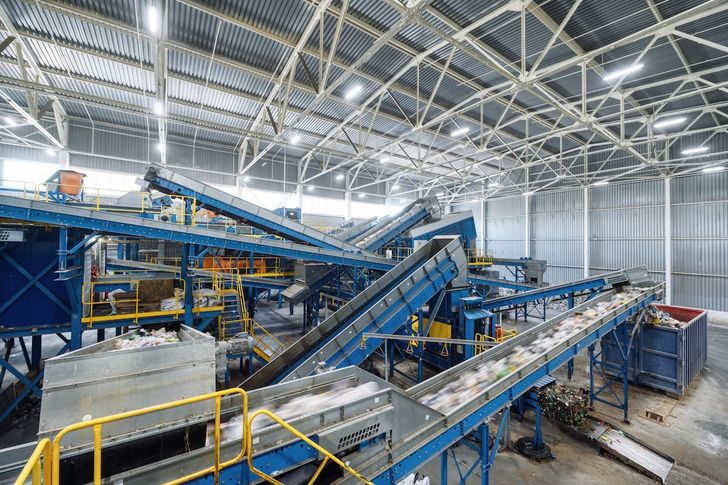
The Department for Environment, Food and Rural Affairs, Environment Agency, Natural Resources Wales, and Welsh Government have published updated guidance on waste sampling and reporting requirements for materials facilities in England and Wales, building on regulatory changes that came into force in October 2024.
The guidance, published on 11 December 2025, consolidates seven separate documents covering notification requirements, supplier identification, sampling methodology, measurement protocols, and enforcement procedures. The regulations form part of the legislative framework supporting the Extended Producer Responsibility for packaging (pEPR) scheme and preparation for the Deposit Return Scheme (DRS), which is scheduled for October 2027.
Under the Environmental Permitting (England and Wales) (Amendment) Regulations 2023, facilities processing 1,000 tonnes or more of waste material annually must notify their regulator and comply with detailed sampling and reporting obligations. The amendments removed the word "mixed" from the definition, bringing single-stream sorting facilities and waste transfer stations that consolidate material from multiple suppliers into regulatory scope for the first time.
Expanded material categories and sampling frequency
The regs require facilities to now categorise input materials across ten material types, expanded from the four broad categories of glass, metal, paper, and plastic required set out in the original 2014 regulations. Metal must now be recorded separately as aluminium and steel, while paper and card are reported as distinct streams. Plastic has been subdivided into four categories: plastic bottles, plastic pots, tubs and trays, film and flexible plastics, and other plastics. A tenth category, fibre-based composite materials, has been added to capture packaging made of paperboard or paper fibres laminated with plastic.
Operators must take input samples for every 75 tonnes of waste material received from each supplier, with individual samples weighing a minimum of 55 kg and averaging 60 kg across all samples in a reporting period. For output materials, sampling frequencies vary by material type, with plastics requiring sampling every 15 tonnes and paper every 60 tonnes.
Each sample must be analysed to identify target materials, non-target materials, and non-recyclable materials. Operators must additionally record the proportion of packaging within each category and identify drinks containers that will fall within DRS scope.
Defra guidance published in March 2024 permits operators to use visual detection and recognition technology, including vision-based artificial intelligence systems, provided they can demonstrate to regulators that their methodology produces representative sampling results.
Data retention and reporting
Data recorded after 1 October 2024 must be retained for seven years, an increase from the previous four-year requirement. The extended retention period aligns with standard financial auditing periods, reflecting the role of materials facility data in calculating pEPR payments and verifying producer declarations.
Facilities must submit quarterly reports within one month of each period's end, using the Environment Agency's materials facility combined waste returns spreadsheet. The returns must include details of the site's Technically Competent Manager, statistical data including standard deviation and confidence intervals, and raw data rather than averages.
The Environment Agency published Regulatory Position Statement 334 in March 2025, allowing operators to report aggregated tonnages over each three-month period rather than recording specific dates for each batch of material received or despatched. The interim measure, valid until December 2027, addresses the administrative burden of daily reporting while operators must still maintain detailed internal records. The expiry date aligns with the rollout of the mandatory Digital Waste Tracking service, which becomes compulsory for waste receiving sites from October 2026 and will capture date-level movement data automatically through a centralised system.
Enforcement approach
The guidance confirms that the Environment Agency and Natural Resources Wales will conduct both announced and unannounced audits, including on-site inspections, virtual assessments, and evaluations of data submissions. Desktop audits will analyse submitted data for statistical anomalies and sampling frequency compliance.
Facilities identified as persistent poor performers, those rated in compliance bands D, E, or F for two or more consecutive years, face escalated subsistence fees and potential permit action. The Environment Agency's 2024-25 Chief Regulator's report recorded 165 persistent poor performers across the waste sector.
The regulations require operators to self-assess their status at the start of each quarterly reporting period. Where a facility's 12-month projection falls below the 1,000-tonne threshold, operators can withdraw their notification before the next reporting period begins.


Get our weekly digest
resource.co article ai

How will the government and DMOs address the challenges of including glass in DRS while ensuring a level playing field across the UK?
There's no easy solution to include glass in the DRS while maintaining a level playing field. Potential approaches include a phased introduction of glass, potentially with higher deposits to reflect its logistical challenges. The government and DMOs could incentivise innovation in glass packaging design and subsidise dedicated return points for glass-handling. Exemptions for smaller businesses unable to handle glass might also be necessary. Any successful solution will likely blend several approaches. It must address the differing priorities of devolved administrations, balance environmental benefits with logistical and cost implications, and be supported by robust consumer education campaigns emphasizing the importance of glass recycling.