

The hub, delivered by charity Tipping Point East on GLA-owned land, is the first phase of a planned Circular Economy Village in Silvertown and will support sustainable housebuilding across East London.
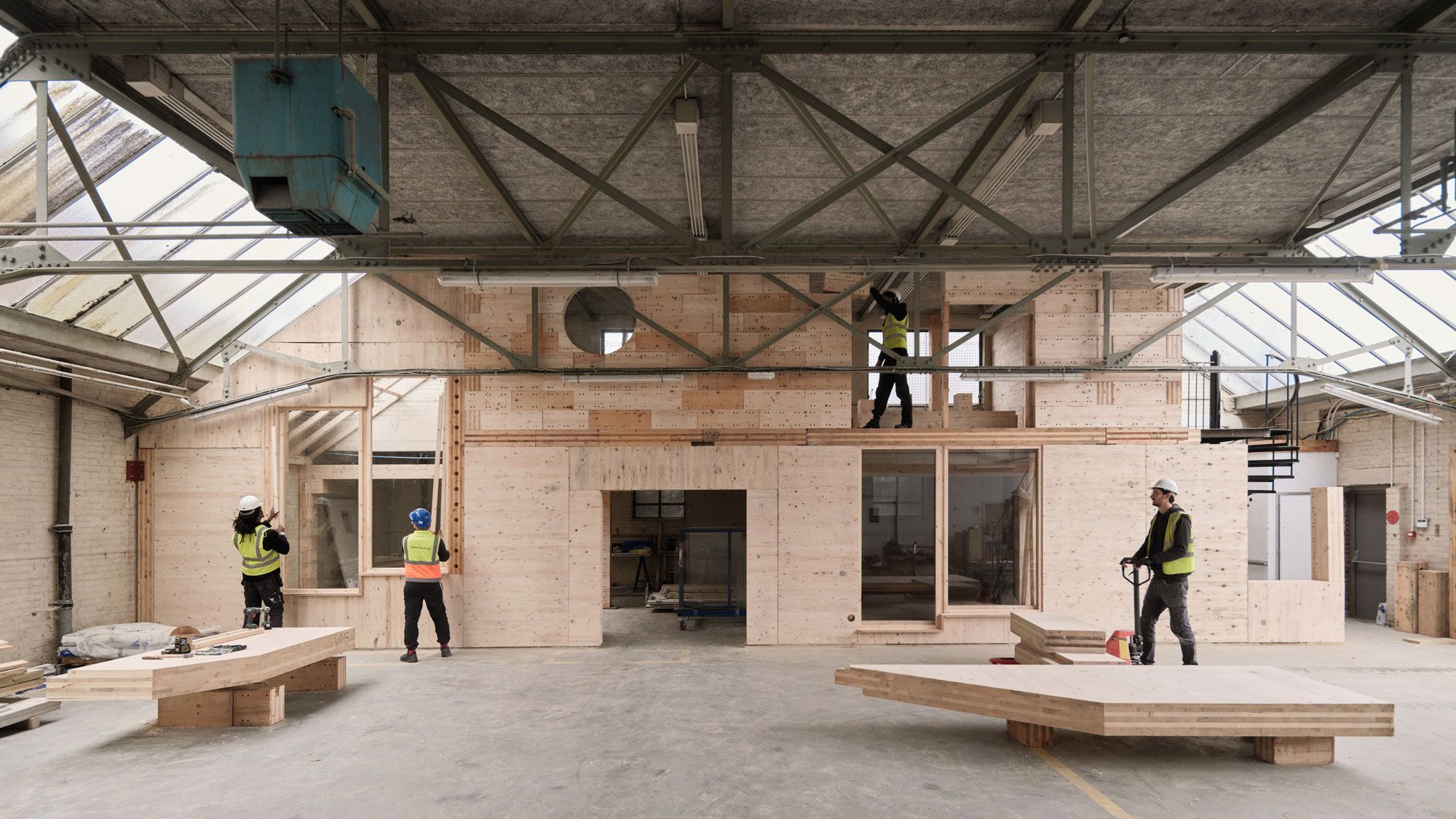
The UK's first Circular Construction Hub has opened on a 20,000 sq m site in the Royal Docks, east London, with the aim of diverting at least 950 tonnes of construction materials from landfill over five years.
The facility, operated by charity Tipping Point East, will salvage materials from demolition projects, commercial fitouts and film sets, storing them for testing, processing and redistribution to new construction projects. Materials handled will range from structural timber and cable trays to sanitaryware, with items quarantined, tested and kiln-dried where necessary before re-entering the supply chain.
The hub is hosted on Greater London Authority land and has been developed in collaboration with Newham Council. It received initial funding from Innovate UK for its office fit-out within an existing warehouse, with architecture practice DSDHA acting as guarantor.
Tipping Point East is a partnership led by three organisations working in regenerative design: Material Cultures, which runs construction education programmes; Yes Make, a design and build collective focused on circular practice; and RESOLVE Collective, an interdisciplinary group combining architecture, engineering and art.
Supporting 36,000 new homes
The hub sits within the Royal Docks Enterprise Zone, where the Mayor of London plans to deliver more than 36,000 new homes and 55,000 jobs. It's intended to support the sustainable construction of these developments by providing locally sourced reclaimed materials and promoting low-carbon building techniques.
One of the largest nearby schemes is the Lendlease-led Silvertown development, backed by the Crown Estate and Newham Council, which has consent for 7,000 homes with a target of at least 30 per cent affordable housing.
The construction, demolition and excavation sector generates more than 100 million tonnes of waste in the UK each year, with over five million tonnes still reaching landfill. The construction industry as a whole accounts for 62 per cent of the UK's total waste output. The hub's backers say large-scale material reuse of this kind can reduce the embodied carbon in new developments.
"I am delighted to see the launch of the UK's first Circular Construction Hub in the Royal Docks, which will help support our ambition to make the capital a zero carbon city by 2030," said Sadiq Khan, Mayor of London. "We are not only cutting carbon emissions, but are also creating new jobs and homes for Londoners as we build a greener and fairer city for everyone."
Circular Economy Village plans
The current hub is the first phase of a wider Circular Economy Village planned for Silvertown, which is expected to expand to 25,000 sq m over the next five years. When fully activated, the facility aims to be the largest of its kind in Europe.
The project also forms part of the Mayor of Newham's Just Transition Climate Action Plan. Rokhsana Fiaz, Mayor of Newham, said: "By transforming how we build, we aren't just reducing waste, we are also pioneering our 'just transition' impact through the creation of green jobs and delivery of high-quality, sustainable homes our residents deserve and can afford."
London's planning framework already requires major developments to submit Circular Economy Statements, setting out how they will design out waste, retain existing structures where possible and reduce embodied carbon. The London Plan Policy SI 7 mandates these assessments for referable applications, and boroughs are encouraged to apply the requirements more broadly.
George Massoud, trustee at Tipping Point East and founding director of Material Cultures, said the hub would "practically demonstrate how we move towards a just transition" by embedding circular economy processes into London's material flows.
The hub opened with a series of site visits during the University of East London's Sustainable Cities Festival, running from 4 to 6 March, with sessions for the construction sector, the circular economy sector and community groups.


Get our weekly digest
resource.co article ai

How will the government and DMOs address the challenges of including glass in DRS while ensuring a level playing field across the UK?
There's no easy solution to include glass in the DRS while maintaining a level playing field. Potential approaches include a phased introduction of glass, potentially with higher deposits to reflect its logistical challenges. The government and DMOs could incentivise innovation in glass packaging design and subsidise dedicated return points for glass-handling. Exemptions for smaller businesses unable to handle glass might also be necessary. Any successful solution will likely blend several approaches. It must address the differing priorities of devolved administrations, balance environmental benefits with logistical and cost implications, and be supported by robust consumer education campaigns emphasizing the importance of glass recycling.