

New research reveals how supporting domestic scale-up of bio-based companies could create over 4,200 jobs and add up to £500 million in economic value to the UK economy.
The UK is failing to capitalise on its world-leading bio-based innovation, with high-potential companies increasingly moving operations abroad to scale up their businesses, according to new research published today by BB-REG-NET.
The study, titled “Leaving to Grow: Why UK Bio-Based SMEs Are Going Global,” found that supporting UK bio-based SMEs to scale domestically could create over 4,200 new jobs and generate between £300 million and £500 million in additional economic value.
The analysis by Perspective Economics examined more than 430 UK bio-based companies and revealed a concerning trend of innovative British firms relocating manufacturing operations to countries such as the Netherlands, Sweden, and Portugal, where scale-up infrastructure and support are more accessible.
“This research suggests that the UK is a great place to start a bio-based company, but that the longer-term economic benefits of world-leading bio-based research and innovation may be constrained by a comparative lack of scale-up funding, sub-optimal access to scale-up infrastructure and less favourable domestic market conditions,” said Jonathan Hobson, Director at Perspective Economics and the report’s lead author.
International expansion drives growth
While only 24 per cent of UK bio-based chemicals and materials companies have international operations, these businesses demonstrate substantially stronger growth trajectories.
The report reveals that internationally focused companies generate 1.8 times higher median revenue (£3.1 million versus £1.7 million) than their UK-focused counterparts. Additionally, the median employment figure for companies with international activity (18 employees) is double that of UK-focused companies (8 employees).
The difference is even more pronounced when comparing medium-sized firms, where internationally-active companies have experienced employment growth approximately seven times greater than their UK-focused counterparts since 2019.
Several notable case studies highlight this trend, including Colorifix, which established manufacturing operations in Portugal; Deep Branch Technology (now Aerbio), which commissioned a pilot unit in Rotterdam; Lixea, which built a pilot plant in Sweden; and Naturbeads, which is constructing its first commercial production plant in Italy.
Jen Vanderhoven, Chief Operating Officer of the Bio-based and Biodegradable Industries Association (BBIA) and project lead for BB-REG-NET, commented: “The urgent need to support bio-based scale-ups is clear. We are losing talent and innovation to countries with more accessible infrastructure, funding, and regulatory support. The UK must act now to ensure that bio-based SMEs have the resources they need to thrive and keep jobs and investment at home.”
Barriers to domestic scale-up
The research identified several systemic barriers preventing UK bio-based companies from scaling domestically.
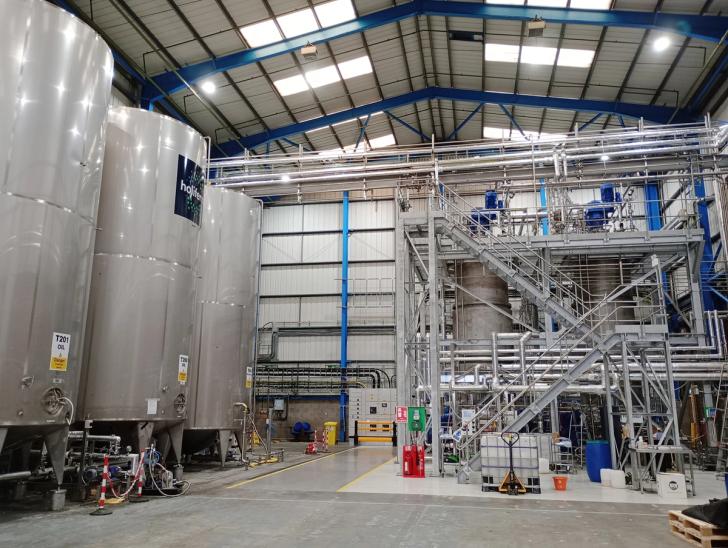
Richard Lock, Managing Director of Holiferm, which manufactures biosurfactant products in the UK, highlighted these challenges: “As a growing bio-based enterprise, we are increasingly constrained by systemic barriers to scaling within the United Kingdom. Chief among these is the shortage of patient capital - long-term investment willing to support the inherently high-risk transition from laboratory research to commercial-scale manufacturing.”
Lock added: “Compounding this is a pronounced deficit in skilled personnel, particularly scale-up scientists, process engineers, and industrial biotech operators - all of whom are vital to effectively bridging the gap between innovation and implementation.”
The report notes that less than 10 per cent of the UK Future Fund portfolio went to manufacturing businesses, while over 50 per cent went to less capital-intensive sectors like IT and finance.
Additionally, many companies reported difficulties accessing appropriate scale-up infrastructure, particularly for production volumes beyond 750 litres – the critical gap between laboratory and commercial-scale production.
The analysis also revealed that UK-focused micro and small bio-based businesses employ more people overall than their internationally active counterparts and have added more people to their workforces since 2019. This suggests that the UK excels at creating and growing bio-based businesses to a certain scale, but struggles to support their continued growth beyond that point.
Five key recommendations
Based on stakeholder workshops with approximately 30 industry participants, the report calls for five immediate actions:
- Audit and enhance access to existing UK scale-up infrastructure to address significant gaps in the UK’s scale-up landscape, bridging progress from laboratory to industrial-scale production.
- Introduce targeted patient capital and scale-up tax credits to direct more investment towards capital-intensive sectors of the bioeconomy.
- Streamline regulation to reduce time-to-market for novel bio-based technologies, as regulatory barriers significantly impact commercialisation timelines.
- Strengthen cross-sector collaboration between government, academia, and industry to better support the transition from research to commercial production.
- Address skills gaps, especially by developing a new cadre of ‘scale-up scientists’ with combined scientific and engineering expertise.
The report concludes that without immediate policy and funding interventions, the UK risks becoming a global incubator that fails to retain its own bio-based innovation. By acting now, the UK can position itself as a world leader in sustainable chemistry and advanced manufacturing, ensuring long-term economic and environmental returns in the race to net zero.
The study, funded through BB-REG-NET, forms part of a broader research initiative to evidence the economic potential of bio-based chemicals and materials to the UK economy and support decision-making across key policy areas.


Get our weekly digest
resource.co article ai

How will the government and DMOs address the challenges of including glass in DRS while ensuring a level playing field across the UK?
There's no easy solution to include glass in the DRS while maintaining a level playing field. Potential approaches include a phased introduction of glass, potentially with higher deposits to reflect its logistical challenges. The government and DMOs could incentivise innovation in glass packaging design and subsidise dedicated return points for glass-handling. Exemptions for smaller businesses unable to handle glass might also be necessary. Any successful solution will likely blend several approaches. It must address the differing priorities of devolved administrations, balance environmental benefits with logistical and cost implications, and be supported by robust consumer education campaigns emphasizing the importance of glass recycling.