

BB-REG-NET publishes Decision Support Tool and Biomass Priority Tower to help policymakers direct scarce biogenic carbon resources toward sectors such as chemicals and aviation where no alternatives to biomass exist.
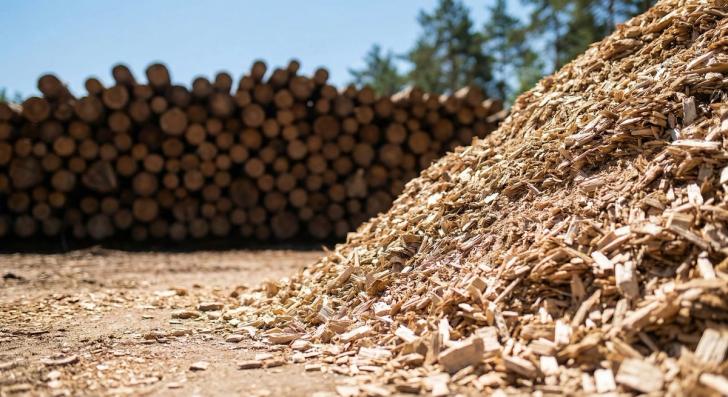
Global demand for biomass is set to exceed sustainable supply, putting the onus on policymakers to establish clear priorities for its allocation rather than relying solely on sustainability criteria, according to a new analysis from the Bio-based and Biodegradable materials REGulatory NETwork (BB-REG-NET).
The report, titled Making the most of biomass: Guiding Principles for Biomass Utilisation in Policy Development, introduces a Decision Support Tool that produces a seven-level Biomass Priority Tower. This ranks applications from essential uses at the top to those where viable alternatives exist at the bottom.
Food production, ecosystem services, biodiversity maintenance and pharmaceuticals manufacturing occupy the highest "penthouse" level. Electricity generation without carbon capture and road transport biofuels for domestic vehicles sit at the lowest "basement" level, on the basis that alternative technologies already exist or are emerging.
The report states that global biomass harvests currently stand at 13 billion tonnes annually. While approximately 40 billion tonnes of harvestable biomass exists globally, the additional amount that could be extracted without degrading soils, depleting ecosystems or undermining food security ranges from six to 14 billion tonnes. Future demand from aviation, shipping and chemicals alone could require around eight billion tonnes.
Defossilisation versus decarbonisation
The report draws a distinction between "decarbonisation" and "defossilisation". While energy systems can be decarbonised through wind and solar power, the chemicals, plastics and materials sectors require carbon molecules as fundamental building blocks.
"These industries cannot be decarbonised; they must be defossilised by switching from fossil carbon to renewable carbon sources," the report states. This positions biomass not as one option among many for these sectors, but as fundamentally necessary.
Dr Adrian Higson, Director of Alder BioInsights and lead author of the report, said: "Sustainability criteria are essential, but they are no longer sufficient on their own. Biomass is a limited and highly contested resource, and we need to be honest about the fact that some sectors – such as chemicals, materials and aviation – have no viable alternatives to biogenic carbon, while others do."
The publication coincides with an ongoing Department for Energy Security and Net Zero consultation on a Common Biomass Sustainability Framework, which closes on 27 February 2026. While that consultation focuses on strengthening sustainability criteria for biomass sourcing, the BB-REG-NET report addresses ensuring sustainably sourced biomass flows to applications where it delivers the greatest benefit.
Policy alignment
The report draws on four stakeholder workshops held in York and Sheffield during 2025. Participants reportedly reached consensus that food production and ecosystem services must be protected above all else, and that the availability of alternative technologies should be a determining factor in how biomass is allocated.
Three core principles underpin the Decision Support Tool's approach: the social value of health, wellbeing and ecosystem services should be the top priority; biomass should be directed to applications where no alternatives exist; and priority should be given to pathways that inherently produce clean carbon dioxide streams suitable for capture.
The report highlights the UK's position in biomass supply chains, noting that the country imports 80 per cent of the wood it consumes. Drax Power Station in North Yorkshire burns 7.6 million tonnes of wood pellets annually, 99 per cent of which are shipped from overseas.
Dr Jen Vanderhoven, Chief Executive Officer of the Bio-based and Biodegradable Industries Association (BBIA) and contributor to the report, said: "Our report provides policymakers with a practical, evidence-based tool to support more coherent decision-making on biomass use. As government consults on sustainability, there is a real opportunity to go further and ensure policy alignment across energy, industrial strategy and the bioeconomy."
The European Union has already moved on prioritisation through its cascading use principle embedded in the Renewable Energy Directive (RED III), which mandates that woody biomass be used first for products, then to extend product life, then for reuse and recycling, and only finally for bioenergy. The UK currently lacks an equivalent framework.
Previous BB-REG-NET research has identified regulatory fragmentation across government departments as a barrier to bioeconomy development. The current UK bioeconomy comprises 1,200 businesses employing 20,300 people and generating £12.5 billion annually, with the sector having the potential to generate £204 billion with appropriate policy support.


Get our weekly digest
resource.co article ai

How will the government and DMOs address the challenges of including glass in DRS while ensuring a level playing field across the UK?
There's no easy solution to include glass in the DRS while maintaining a level playing field. Potential approaches include a phased introduction of glass, potentially with higher deposits to reflect its logistical challenges. The government and DMOs could incentivise innovation in glass packaging design and subsidise dedicated return points for glass-handling. Exemptions for smaller businesses unable to handle glass might also be necessary. Any successful solution will likely blend several approaches. It must address the differing priorities of devolved administrations, balance environmental benefits with logistical and cost implications, and be supported by robust consumer education campaigns emphasizing the importance of glass recycling.