

Tolvik Consulting statistics reveal 4.3 per cent rise in waste processed across 63 operational facilities, with 13 more under construction in 2025.
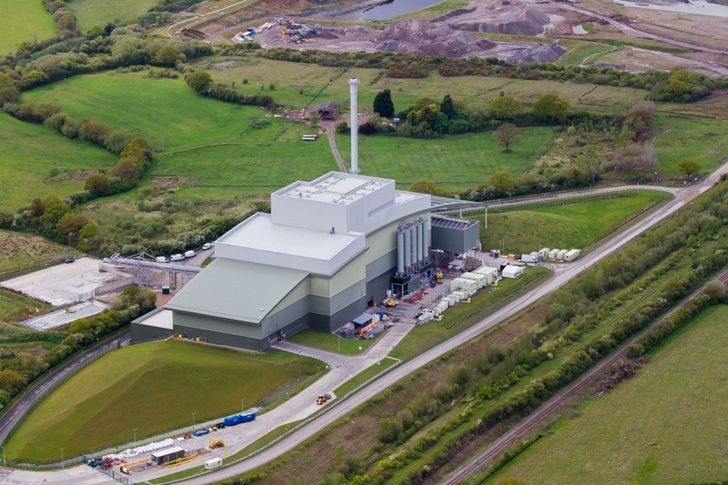
The UK Energy from Waste (EfW) sector processed 16.82 million tonnes of waste in 2024, representing a 4.3 per cent increase on the previous year, according to the latest annual report from Tolvik Consulting.
The statistics, which are based on Annual Performance Reports (APR) submitted by operators, reveal that the 63 fully operational EfW facilities in the UK are now running at 88.6 per cent of their permitted capacity. There are a further 13 under construction as of December 2024.
The total permitted capacity of operational facilities reached 19.31 million tonnes per annum, while facilities under construction will add a further 4.9 million tonnes per annum.
The increase in capacity and waste processing volumes over the past five years demonstrates steady growth in the sector, as illustrated in the table below.
| Year | Capacity of fully operational facilities (million tonnes) | Capacity including facilities under construction (million tonnes) | Total tonnage inputs (million tonnes) | Annual increase in tonnage inputs |
|---|---|---|---|---|
| 2020 | 16.27 | 20.37 | 14.07 | 11.4% |
| 2021 | 26.37 | 21.67 | 14.94 | 6.2% |
| 2022 | 17.52 | 23.24 | 15.32 | 2.6% |
| 2023 | 18.45 | 23.93 | 16.12 | 5.2% |
| 2024 | 19.31 | 24.16 | 16.82 | 4.3% |
Table 1: Total permit capacity (as at December 2024) and EfW inputs
Although 74.4 per cent of all EfW inputs came from Local Authority Collected Waste (LACW) primarily consisting of household waste, Commercial and Industrial (C&I) Waste grew from 24.6 per cent to 25.6 per cent, revealing a continuing trend of increasing commercial waste.
Power generation increases as EfW facilities contribute to UK national grid
According to the report, UK EfW facilities exported an estimated 10,040 GWh of power to the grid in 2024, approximately 3.6 per cent of total UK net power generation.
Heat exports, the process of transferring waste heat, reached their highest ever reported figure, with 1,949 GWh of heat exported for use alongside power - a ten per cent increase on 2023.
In terms of carbon emissions, 57 EfWs reported their emissions within their APR. The capacity-weighted average of CO2 emissions per tonne of waste input increased slightly to 1.00 tonne of CO2 per tonne of waste, up from 0.98 tonne in 2023.
The total fossil CO2 emissions from UK EfW were estimated at 7.63 million tonnes, an increase reflecting greater waste inputs.
"As the future carbon cost liability is to be based upon calculation of fossil CO2 emissions by site and prevailing carbon allowances prices it is, in Tolvik's opinion, becoming increasingly important that the ETS Authority and Regulators ensure that consistent protocols are used to report emissions and to allow these to be apportioned to feedstocks," the report states.
EfW plant efficiency reaches 87.4 per cent
For EfWs operational throughout 2024, the weighted average ability based on waste combustion hours improved to 87.4 per cent, up from 86.6 per cent.
For ash recovery, 99 per cent of the 3.2 million tonnes of incinerator bottom ash produced was recorded as being sent for recovery, while 41.3 per cent of the 515,000 tonnes of Air Pollution Control residues was reported as being sent for recovery.
Tolvik Consulting estimates that the total UK operational capacity for treatment of residual waste at EfW plants in operation and in construction is now 22.0 million tonnes.
While the Department for Environment, Food and Rural Affairs (Defra) predicts that total energy recovery capacity will be 18.8Mt of municipal residual waste in 2035, Tolvik’s projects suggest that operational capacity in the UK will reach 22.7Mt by 2030, significantly higher than Defra’s predictions.


Get our weekly digest
resource.co article ai

How will the government and DMOs address the challenges of including glass in DRS while ensuring a level playing field across the UK?
There's no easy solution to include glass in the DRS while maintaining a level playing field. Potential approaches include a phased introduction of glass, potentially with higher deposits to reflect its logistical challenges. The government and DMOs could incentivise innovation in glass packaging design and subsidise dedicated return points for glass-handling. Exemptions for smaller businesses unable to handle glass might also be necessary. Any successful solution will likely blend several approaches. It must address the differing priorities of devolved administrations, balance environmental benefits with logistical and cost implications, and be supported by robust consumer education campaigns emphasizing the importance of glass recycling.