

A study from recycling company TOMRA has revealed ‘holistic’ resource systems could save 2.76 billion tonnes of CO2 annually.
The study, commissioned by the recycling solutions firm to environmental consultancy Eunomia, establishes the potential for an optimised waste management network to tackle climate change.
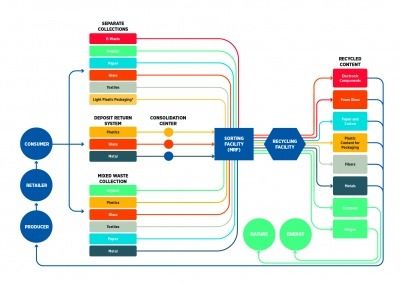
TOMRA specialises in the manufacturing of advanced collection and sorting solutions for resource optimization and aims to help achieve the goal of climate change mitigation through overhauling the current waste management structure.
It also aims to enable 40 per cent of all post-consumer plastic packaging produced globally each year to be collected for recycling by 2030.
The new EU climate law increased the emission reduction target from 40 per cent to at least 55 per cent by 2030, in order to meet the expectations of the November World Climate Summit in Glasgow.
Overall, a reduction of 2.76 billion tonnes of CO2 per year is possible, the study suggests.
This reduction can be achieved using Holistic Resource Systems – the optimised combination of key waste management practices for collection, sorting and recycling, to facilitate the transition towards a circular economy.
Holistic Resource Systems also encompass a combination of political framework regulations, such as extended producer responsibility (EPR), deposit return schemes (DRS), and technical processes for waste handling.
Eunomia has examined various models to identify the most efficient, cost-effective scenario for a holistic system.
The outcome is as follows:
- DRS for polyethylene terephthalate (PET) bottles and metal beverage containers, which will aim to deliver a return rate of over 90 per cent, should play a central role in such a system. They will maximise the capture of high, carbon-intensity material, whilst reducing litter. This will save 1.4 billion tonnes of CO2e per year.
- With regard to remaining household waste, only biowaste, paper, textiles, and waste electrical and electronic equipment (WEEE) should be collected separately. Separate waste collection (SWS) will allow the materials to be recycled for the best carbon benefit, though further sorting of the residual waste fraction will always be necessary. This will save 0.73 tonnes of CO2e per year.
- The rest should remain in a mixed waste stream, which can be most efficiently separated into reusable materials for further recycling. Mixed waste sorting (MWS) generates additional collection and recycling rates above and beyond what other elements can deliver, as well as reducing greenhouse gas emissions through diverting refuse that ends up being burnt in landfills.
This multifaceted model should, according to the study, enable regionally customised holistic models to cut global CO2 emissions by up to 5 per cent.
While 60 per cent collection and sorting rates are considered ‘respectable’ today, according to the report, Holistic Resource Systems can deliver over 500 per cent more new products made of recycled content.
Volker Rehrmann, Executive Vice President and Head of TOMRA Recycling/Mining and Circular Economy Division, commented: “Now is the time for real action to ensure societies stop wasting resources with all the related negative consequences.
“In many places, the pandemic helped to meet Paris Climate Agreement goals.”
“But even maintaining this level will require determined and consistent implementation, including holistic systems, to close the loops.”
Joe Papineschi, Chairperson Eunomia Research & Consulting, said: “Half our carbon emissions come from our materials and food systems, with their attendant pollution and habitat destruction impacts.
“A circular economy that minimises resource use while driving equality in global standards of living is fundamental to a socially just net zero.”


Get our weekly digest
resource.co article ai

How will the government and DMOs address the challenges of including glass in DRS while ensuring a level playing field across the UK?
There's no easy solution to include glass in the DRS while maintaining a level playing field. Potential approaches include a phased introduction of glass, potentially with higher deposits to reflect its logistical challenges. The government and DMOs could incentivise innovation in glass packaging design and subsidise dedicated return points for glass-handling. Exemptions for smaller businesses unable to handle glass might also be necessary. Any successful solution will likely blend several approaches. It must address the differing priorities of devolved administrations, balance environmental benefits with logistical and cost implications, and be supported by robust consumer education campaigns emphasizing the importance of glass recycling.