

The Coventry-based company can utilise the XR3000C technology to process more waste in-house from its own operations and from other waste management services.
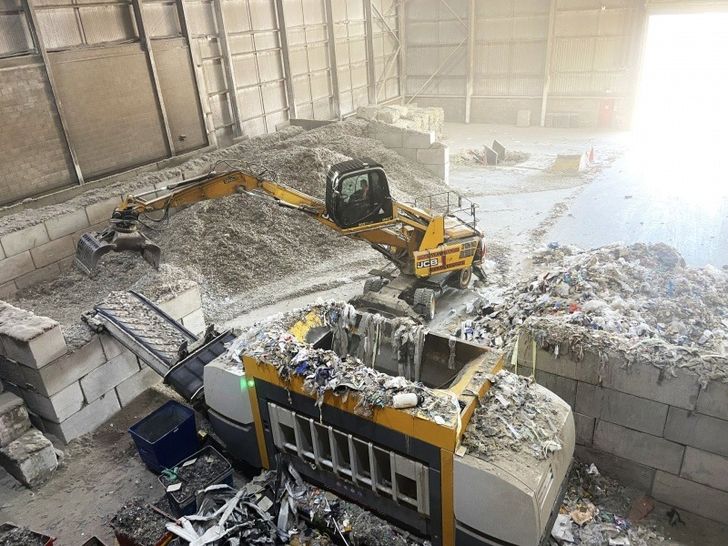
Coventry-based waste management service, Tom White, has partnered with UNTHA UK to install an XR3000C shredder into its facilities. The investment aims to streamline operations, improve efficiency, and enable the production of solid recovery fuel (SRF) on-site.
Handling approximately 180 tonnes of commercial, industrial and demolition waste daily, Tom White sorts materials based on size and density to extract heavy fractions and valuable commodities for redistribution.
Previously, residual waste fractions were sent elsewhere for further processing, but with the UNTHA XR3000C, the company can now refine and process these materials into a homogeneous feedstock in-house.
These feedstock, which is less than 50mm in particle size, can be used for SRF, offering Tom White a sustainable alternative fuel source.
Commenting on the utility of the new shredder, Michael Trueman, Head of Production at Tom White Waste, said: “As well as something mobile, we wanted a tried-and-tested shredder that could withstand the high volumes of waste passing through our facility.
“Having seen the UNTHA XR in action on other sites, we knew it promised the resilience for tough operating conditions and a consistent SRF output. The question was whether it could keep pace with the tonnage we wanted to put through it — a challenge that, so far, it is living up to.”
The XR3000C shredder delivers throughput rates of 60 tonnes per day, with the capacity to process up to 80 tonnes in one shift. It utilises an electric drive system, which offers up to 75 per cent greater energy efficiency compared to diesel-hydraulic alternatives.
Tom White will also be able to process materials from other waste management specialists, which can be mixed with the fractions generated by the plant itself to produce a greater volume of fossil field substitutes.
This shift supports Tom White’s sustainability goals, lowering the facility’s carbon footprint while advancing its long-term SRF production capabilities.
Trueman further explained the financial advantages of the partnership: “From a cost perspective, the UNTHA Finance package was an attractive benefit for us too — and not just because we can budget accurately. We have wrapped a five-year service plan into our investment — including three site visits per annum, complete with full machine inspection and service, plus oil and filter change — for ultimate peace of mind.”


Get our weekly digest
resource.co article ai

How will the government and DMOs address the challenges of including glass in DRS while ensuring a level playing field across the UK?
There's no easy solution to include glass in the DRS while maintaining a level playing field. Potential approaches include a phased introduction of glass, potentially with higher deposits to reflect its logistical challenges. The government and DMOs could incentivise innovation in glass packaging design and subsidise dedicated return points for glass-handling. Exemptions for smaller businesses unable to handle glass might also be necessary. Any successful solution will likely blend several approaches. It must address the differing priorities of devolved administrations, balance environmental benefits with logistical and cost implications, and be supported by robust consumer education campaigns emphasizing the importance of glass recycling.