

First real-time tracking of microplastic gut passage reveals how tiny marine organisms are redistributing plastic pollution from surface waters to ocean depths and through the food chain.
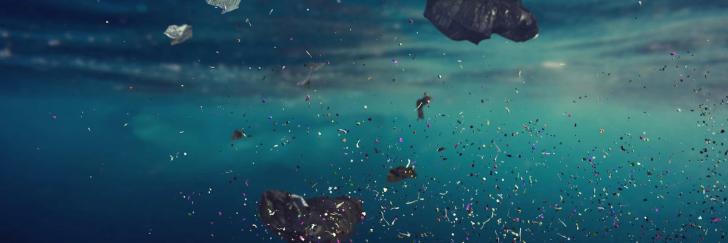
Zooplankton are transporting hundreds of microplastic particles through the ocean water column each day, according to new research published in the Journal of Hazardous Materials that provides the first real-time measurements of how quickly microplastics move through these organisms.
"I would liken this process to both a microplastic plumbing system, and a microplastic food delivery service," comments Professor Penelope Lindeque, one of the study's authors at Plymouth Marine Laboratory. "Zooplankton are both sinking microplastics down the water column, and passing them higher up in the marine food chain."
The study estimates that copepods – small crustaceans typically 1-2mm in length that form the base of many marine food chains – in the western English Channel are driving microplastic fluxes of approximately 271 particles per cubic metre of seawater per day. The findings offer a quantitative framework for understanding how plastic waste reaching the ocean is redistributed through marine ecosystems and food webs.
Researchers from Plymouth Marine Laboratory (PML) and the Oceanographic Centre of the Balearic Islands tracked individual microplastic particles as they were ingested and expelled by copepods, measuring gut passage times with a median of approximately 40 minutes. The passage time remained consistent regardless of plastic shape or feeding conditions, with polystyrene beads, polyamide fibres and polyamide fragments all moving through at similar speeds.
Waste plastics entering marine environment
It was estimated that 19 to 23 million metric tonnes of plastic waste entered aquatic ecosystems in 2016, with projections suggesting this figure could increase to 53 million metric tonnes per year by 2030. According to the study authors the ocean is projected to already contain more than 125 trillion microplastic particles,
Copepods are considered the most numerous zooplankton in the ocean, dominating communities in nearly every region from surface waters to the deep sea. Their abundance means that even small actions by individual animals can collectively drive ecosystem-level changes.
Dr Rachel Coppock, marine ecologist at PML, said: "Microplastic pollution is often framed as a surface ocean problem, but our study shows that zooplankton are constantly moving plastics through the water column, and into the food web. Copepods don't just encounter microplastics – they process and transport them, day in, day out."
Food web implications
The study raises questions about chronic exposure to microplastics throughout the marine food chain. Copepods serve as a primary food source for fish larvae and small pelagic fish, meaning predators may be routinely exposed to ingested plastics.
Professor Penelope Lindeque added: "If copepods routinely contain microplastics, then their predators will be chronically exposed to ingested plastics. This could influence energy budgets, behaviour or health in subtle ways over time, especially when combined with other stressors."
The researchers collected copepods of the species Calanus helgolandicus from the L4 Station of the Western Channel Observatory, approximately six nautical miles south of Plymouth. In laboratory conditions, the organisms were exposed to three types of microplastics: fluorescent polystyrene beads, polyamide fibres and polyamide fragments.
Lead author Dr Valentina Fagiano, based at COB-IEO-CSIC in Spain, said: "By quantifying this flux, we can start to link what happens inside a single animal to how plastics are redistributed across entire ecosystems."
The quantitative framework developed through the research offers potential to integrate zooplankton behaviour into ocean plastic transport models, reduce uncertainty around where microplastics accumulate over time, and improve risk assessments for ecologically or economically important regions.
Commenting on the report Sian Sutherland, Co-Founder of A Plastic Planet and Plastic Health Council said: “When will the illusion that plastic pollution is a surface-level problem finally collapse? The Ocean is Earth’s great carbon sink, and we are knowingly smothering it with a permanent fog of microplastics.
“By allowing microplastics to interfere with plankton, the microscopic organisms that quietly manage the planet’s climate balance, we are weakening the ocean’s ability to protect us from climate breakdown, one of the greatest threats to life on Earth. This is a systemic failure, driven by a plastic industry that continues to expand, unrestrained, shielded by policy frameworks that manage waste rather than prevent harm. You cannot climate-proof a planet that’s being chemically sabotaged at the microscopic level. Turn off the plastic tap or watch one of our last natural climate allies collapse.”


Get our weekly digest
resource.co article ai

How will the government and DMOs address the challenges of including glass in DRS while ensuring a level playing field across the UK?
There's no easy solution to include glass in the DRS while maintaining a level playing field. Potential approaches include a phased introduction of glass, potentially with higher deposits to reflect its logistical challenges. The government and DMOs could incentivise innovation in glass packaging design and subsidise dedicated return points for glass-handling. Exemptions for smaller businesses unable to handle glass might also be necessary. Any successful solution will likely blend several approaches. It must address the differing priorities of devolved administrations, balance environmental benefits with logistical and cost implications, and be supported by robust consumer education campaigns emphasizing the importance of glass recycling.