

New survey data reveals Brits are the most likely to guess when recycling items due to poor labelling on certain products
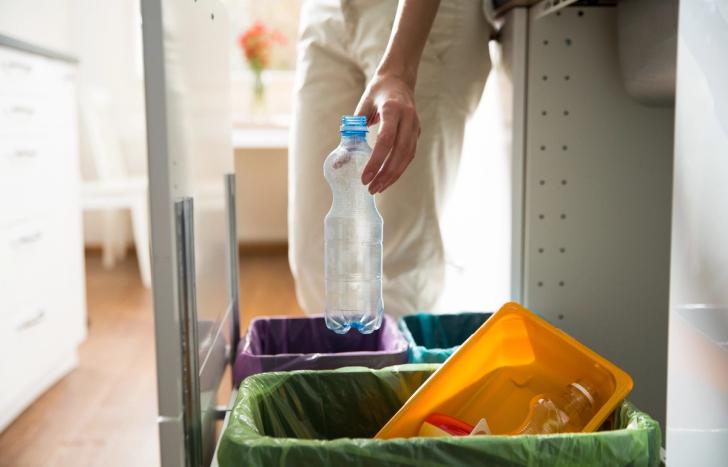
73 per cent of Brits admit to ‘wishcycling’, the practice of recycling items without knowing if they are recyclable.
A survey by Aura, a packaging sustainability consultancy, asked 2001 people across several countries about their waste disposal habits.
Although the problematic habit is prevalent in other countries surveyed, UK recyclers were found to be the most confused. In Canada, 69 per cent of respondents admitted to placing items in the bin without certainty that they could be recycled. This figure was 68 per cent in France and Germany, 66 per cent in Spain and 61 per cent in the US.
The survey found that the lowest proportion of wish-cyclers lived in Italy, with only 51 per cent admitting to making a guess.
Also known as ‘aspirational recycling’, this practice results in recycling contamination and causes whole batches to be sent to landfill. WRAP estimates that around 17 per cent of all recycling collected from UK households is contaminated.
Defra identified ‘wishcycling’ as a widespread issue in 2023 when they released a statement reiterating its ambition to make recycling easier. The introduction of ‘Simpler Recycling', aims to remove the confusion caused by the different approaches to recycling collections, by specifying materials that should be recycled at kerbside.
Participants blame businesses
UK Consumers blamed their ‘wishcycling’ on businesses for their poor labelling of packaging, with 88 per cent agreeing that producers should do more to help them recycle properly. The introduction of packaging extended producer responsibility
Although, UK’s packaging extended producer responsibility (pEPR) scheme places requirements on producers to place mandatory recycling labels on their products, the government has temporarily withdrawn the planned 2026 and 2027 deadlines for on-pack recycling information to allow for greater alignment with forthcoming European Union packaging waste legislation.
Italy, with the lowest-rate of wish-cycling, has relied on an industry-led EPR model since 1997, where producers pay a central packaging consortium (CONAI) to manage the recycling of their products. Germany had similarly operated the ‘Green Dot System’ since the early 1990s.
Gillian Garside-Wight, Aura’s director of consulting argued: “The onus is on everyone, including brands and retailers, to educate consumers. This should be through consistent and recognisable end-of-life labelling schemes, such as OPRL in the UK. This not only educates consumers but ensures a consistent message, removing ambiguity and instructing on the correct disposal method in each market.”
The US operates a state-by-state approach to recycling. Four states, Maine, Oregon, California and Colorado are currently in the process of implementing EPR systems for packaging.
The US reports an overall low participation recycling, which could be a reason for the lower rate of ‘wish-cycling’. According to the most recent data from the U.S. Environmental Protection Agency (EPA), the recycling and composting rate for all Municipal Solid Waste (MSW) is 32 per cent, compared with 44 per cent in the UK.
Consumer awareness differs between products
UK consumers were asked specifically which products offered clear guidance for they were recyclable. Soft drink packaging is seen as the most recyclable with 52 per cent of shoppers claiming they were clear. This was followed by toiletries (40 per cent), household products (37 per cent), e-commerce such as amazon boxes, (30 per cent) and fresh food (29 per cent).
Garside-Wight, added: “Soft drinks brands include some of the world leaders in sustainability and recycling, so it’s no surprise to see them lauded for their labelling that shows which of their products are recyclable.”
Participants were also asked which categories use the most excessive or unsustainable packaging, with takeaway food seen as the worst (19 per cent). This was followed by beauty and cosmetics (16 per cent), e-commerce providers (15.5 per cent), toys and games (15 per cent) and white goods (14 per cent).
Garside-Wright said: “There are always things they can do to improve. Food contamination from takeaways will prevent many people from recycling, so use less packaging. In addition, bathroom products like health and beauty are notorious for seeing far lower recycling rates than kitchen products, so educate consumers to do more.”
The research was conducted by Censuswide, with 500 respondents 1000 respondents from North America (500 from USA and 500 from Canada) 200 from UK and 801 from Europe.


Get our weekly digest
resource.co article ai

How will the government and DMOs address the challenges of including glass in DRS while ensuring a level playing field across the UK?
There's no easy solution to include glass in the DRS while maintaining a level playing field. Potential approaches include a phased introduction of glass, potentially with higher deposits to reflect its logistical challenges. The government and DMOs could incentivise innovation in glass packaging design and subsidise dedicated return points for glass-handling. Exemptions for smaller businesses unable to handle glass might also be necessary. Any successful solution will likely blend several approaches. It must address the differing priorities of devolved administrations, balance environmental benefits with logistical and cost implications, and be supported by robust consumer education campaigns emphasizing the importance of glass recycling.