

BB-REG-NET survey of more than 2,000 UK adults indicates strong demand for compostable packaging but identifies regulatory frameworks that continue to favour fossil-based plastics over renewable alternatives.
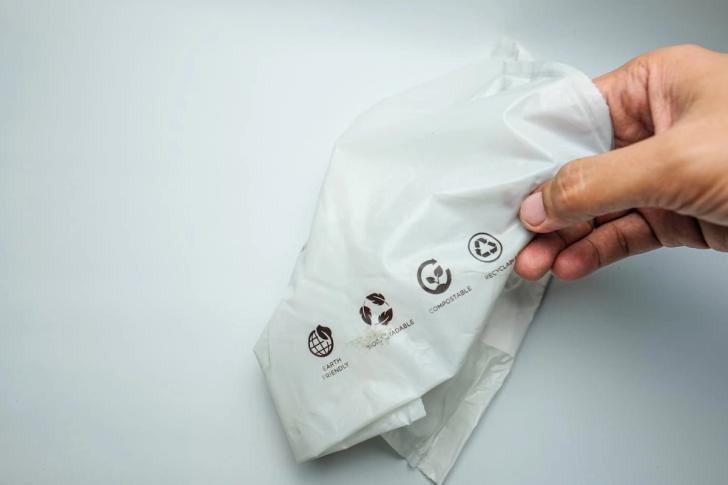
Three quarters of UK adults believe the government should encourage the use of compostable packaging, according to a nationally representative survey published today by BB-REG-NET.
The study, Beyond the Label: UK Public Attitudes and Policy Gaps on Bio-Based, Biodegradable, and Compostable Packaging, surveyed 2,062 UK adults and found that 64 per cent believe the government should provide financial incentives when renewable packaging options cost more than fossil-based alternatives.
Despite this backing, the research identifies fundamental policy misalignments that disadvantage bio-based materials. Bio-based raw materials cost two to three times more than fossil-based equivalents, yet current policy measures fail to address this gap. The Plastic Packaging Tax exempts fossil-based plastics containing 30 per cent recycled content but makes no provision for materials derived entirely from renewable biogenic sources.
Under the Recycling Assessment Methodology (RAM) for Extended Producer Responsibility (EPR), even independently certified compostable packaging is classified as not recyclable. This results in a doubling of base fees to approximately £520 per tonne, according to recent BB-REG-NET analysis, effectively increasing production costs by around 20 per cent.
"The findings reveal the British public wants to act more sustainably," said Dr Jen Vanderhoven, Chief Executive Officer at BBIA and Project Lead for BB-REG-NET. "To capitalise on this support, we must see stronger alignment between policy, regulatory standards and industry to build consistent and fair systems, which do not penalise bio-based and biodegradable materials. The upcoming Circular Economy Growth Plan provides the perfect opportunity to address current challenges and deliver change for the British public."
Consumer understanding and behaviour
The survey reveals that 53 per cent of respondents consider it important to find products packaged in the most environmentally friendly way, while 52 per cent state that knowing more about what packaging is made from would influence their buying decisions. However, only 27 per cent have intentionally purchased compostable-packaged products in the past year, citing limited availability, unclear disposal options, and price sensitivity as barriers.
Public understanding of recycling systems shows concerning gaps. While 58 per cent say labelling makes it easy to know how to dispose of packaging, just 22 per cent say they know what happens to their waste once collected, and only 48 per cent feel confident their recycling is actually recycled.
Confusion around flexible plastics such as crisp packets, bread bags, and pet-food pouches is particularly acute. The survey found 45 per cent incorrectly believe these materials can be recycled at kerbside, yet very few local authorities offer such services. Evidence from an Everyday Plastic tracker study suggests that 70 per cent of soft plastics reaching supermarket drop-off schemes are ultimately incinerated rather than recycled.
"The challenge facing compostable packaging today is not one of scientific credibility, but of policy alignment," comments Eilidh O'Connor, Head of Environmental at Vegware. "In food-contact applications, certified compostable packaging can play a valuable role by helping to capture food waste that would otherwise be lost from the system, allowing food and packaging to be treated together through composting."
She added: "However, current EPR and tax frameworks treat these materials as a problem rather than a solution. In some cases, they can unintentionally disadvantage renewable, bio-based materials, creating barriers to innovation, investment and wider adoption."
Disposal confusion
Compostable materials face similar challenges to traditional plastics in terms of consumer understanding. While 40 per cent believe compostable packaging breaks down properly when collected with food waste, 51 per cent remain unsure. Inconsistent local authority policies compound the confusion, with some councils accepting compostables in food waste bins while others explicitly exclude them.
When asked how they would dispose of items labelled "compostable", a total of 42 per cent indicated either garden waste or home composting, while only 22 per cent selected food-waste collection routes.
The research concludes that even if bio-based products were exempted from all fees and charges under EPR, the UK Emissions Trading Scheme, and the Plastic Packaging Tax, they would still be twice as expensive to produce on average as their fossil-based counterparts.
With UK-wide household food waste collections mandated by 2026 and a Circular Economy Growth Plan expected in early 2026, the report identifies an opportunity to integrate bio-based, biodegradable, and compostable materials into national policy.
The report calls for consistent sector-wide labelling to reduce consumer confusion, uniform collection routes for compostable materials, regulatory recognition of composting as a legitimate end-of-life pathway, and investment in composting infrastructure to match public demand.


Get our weekly digest
resource.co article ai

How will the government and DMOs address the challenges of including glass in DRS while ensuring a level playing field across the UK?
There's no easy solution to include glass in the DRS while maintaining a level playing field. Potential approaches include a phased introduction of glass, potentially with higher deposits to reflect its logistical challenges. The government and DMOs could incentivise innovation in glass packaging design and subsidise dedicated return points for glass-handling. Exemptions for smaller businesses unable to handle glass might also be necessary. Any successful solution will likely blend several approaches. It must address the differing priorities of devolved administrations, balance environmental benefits with logistical and cost implications, and be supported by robust consumer education campaigns emphasizing the importance of glass recycling.