

Carbon Cell raises pre-seed funding to develop biochar-based alternative from batch to continuous manufacturing.
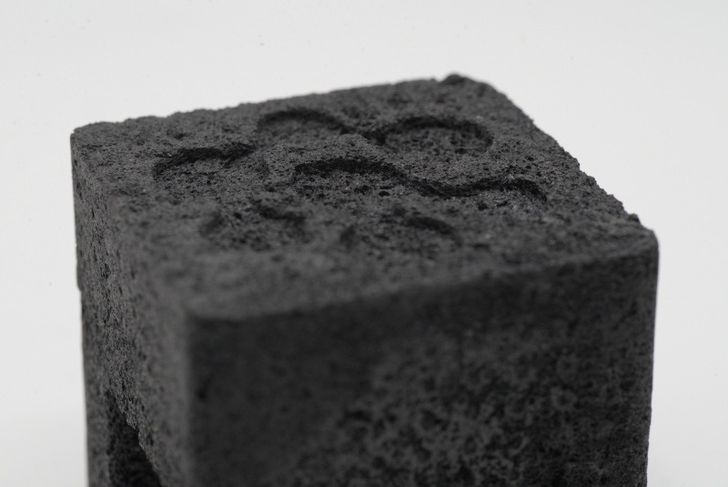
Carbon Cell, a London-based materials start-up, has secured £1.2 million in pre-seed funding to scale production of its plastic-free foam made from biochar and natural polymers.
The funding round was led by Green Angel Ventures and Counteract, with participation from HERmesa, RCA Design and Innovation S/EIS Fund, and One Planet Capital.
The company has developed a patent-pending foam material that combines biochar, which is created by processing waste biomass from agricultural co-products or materials, with natural polymers to create an alternative to conventional plastic foams.
The biochar is processed through pyrolysis in a low oxygen environment, preventing the biomass from burning and emitting carbon dioxide, or decomposing and releasing methane. Instead, the carbon is fixed into a stable form, creating a carbon-negative material.
It can be used to replace expanded polystyrene, expanded polypropylene, and PUR/PIR across sectors such as packaging and insulation. Carbon Cell confirmed that the material is compostable, and will degrade over time if it ends up in landfill.
Over 10 million tonnes of expanded polystyrene was produced last year, according to the company.
"Traditional foams have dominated for too long at the expense of our environment. At Carbon Cell, we're rethinking materials from the ground up, creating a carbon-negative foam that performs today and protects tomorrow," said Liz Lee, founder and CEO of Carbon Cell.
Scaling plastic-free foam production
The pre-seed funding will support Carbon Cell’s transition from batch processing to continuous production methods. The company plans to conduct manufacturing trials to validate the material's performance as a direct replacement for plastic foams.
Additionally, Carbon Cell is collaborating with early customers to deliver several thousand units of product for testing, evaluation, and trial purposes.
The investment builds upon existing grant finance from Innovate UK, SHIFT London, and Village Capital’s Green Tech EU, as well as early investment from Carbon13 and Queen Mary Social Venture Fund.
The company has also received support from various accelerators and programmes including Imperial’s Undaunted, London Social Ventures, GLA Better Futures Program, Creative Destruction Lab, Plus X Innovation CRLZ, EIT Food Accelerator, and Third Derivative.
"Carbon Cell shows what's possible when we rethink everyday materials. Their biochar foam replaces fossil-based packaging with a biodegradable alternative that cuts plastic waste, reduces emissions, and even stores carbon in the process," said Cam Ross, CEO of Green Angel Ventures.
Richard Barker, Partner at Counteract, added: "As an investor specialised in carbon removal, we love what Carbon Cell is doing with biochar. Creating new, planet-friendly materials in packaging and insulation is an exciting new sector with attractive growth prospects."


Get our weekly digest
resource.co article ai

How will the government and DMOs address the challenges of including glass in DRS while ensuring a level playing field across the UK?
There's no easy solution to include glass in the DRS while maintaining a level playing field. Potential approaches include a phased introduction of glass, potentially with higher deposits to reflect its logistical challenges. The government and DMOs could incentivise innovation in glass packaging design and subsidise dedicated return points for glass-handling. Exemptions for smaller businesses unable to handle glass might also be necessary. Any successful solution will likely blend several approaches. It must address the differing priorities of devolved administrations, balance environmental benefits with logistical and cost implications, and be supported by robust consumer education campaigns emphasizing the importance of glass recycling.