

The plant, located in Deeside, North Wales, will become UK’s largest recycled paper manufacturing facility, with the capacity to produce 750kt of containerboard and 67kt of tissue paper per year.
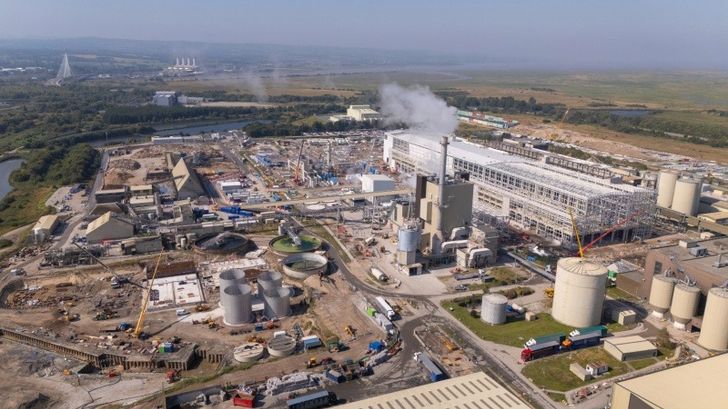
An investment of over £1 billion in the development of Shotton Mill in Deeside, North Wales, has been announced. This transformation is led by Turkish cardboard manufacturers, Eren Holding, who acquired Shotton Mill in 2021, and aims to turn the plant into the UK’s largest fibre reprocessing facility.
Shotton Paper mill will produce nearly 100 per cent recycled fibre products, powered by a hydrogen-fueled combined heat and power (CHP) plant on site. Its system will purify its own wastewater, which will be recycled back into the plant. The redeveloped facility is expected to reduce carbon emissions by the equivalent of those from 190,000 homes annually.
Welsh Government Economy, Energy and Planning Cabinet Secretary, Rebecca Evans, explained: “Once fully operational, instead of transporting paper waste many hundreds or thousands of miles overseas to be processed it will be turned into recycled packaging here in Wales.”
The plant is also expected to safeguard 147 existing jobs at the mill, which opened in 1983, and create a further 220 when fully operational.
Evans also noted the opportunities generated by the plant: “This is excellent news for Deeside and the wider Welsh economy and is a prime example of how, through our commitment to a prosperous, green economy we are able to attract investment, and create good, sustainable jobs whilst reducing waste.”
Government investment
Shotton Mill has received significant financial support from both the UK and Welsh governments, with the Welsh Government providing £13 million and the UK Export Finance (UKEF) offering £136 million. Cabinet members from both governments will visit the site to meet with members of Eren Holdings to discuss how the site’s transformation will work.
UK Secretary of State for Business and Trade, Jonathan Reynolds, commented: “This is a massive vote of confidence in the Welsh economy and this government’s plans to make Britain the destination of choice for investments in the industries of tomorrow. This transformative investment will not only support local skilled jobs but raise living standards in the community.”
Secretary of State for Wales, Jo Stevens, added: “Deeside has a long and proud history as one of Wales’ key industrial centres and this significant investment from our two governments will secure jobs and help bring a prosperous future for the area.
“We have reset the relationship between the UK and Welsh Government. Working together in close partnership we are delivering growth and good jobs to people across Wales.”
Shotton Mill redevelopment
The 85.6 hectare site is set to introduce a cardboard paper machine (PM3) and a tissue paper machine (TM1), replacing the recycled newsprint mill that was managed by UPM. Once functional, these machines will have the capacity to manufacture 750,000 tonnes of containerboard and 67,000 of tissue paper per year, and incorporate production technologies such as approach flow systems, a wire section, and a roll handling system.
The site will include facilities for fibre storage, an anaerobic digestion system for treating waste, a CHP plant, warehouses, and office spaces. Existing buildings like the material recycling centre and the biomass plant will be preserved.
Hamdullah Eren, Senior board member of the Eren Holding group, said: “Production at our new plant at Shotton Mill will be based on state-of-the-art technology, making this the most advanced paper campus in Europe. Our custom-built plant will deliver sophisticated and sustainable manufacturing solutions well into the 21st century.”
The investment made by UKEF has been made on the basis this will directly boost Welsh (and UK) exports, with an understanding this will be at a level of 10 per cent of the facility turnover within five years.


Get our weekly digest
resource.co article ai

How will the government and DMOs address the challenges of including glass in DRS while ensuring a level playing field across the UK?
There's no easy solution to include glass in the DRS while maintaining a level playing field. Potential approaches include a phased introduction of glass, potentially with higher deposits to reflect its logistical challenges. The government and DMOs could incentivise innovation in glass packaging design and subsidise dedicated return points for glass-handling. Exemptions for smaller businesses unable to handle glass might also be necessary. Any successful solution will likely blend several approaches. It must address the differing priorities of devolved administrations, balance environmental benefits with logistical and cost implications, and be supported by robust consumer education campaigns emphasizing the importance of glass recycling.