

A new ‘credible’ pay offer from local authority leaders COSLA has suspended council work strikes in Scotland, due to go ahead from 6 to 13 September.
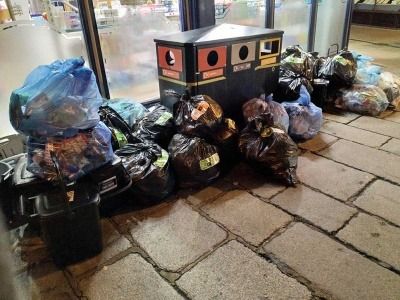
An agreement to suspend strikes in waste services and education was made by the three trade unions taking part in industrial action – Unison, Unite and the GMB.
The improved offer from COSLA – secured after negotiations with the First Minister, Deputy First Minister, and the Scottish Government – will now be put forwards to Union members.
As a result of the revised offer, workers earning up to £20,500 could receive an increase of £2,000 a year. Unite has calculated this offer to be equivalent to a 10-11 per cent increase for the lowest paid, who are estimated to be around 18 per cent of the total workforce.
Those earning between £20,500 to £39,000 a year (based on a 36-hour working week as opposed) will receive a rise of £1,925. According to Unite, this is the equivalent to an increase of eight per cent for those earning around £24,000 – an offer that ‘would also be backdated to April’.
Under the revised offer there will also be a five per cent increase for those earning between £39,000 to £60,000. However, the maximum increase for workers earning above £60,000 will be £3,000.
These calculations are based on a 36-hour working week, as opposed to a 37-hour week – one of the ‘sticking points’ UNISON says the offer has overcome. The Union also presented the £600 million pay envelope increase as a victory for its members.
COSLA’s latest pay offer will enable the removal of SSSC (social care registration fees) and the addition of one extra day's annual leave.
Further estimations from Unite highlight that negotiators have been able to secure ‘around an extra £460 million’ for local government since the dispute in waste services began in Edinburgh on 18 August.
Wendy Dunsmore, Unite’s lead negotiator for local government, said: “After the latest round of intensive talks a new credible offer has finally been put on the table by COSLA. Unite wants to acknowledge the First Minister’s direct involvement as a primary reason for the breakthrough.
“The offer on the table is fully consolidated and as such there will be more cash in the pot going forward for local government workers. It provides a degree of security for the lowest paid with a flat rate offer of £2,000 which is an uplift worth around 10-11 per cent.
“We now have a credible offer which our local government representatives can recommend to the membership for acceptance.”
Keir Greenaway, GMB Scotland Senior Organiser for Public Services, added: “GMB has been very clear that more must be done for the lowest paid in local government and this latest offer delivers a significant amount of consolidated money for these workers, including the frontline refuse and schools’ staff that everyone depends on.
“It’s not a perfect offer but it is the view of GMB Scotland’s local government committee that it’s worthy of members' consultation and their acceptance, but ultimately our members whose campaigning and strike actions have improved these terms will have the final say.
“In the meantime, we have agreed to suspend all planned strike action so this consultation process can take place and our GMB organisers and workplace reps will be visiting as many workplaces as possible to engage our members on this.
“Most importantly, we want to pay tribute to our members. Strike action is not easy, it requires sacrifice and solidarity to deliver outcomes that make work better, and they have fought long and hard for an improved offer to help confront this cost-of-living crisis.”
Johanna Baxter, UNISON head of local government, also said: “This offer is a victory for UNISON members. It has taken eight months and the industrial might of UNISON members in schools and early years and waste and recycling workers to drag £600 million out of [the] Scottish government and COSLA and into the pockets [of] hardworking people.
“COSLA originally offered two per cent, then 3.5 per cent, then five per cent – we now we have £600m on the table, which is a 7.5 per cent increase to the total pay bill and 87 per cent of our council workers will receive fully consolidated increases between five per cent to ten per cent.
UNISON want to get this money into the pockets of council workers now while we continue the campaign to support [people] through the cost of living crisis.”
Commenting on the positive response from Union and Council leaders Councillor Katie Hagmann, COSLA’s Resources Spokesperson, added: “Firstly I would like to thank all our Trade Union colleagues for the constructive discussions.
“The revised offer made shows that Scotland’s Council Leaders have listened to the concerns of our workforce and have responded positively.
“Council Leaders have said consistently throughout these negotiations that we very much value and are grateful to the Local Government Workforce.
“We have sent letters to our union colleagues following today’s meeting and hope that this enables strike action to be suspended and allows our workforce to get back to doing what they do best, delivering [high-quality] essential services for the people within our communities right across Scotland.”


Get our weekly digest
resource.co article ai

How will the government and DMOs address the challenges of including glass in DRS while ensuring a level playing field across the UK?
There's no easy solution to include glass in the DRS while maintaining a level playing field. Potential approaches include a phased introduction of glass, potentially with higher deposits to reflect its logistical challenges. The government and DMOs could incentivise innovation in glass packaging design and subsidise dedicated return points for glass-handling. Exemptions for smaller businesses unable to handle glass might also be necessary. Any successful solution will likely blend several approaches. It must address the differing priorities of devolved administrations, balance environmental benefits with logistical and cost implications, and be supported by robust consumer education campaigns emphasizing the importance of glass recycling.