

East Dunbartonshire Council has renewed a two-year contract to send its food waste to Scotland’s first large-scale recycling facility, to be used to generate renewable energy.
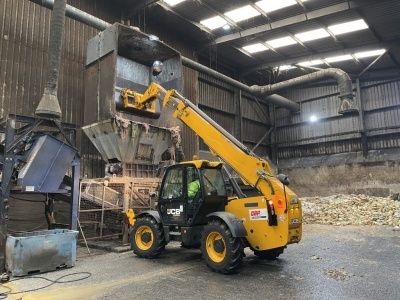
At Scottish Water Horizons’ Deerdykes Bioresources Centre, near Cumbernauld, the municipality’s waste undergoes anaerobic digestion – a process which uses bacteria to break down organic matter. As a result, gas is harnessed from food waste, with the aim of generating green energy using a combined heat and power engine (CHP).
On the back of the contract renewal, the partnership between Scottish Water Horizons and East Dunbartonshire Council hopes to help drive positive behaviours in recycling food waste. Both teams involved have expressed their keenness to raise awareness of the benefits of properly segregating and recycling waste.
Since it opened in 2010, The Deerdykes Bioresources Centre in North Lanarkshire states it has generated more than 50 GWh of green electricity – ‘the equivalent of powering 13,500 homes for a year’.
Colin Lindsay, Operations Manager at Scottish Water Horizons, said: “A less sustainable alternative is to use comingled waste – mixing food and garden rubbish – which goes to composting.
“This generates greenhouse gases – including methane – which are harmful to the environment. Sending waste to a food waste recycling facility which uses anaerobic digestion avoids this issue whilst generating sustainable energy.
“Last year East Dunbartonshire sent 3000 tonnes of food waste to us for processing, that’s the equivalent of more than a quarter of a million weekly food shops, reducing a massive 1850 tonnes of carbon.
“This has been a great effort on East Dunbartonshire’s behalf in encouraging the public to separate their food waste, and we are confident through working together that we can build on that success in the years ahead.”
Ann Davie, Depute Chief Executive, East Dunbartonshire Council added: “We’re very proud of the fact that our residents have consistently been amongst the top recyclers in the country.
“By renewing this contract, we are demonstrating the Council’s commitment to ensuring as much food waste as possible in East Dunbartonshire is turned into renewable energy and not sent to landfill.
“We are currently running a campaign to raise awareness locally of what items go in each of our bins to increase our area’s recycling even further.
“So far the response from our residents has been terrific which shows just how passionate they are about this issue.”


Get our weekly digest
resource.co article ai

How will the government and DMOs address the challenges of including glass in DRS while ensuring a level playing field across the UK?
There's no easy solution to include glass in the DRS while maintaining a level playing field. Potential approaches include a phased introduction of glass, potentially with higher deposits to reflect its logistical challenges. The government and DMOs could incentivise innovation in glass packaging design and subsidise dedicated return points for glass-handling. Exemptions for smaller businesses unable to handle glass might also be necessary. Any successful solution will likely blend several approaches. It must address the differing priorities of devolved administrations, balance environmental benefits with logistical and cost implications, and be supported by robust consumer education campaigns emphasizing the importance of glass recycling.