

Scotland's community-based reuse network generates 2,600 jobs, 8,400 volunteer placements, and delivers £138 million turnover with close to £1 billion in social value, demonstrating the sector's maturation from small-scale to a mainstay of circular economy services.
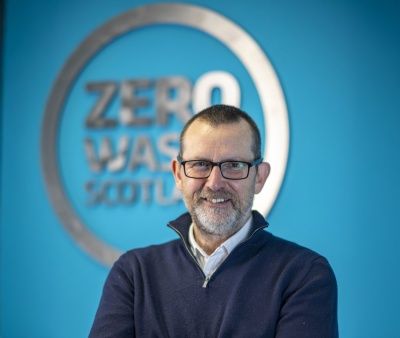
In Scotland, we're fortunate enough to have a burgeoning reuse sector that is helping us in our transition to a circular economy.
It's a vibrant ecosystem of charities, social enterprises, and circular businesses dedicated to giving products, resources, and materials a second lease of life.
But the benefits of reuse go much further. As well as the obvious environmental benefits there are significant social benefits too. Many reuse organisations are rooted in their communities, fostering human connection, inclusion, and wellbeing. By offering affordable goods and providing jobs and training they offer an anchor for social cohesion, community wealth building and community resilience.
What were once perceived as small-scale efforts are now more commonplace than ever before. From refurbished furniture outlets and bike repair shops opening their doors on the high street, to city-based tool libraries becoming more popular than ever.
In fact, Circular Communities Scotland's 2025 impact report showed that the nation's community-based reuse network accounted for 2,600 jobs, 8,400 volunteers and placements, achieved annual carbon savings of 131,772 tCO2 e, and boasted an impressive £138 million turnover. In social value terms this all amounts to close to £1 billion worth of impact – something that is too big to ignore.
It was therefore an absolute pleasure to attend this year's Circular Communities Scotland annual conference in Glasgow earlier this week and share some thoughts on what feels like a 'new era' for reuse in Scotland. With key government policies such as the proposed CE Strategy and the Community Wealth Building Bill signalling not only appreciation for community based action, but clear actions to embed and support further development to ensure our communities are woven into the shared prosperity that our economic ambitions seek.
Our partnership with CCS has constantly evolved over the years and their work continues to deliver impressive benefits to reuse and repair organisations, including the Share and Repair Network, which has demonstrated real progress and expansion since its inception in June 2022. As of March 2025, the network boasted 125 member organisations, with almost 90 currently active projects.
It's this community spirit that also inspired the creation of one of Zero Waste Scotland's most significant contributors to the professionalisation and growth of Scotland's reuse sector. The Revolve Certification Programme launched in 2011 and set out to raise standards across the country's reuse organisations, giving shoppers confidence that second-hand didn't mean second best. It has since provided a quality stamp to over 200 shops across charity, third, public, and private sectors, creating a robust network of high-calibre reuse retailers and helping transform public perceptions of buying pre-loved goods.
The formal certification of organisations has now evolved, bringing Revolve's Certification Programme to a natural end and graduating into the Revolve Knowledge Hub, where over a thousand businesses are regularly accessing toolkits and resources to embolden their circular efforts through successfully upskilling their teams, improving retail practices, and embedding a culture of continuous review and improvement.
These sustained efforts, along with many more collaborations, have morphed our reuse sector into the assured, tooled, and independently driven force we know today. This landscape maturation has proven how moving from a model of offering one-to-one business support and arm's length validation to a more dynamic, real time and self-help solution can achieve increased impact, greater self-sufficiency and increased financial sustainability.
This new found confidence was best demonstrated by the reuse organisations in the room in Glasgow. The diversity of operations and the sheer geographical spread is testament to a sector stepping forward with renewed gusto and purpose to ensure that our transition to a circular economy is one that is not about the realignment of technical systems. It is the re-imaging of social systems – encouraging people to think differently about ownership, value, and consumption, helping to normalize sustainable behaviours to foster real community collaboration, mutual support and local economic resilience.
Community reuse models in action
We heard from New Start Highland, a long-established charity and social enterprise based in Inverness. Their new Training and Reuse Village is a first in Scotland – a dedicated large-scale hub combining circular economy infrastructure with social support, offering a variety of pre-loved retail outlets, a tool library, a bike repair hub and a café, as well as co-ordinated training opportunities including hospitality (via the training café/kitchen), and skills in repair, reuse, and upcycling of goods.
In contrast and at the other end of the country in Langholm in the Scottish Borders, we heard from Creation Mill CIC – a newly created business focusing on textile reuse, education, and sustainable craft. Their workshops and training sessions are designed around zero-waste, teaching traditional sewing skills and modern textile craft in a way that emphasizes sustainability: reusing, repairing, and rethinking how textiles are made and consumed. Mental health and wellbeing are woven into their mission through mindful crafting sessions like "knit and natter", and the creation of safe, inclusive spaces where people can connect, express themselves, and work through isolation or stress.
Both New Start Highland and Creation Mill illustrate how reuse isn't just about waste diversion – it's about people. Their models link circular economy practices with training, mental health, employability, and social cohesion. In their own way they show scalability and local embedding: whether this is a physical reuse village or through leveraging local partnerships to maximise impact and reach. This is what sits behind the figures that impress – the tangible social value told through the individual stories of the people involved and supported through circular activity. Something we should not forget but seek to cherish and promote as our circular ambitions scale and flourish.
Our recent Circular Economy (Scotland) Act and proposed Circular Economy Strategy make clear that the circular economy has moved from concept to practice and is now woven into how we see our future economy evolving. But it is up to us just how much of this evolution will be entrenched in our communities to make the most of the new opportunities for local social and economic benefit
Our journey to date is a testament to what we can achieve when passion meets purpose. Not only have we built strong foundations – from a bustling network of reuse champions to a growing public appetite for sustainable options – but we now have the supporting legislative frameworks to translate ambitions into reality.
The story of Scotland's reuse sector is one of progress, pride, potential, and pace. Let's celebrate how far we've come, while boldly imagining how much further we can still go.


Get our weekly digest
resource.co article ai

How will the government and DMOs address the challenges of including glass in DRS while ensuring a level playing field across the UK?
There's no easy solution to include glass in the DRS while maintaining a level playing field. Potential approaches include a phased introduction of glass, potentially with higher deposits to reflect its logistical challenges. The government and DMOs could incentivise innovation in glass packaging design and subsidise dedicated return points for glass-handling. Exemptions for smaller businesses unable to handle glass might also be necessary. Any successful solution will likely blend several approaches. It must address the differing priorities of devolved administrations, balance environmental benefits with logistical and cost implications, and be supported by robust consumer education campaigns emphasizing the importance of glass recycling.