

Environmental Standards Scotland reaches agreement with Scottish Government requiring development of indicative waste treatment cap and integration into SEPA permitting regulations after investigation identified gaps allowing capacity increases without proper oversight.
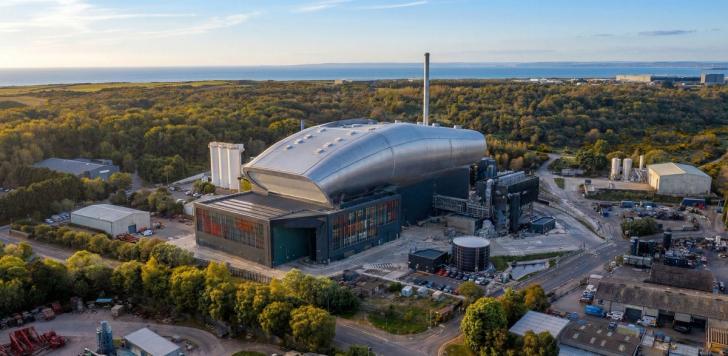
Environmental Standards Scotland (ESS) has reached an agreement with the Scottish Government on remedial actions to prevent excess incineration capacity, following an investigation that identified ineffective implementation of planning and environmental laws controlling the sector.
The Scottish environmental watchdog found that existing controls allowed incineration capacity to increase without adequate consideration whether the expansions have aligned with Scotland's residual waste management needs. The investigation concluded that the absence of an indicative cap on incineration capacity rendered planning and regulatory controls potentially ineffective.
Scotland incinerated 1.86 million tonnes of waste in 2024, representing a 354 per cent increase since 2011. This has risen despite a 2022 moratorium on new facilities, with 18 permitted incineration sites now operating across the country.
The Scottish Government has committed to developing an indicative residual waste treatment cap through Scotland's Residual Waste Plan, due to be published in 2027. The cap will also be integrated into the Scottish Environment Protection Agency's (SEPA) permitting regulations, ensuring national capacity is considered when assessing all environmental authorisations.
Regulatory gaps identified
ESS identified two mechanisms that control incineration capacity at operational and planned facilities, but found both contained loopholes allowing capacity increases without proper oversight.
Under planning controls, physical extensions require new planning permission, and operators must apply to vary conditions under the Town and Country Planning (Scotland) Act 1997, where capacity limits exist. However, ESS found that capacity could increase at existing facilities without structural changes or Section 42 applications if original consents lacked capacity conditions.
The Dunbar Energy Recovery Facility illustrated these gaps when its permitted capacity increased from 325,000 to 390,000 tonnes per annum in 2023 without new planning consent or condition variations.
ESS also found that while environmental regulations require SEPA to include total waste incineration capacity in authorisations, SEPA does not consider national capacity when determining or varying authorisations for individual facilities.
"The absence of national capacity as a material consideration when setting capacity at individual facilities creates the potential for incineration capacity to increase without assessing if this aligns with Scotland's overall residual waste management needs," the ESS report stated.
Overcapacity concerns
A 2022 independent review commissioned by the Scottish Government concluded that proposed incineration capacity exceeded Scotland's projected future needs. The review warned that excess capacity could create "lock-in" effects where long-term investment in incineration infrastructure undermines preferable waste management options including waste prevention, reuse and recycling.
Zero Waste Scotland estimated in 2024 that if all proposed incineration capacity is built and recycling rates improve as expected, Scotland could face excess capacity of approximately 10 to 18 per cent from 2027 onwards.
Waste incinerated by disposal - where waste is burned primarily to reduce volume rather than generate energy - increased from 0.17 million tonnes in 2018 to 0.52 million tonnes in 2024, according to SEPA data. This disposal method, the least efficient of the three incineration approaches, accounted for 28 per cent of total waste incinerated in Scotland in 2024.
Mark Roberts, Chief Executive of ESS, commented: "While well-regulated incineration has a role in managing unavoidable residual waste, we must prevent the potential harm caused from over-reliance on this method of waste management.
"The Scottish Government's commitment to develop an indicative cap and ensuring this is reflected in SEPA's permitting regulations, will provide a strategic benchmark for decision making, reinforce the objectives of the waste hierarchy and prevent overcapacity that could undermine wider recycling and waste reduction efforts."
Environmental group response
Environmental groups requested ESS to investigate in June 2024, citing concerns that the Scottish Government had failed to implement a key recommendation from the 2022 review to develop an indicative residual waste management cap.
Friends of the Earth Scotland and UK Without Incineration Network formally raised concerns with the Scottish Government in 2023 about incineration overcapacity. Since 2023, new incinerators have started operations in Aberdeen, Grangemouth and Fife, with facilities almost ready in North Ayrshire and Glasgow. These five incinerators increase Scotland's capacity by almost one million tonnes.
Kim Pratt, Senior Circular Economy Campaigner at Friends of the Earth Scotland, said: "This report is a clear warning that Ministers must take immediate action to halt incineration growth which can harm both people and nature."
"For years, every decision which the Scottish Government could have used to reduced capacity has been used to expand it instead. Communities in Aberdeen, Fife, Grangemouth, Irvine and Glasgow must now live with these waste burning monsters on their doorsteps, belching out pollution for decades to come," she added.
Shlomo Dowen, UK Without Incineration Network's National Coordinator, said: "Far too much of what is currently incinerated is material that could and should be recycled or composted. Diverting this from incinerators would help improve resource efficiency, enhance soil quality by returning nutrients to the earth, reduce harmful climate emissions, and promote the circular economy."
The Scottish Government accepted the 2022 review recommendations and committed to developing a cap, but the measure was not implemented. During ESS enquiries, the Scottish Government explained the delay was due to the need for further and more robust data. Work to improve waste data quality is underway, including digital waste tracking and engagement with partners.
ESS has requested a formal implementation plan from the Scottish Government setting out how and when the agreed actions will be completed, including key milestones, responsible parties and mechanisms for public reporting. The watchdog has said it will monitor delivery of the agreed remedial actions and provide public updates on progress.


Get our weekly digest
resource.co article ai

How will the government and DMOs address the challenges of including glass in DRS while ensuring a level playing field across the UK?
There's no easy solution to include glass in the DRS while maintaining a level playing field. Potential approaches include a phased introduction of glass, potentially with higher deposits to reflect its logistical challenges. The government and DMOs could incentivise innovation in glass packaging design and subsidise dedicated return points for glass-handling. Exemptions for smaller businesses unable to handle glass might also be necessary. Any successful solution will likely blend several approaches. It must address the differing priorities of devolved administrations, balance environmental benefits with logistical and cost implications, and be supported by robust consumer education campaigns emphasizing the importance of glass recycling.