

The Scottish Government is to implement legislation that will see the majority of single-use plastic products being banned from 1 June 2022.
Laid before the Scottish Parliament, the new regulations will see the following items being prohibited, unless particular exemptions apply: plastic cutlery (forks, knives, spoons, chopsticks); plates; straws; beverage stirrers; balloon sticks; and food containers and cups made of expanded polystyrene, including their covers and lids.
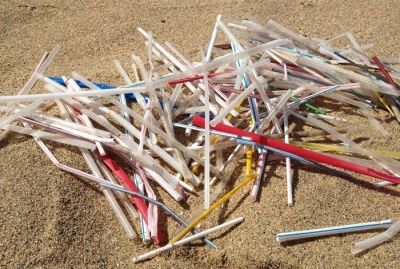
The introduction of the ban comes after a twelve-week public consultation which concluded in January 2021 and resulted in the publication of draft regulations in March 2021. Whilst regulations make it unlawful to commercially supply all of the listed items, exemptions will apply to single-use plastic straws and balloon sticks in certain circumstances.
Exemptions
In terms of plastic straw exemption, immunity is applied in the case of those who require them either to eat and drink independently, or for specific medical purposes. This means that single-use plastic straws will still be available to purchase at pharmacies, as well as being given at request within hospitality venues, hospitals, care homes, schools, early learning premises, and prisons. They will also be supplied as medical devices or by any person providing personal care or support.
As for balloon stick exemption, exceptions are applicable within industrial and professional usage in which the items are not handed out to individual consumers.
The transition to banning single-use plastics
The Scottish Government is now encouraging businesses that will be affected by the changes to consider managing stock levels of banned items, so as to avoid waste. Companies are being motivated to shift to alternatives, particularly those which are reusable, in order to use up single-use plastics stock by the time regulations come into effect – they are being diverted away from merely switching to other single-use items, however, as these also have their own environmental impacts.
There are high levels of public support for the transition to reusable alternatives, the Scottish Government states. In a recent survey, 77 per cent of Scots were reported to be concerned with the amount of single-use plastic and single-use packaging used across the country.
To usher in the transition, the Scottish Government has already consulted on introducing charges for the provision of single-use disposable items. The parliamentary body intends to create a working group designed to support the implementation of a fee on single-use beverage containers in order to initiate this change. The Scottish Government will also consider ways through which to reduce the consumption of on-the-go food containers by engaging with various stakeholders.
The transition will also be facilitated by a nationwide approach to developing extended producer responsibility (EPR) schemes for packaging, led by the Department for Environment, Food and Rural Affairs (Defra). With a consultation on the initiative running earlier in 2021, the scheme will bolster the Scottish Government’s commitment to improving ‘the collection, recycling and recyclability of plastic and other packaging not covered by these single-use plastics market restrictions.’
Circular Economy Minister, Lorna Slater, commented: “We are turning promise into action and banning some of the most problematic single-use plastic items in Scotland. Every year, hundreds of millions of pieces of single-use plastic are wasted in this country. They litter our coasts, pollute our oceans and contribute to the climate emergency. That has to end and this ban will be another step forward in the fight against plastic waste and throwaway culture. This is another example of the sort of bold action that is needed if we are to deliver on the commitments that are being made at COP26.”
“Crucially, the legislation includes exemptions for single-use plastic straws, to make sure that those who need them for independent living or medical purposes can still get access to them. However, the ban is at risk from the UK Internal Market Act, which effectively exempts any items that are produced in or imported via another part of the UK. I will be writing to the UK government to ask that they take the necessary steps to ensure the integrity of this ban.”


Get our weekly digest
resource.co article ai

How will the government and DMOs address the challenges of including glass in DRS while ensuring a level playing field across the UK?
There's no easy solution to include glass in the DRS while maintaining a level playing field. Potential approaches include a phased introduction of glass, potentially with higher deposits to reflect its logistical challenges. The government and DMOs could incentivise innovation in glass packaging design and subsidise dedicated return points for glass-handling. Exemptions for smaller businesses unable to handle glass might also be necessary. Any successful solution will likely blend several approaches. It must address the differing priorities of devolved administrations, balance environmental benefits with logistical and cost implications, and be supported by robust consumer education campaigns emphasizing the importance of glass recycling.