

Major charity textile collector pauses HWRC contracts from 22 December amid operational challenges, adding to calls for government intervention as the UK's used textiles sector faces sustained financial pressures.
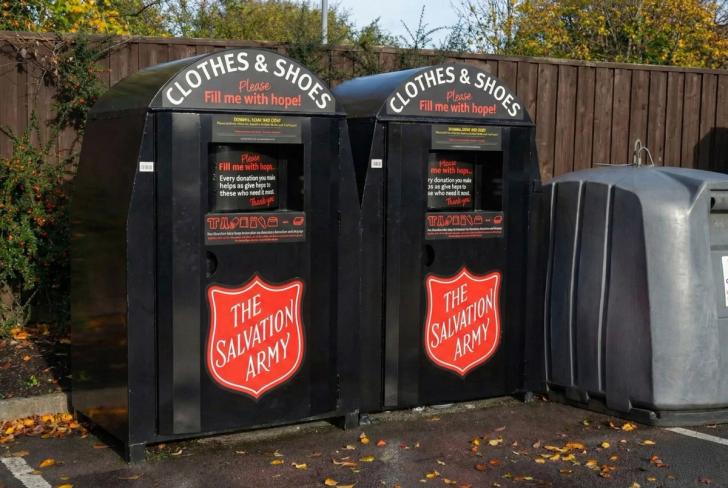
The Salvation Army Trading Company (SATCoL) has suspended textile collections from household waste and recycling centres (HWRCs) across the UK, citing difficulties managing the volume and quality of clothing donations.
Local authorities were informed that contracts would be paused from 22 December 2025 until the end of January 2026, traditionally the busiest period for textile donations. SATCoL, the trading arm of The Salvation Army and one of the UK's largest second-hand textiles merchants, confirmed it will conduct a full review of its position in February.
"The volume of donations has soared and so we have been forced to take urgent action to manage the expected volumes in the peak month of January," a SATCoL spokesperson said. "This is not a decision we took lightly but unless we reduce the volume of clothes for processing, we face operational challenges which would impair our ability to generate money for The Salvation Army."
The spokesperson added: "We know this will inconvenience people trying to donate their clothes to an important cause, but we hope the public understand that like many charity collectors, SATCoL is experiencing real challenges to manage the volume and quality of clothing donations. We are also liaising closely with local authorities and will closely monitor the situation."
The suspension follows warnings from WRAP earlier this year that the UK's used textiles sector is operating at an unsustainable financial loss, with local authorities potentially facing an additional £64 million per year in disposal fees if textile reuse infrastructure collapses.
Local authority response
The Local Authority Recycling Advisory Committee (LARAC) expressed disappointment at the development, noting it has been engaged in long-running discussions about declining markets for post-consumer textiles.
Cathy Cook, LARAC Chair, said: "Whilst the Salvation Army has cited global challenges as a result of geopolitical instability, the long running issues of limited UK infrastructure, reliance on overseas market, and poor-quality material will be no surprise to the sector."
Cook added that the impact on local authorities working with the Salvation Army to operate textile banks at their HWRCs will be evident. "While we hope that this is not a sign of further challenges for UK textiles recycling, it should act as a signal to government that action needs to be taken to support this sector if circular economy and net zero targets are to be achieved," she said.
LARAC called for the government to introduce an Extended Producer Responsibility (EPR) scheme for textiles to help address the ongoing difficulties faced by the sector.
Market pressures
The suspension comes amid sustained difficulties in global markets for used textiles. Prices per tonne for textile bank donations have fallen 58 per cent over the past decade, according to WRAP data, while increased volumes of low-value fast fashion entering the waste stream have reduced the proportion of material suitable for resale.
Where charities, local authorities and HWRC operators could previously expect to receive income from textile collections, many collectors are now only able to offer a free-of-charge service at best. Some in the sector have indicated they may need to consider charging for collections if market conditions do not improve.
The EU's revised Waste Framework Directive, which entered into force in October, gives member states 30 months to establish EPR schemes for textile and footwear products. The UK Government has indicated it will consult on measures for textiles, though no firm timetable has been set.
SATCoL told local authorities that it will communicate with councils about the removal of any on-site assets, though equipment will otherwise remain in place during the suspension period.


Get our weekly digest
resource.co article ai

How will the government and DMOs address the challenges of including glass in DRS while ensuring a level playing field across the UK?
There's no easy solution to include glass in the DRS while maintaining a level playing field. Potential approaches include a phased introduction of glass, potentially with higher deposits to reflect its logistical challenges. The government and DMOs could incentivise innovation in glass packaging design and subsidise dedicated return points for glass-handling. Exemptions for smaller businesses unable to handle glass might also be necessary. Any successful solution will likely blend several approaches. It must address the differing priorities of devolved administrations, balance environmental benefits with logistical and cost implications, and be supported by robust consumer education campaigns emphasizing the importance of glass recycling.