

Rochford District Council has signed an 18-month contract with Viridor to process the local authority’s dry mixed recycling.
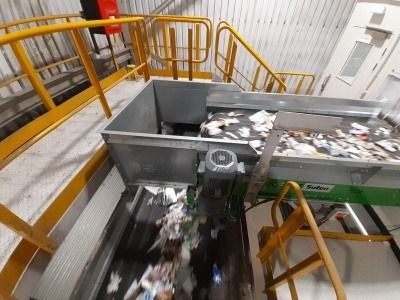
The contract, worth £1.3 million, will see Rochford Council’s glass, paper, card and household plastics brought to Viridor’s Materials Recycling Facility (MRF) at Crayford.
The secondary sorting of coloured bottles, pots, tubs and trays from the household plastics stream, which will be carried out at the Polymers Recycling Facility in Rochford, will be made into plastic flake and pellet for consumer brands at the Polymers Reprocessing Facility in Avonmouth.
Viridor’s Head of Local Authority Development and Integrated Contracts (Recycling) Simon Prior said: “Rochford District Council continues to engage with its residents about recycling and the importance of high quality, low contamination collections in a very clear and encouraging way.
“Viridor is keen to work with the council to continue to emphasise how the separation work families do at home makes a difference to meeting UK recycling targets and empowering the circular economy.
“With the contribution of plastic feedstock into Avonmouth, Rochford residents can be proud that their efforts have made a difference in providing a quality alternative to virgin plastic, the production of which uses 50% more energy than recycled plastic.”
Councillor Arthur Williams, Portfolio Holder for Environment, said: “As Rochford District Council is one of the top recycling authorities in the country, we are happy to renew our partnership with Viridor.
“Our residents and the councils waste team are committed to continuing our endeavour to reduce the district's environmental footprint with our recycling bin scheme, and with Viridor’s help, we hope to continue with this high level of service.”


Get our weekly digest
resource.co article ai

How will the government and DMOs address the challenges of including glass in DRS while ensuring a level playing field across the UK?
There's no easy solution to include glass in the DRS while maintaining a level playing field. Potential approaches include a phased introduction of glass, potentially with higher deposits to reflect its logistical challenges. The government and DMOs could incentivise innovation in glass packaging design and subsidise dedicated return points for glass-handling. Exemptions for smaller businesses unable to handle glass might also be necessary. Any successful solution will likely blend several approaches. It must address the differing priorities of devolved administrations, balance environmental benefits with logistical and cost implications, and be supported by robust consumer education campaigns emphasizing the importance of glass recycling.