

During Prime Minister’s Questions yesterday (26 October), new PM Rishi Sunak was questioned by Dr Andrew Murrison, MP for South West Wiltshire, over the proposed Westbury Energy from Waste (EfW) plant.
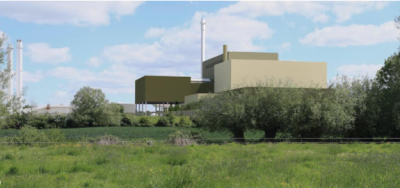
Murrison asked Sunak to ‘signal his intent to continue promoting public health, net zero and the environment by placing a moratorium on any more unwanted, unnecessary toxic waste burners’. He noted that the Government is currently reviewing its air quality targets.
Sunak responded that while local authorities are responsible for such issues, all ‘large incinerators’ must comply with strict emission limits and only receive permits if plants ‘don’t damage human health’. The new PM also said that having visited Murrison’s constituency over summer, he knew him to be a ‘vociferous campaigner’ for the issue.
Wiltshire EfW Plant
Northacre Renewable Energy Limited (NREL) submitted a renewed planning application to Wiltshire council in 2020 for the site, which is set to cost £200 million. NREL is co-owned by the Bioenergy Infrastructure Group and Wiltshire-based waste management company, The Hills Group.
The proposed plant will employ a conventional moving grate combustion process and will have an annual tonnage of 234,000 – consisting of residual non-recyclable waste from businesses and households.
The renewed plans show an energy-generating capacity of 25.6 megawatts (MW), producing around 201,000MW annually.
NREL currently has permission for a gasification-based plant on the same site. Work on this site has begun.
The process so far
The site in Westbury has been allocated for waste processing and is just several 100 metres away from the town. The renewed plan was provisionally approved in 2021 by then Secretary of State, Michael Gove.
In July 2022, the Wiltshire Council’s Strategic Planning Committee voted against approving the planning application as ‘it did not represent sustainable development’ and it was passed to an independent planning inspector. The Committee had originally approved the plans in 2021 but revisited its position after public outcry. A final decision is expected in November.
Public response
The response from the public to the plans has largely been negative with thousands of residents and campaigners in opposition.
During a public consultation, Dr Murrison spoke of neighbouring dairy farm Arla’s statement ‘in clear and unambiguous terms’ that the new facility would be a threat to its operations.
Mayor of Westbury, Sheila Kimmins told the BBC in May that she has never seen the town ‘as united as it has been around this issue’. She continued: “It would bring absolutely nothing other than add to the climate emergency, add to air pollution, add to traffic on the roads”.


Get our weekly digest
resource.co article ai

How will the government and DMOs address the challenges of including glass in DRS while ensuring a level playing field across the UK?
There's no easy solution to include glass in the DRS while maintaining a level playing field. Potential approaches include a phased introduction of glass, potentially with higher deposits to reflect its logistical challenges. The government and DMOs could incentivise innovation in glass packaging design and subsidise dedicated return points for glass-handling. Exemptions for smaller businesses unable to handle glass might also be necessary. Any successful solution will likely blend several approaches. It must address the differing priorities of devolved administrations, balance environmental benefits with logistical and cost implications, and be supported by robust consumer education campaigns emphasizing the importance of glass recycling.