

Alliance to End Plastic Waste report maps recycling challenges and circularity enablers for flexible packaging across Europe and North America, proposing dedicated large-scale sorting facilities as a foundation for systems change.
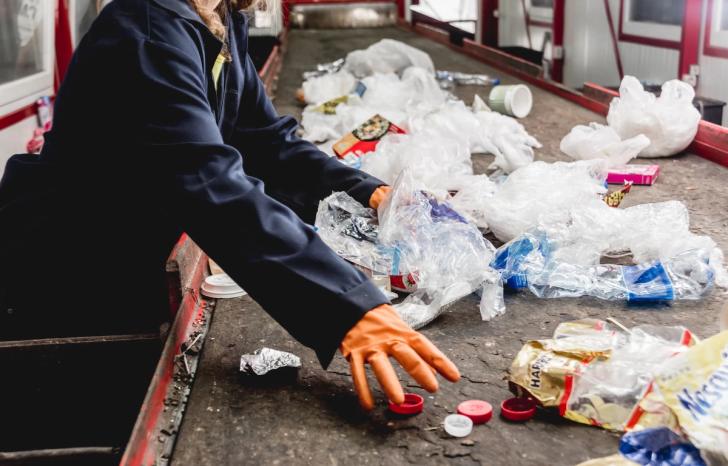
Dedicated large-scale Plastics Recovery Facilities processing at least 100,000 tonnes per year should replace the current model of individual recyclers managing their own sorting if flexible packaging recycling is to move beyond downcycling, according to a new insight report from the Alliance to End Plastic Waste (AEPW).
The report, covering Europe and North America, argues that flexibles remain stuck in low-value downcycling into plastic lumber and bin liners, with the economics of closed-loop recycling undermined by feedstock variability, sorting costs and the price gap against virgin polymer.
The Alliance, a Singapore-based non-profit founded in 2019 and funded by member companies including ExxonMobil, Dow, Shell, BASF and Procter & Gamble, draws on data from its own ValueFlex project, jointly developed with the European flexible packaging consortium CEFLEX. A project that achieved a recycling yield of only 50 per cent from household flexible waste, with sorting alone accounting for around 30 per cent of total cost on a 25,000-tonne-per-year facility costing approximately US$35 million. The Alliance states the project "faced difficulties in demonstrating sufficient economic viability to attract investors."
Sorting infrastructure
The report argues that Materials Recovery Facilities (MRFs), typically focused on maximising recovery of higher-value streams such as paper and metals, are unlikely to provide the granular sorting that flexible packaging requires. Instead, it proposes that mixed plastic waste streams from multiple MRFs be aggregated into large-scale secondary sorting operations.
These it suggests would deploy advanced detection technologies including digital watermarks and AI-based object recognition. The Alliance identifies digital watermarks - invisible codes embedded throughout packaging, demonstrated in its HolyGrail project jointly funded with the European Brands Association - as the more strategic long-term option. However, the report acknowledges that adoption has been slow due to upfront costs and concerns about single-provider dependency, and states that the more immediate priority is deploying advanced sorting infrastructure regardless of detection method.
AI-based object recognition, which uses brand logos, shapes and colours to identify packaging types, has been proven primarily with rigid packaging. The report notes that recognition of flexible packaging may be limited because materials are frequently balled up, torn, covered in food residues or otherwise deformed during waste processing.
The findings have parallels with the FlexCollect trial, the UK's largest flexible plastic packaging collection project involving over 160,000 households, which indicates that current domestic facilities can process only 25,000 to 50,000 tonnes annually against projected demand of over 150,000 tonnes from 2027. Gate fees during the trial varied from £80 to over £1,000 per tonne, illustrating the absence of market stability for collected material.
Recycling technologies rated
The report presents a ten-level waste hierarchy that places open-loop mechanical recycling - the dominant current practice for flexibles - at sixth position, below high-quality mechanical recycling, dissolution and chemical recycling. It characterises current downcycling markets for products such as garden furniture and railway sleepers as low-value and small in scale relative to the volume of flexible packaging waste, noting they can become saturated quickly.
Chemical recycling is described as offering the most direct pathway back to virgin-quality polymer, but the report identifies ongoing regulatory uncertainty around mass-balance attribution and recycled content claims as deterrents to investment. Mechanical recycling and dissolution can support closed-loop recycling of flexibles back into new film, but only with consistently high-quality feedstock, which in turn the authors say requires advanced sorting infrastructure.
On end-market demand, AEPW identifies mandated post-consumer recycled content targets as the most effective mechanism but cautions against a one-size-fits-all approach. A single target applied at individual product level rather than averaged across a brand owner's portfolio would neither incentivise use of recyclates below the target threshold nor reward utilisation above it. The report also warns that overly ambitious targets risk prompting brand owners to switch to higher-carbon alternative materials.
It argues paper, commonly perceived as a more sustainable alternative to plastic, requires life-cycle assessment before substitution. In regions where waste is landfilled without biogas recovery, the Alliance states that paper and cardboard can generate more harmful greenhouse gas outcomes than plastic owing to methane emissions from decomposition.
"Delivering materials circularity for flexible plastics is complex but achievable," said Jacob Duer, president and chief executive officer of the Alliance. "Combined with industry action and regulatory momentum, there is a real opportunity to improve the rate and quality of flexible films recycling in an accelerated timeframe."
The Alliance launched a multi-year Flexibles Thematic Program at the end of 2024, structured around market mapping, showcase demonstrations and enabling geographic replication.


Get our weekly digest
resource.co article ai

How will the government and DMOs address the challenges of including glass in DRS while ensuring a level playing field across the UK?
There's no easy solution to include glass in the DRS while maintaining a level playing field. Potential approaches include a phased introduction of glass, potentially with higher deposits to reflect its logistical challenges. The government and DMOs could incentivise innovation in glass packaging design and subsidise dedicated return points for glass-handling. Exemptions for smaller businesses unable to handle glass might also be necessary. Any successful solution will likely blend several approaches. It must address the differing priorities of devolved administrations, balance environmental benefits with logistical and cost implications, and be supported by robust consumer education campaigns emphasizing the importance of glass recycling.