

Altilium’s EcoCathode material demonstrates less than one per cent variation from commercial benchmarks at UK Battery Industrialisation Centre trials.
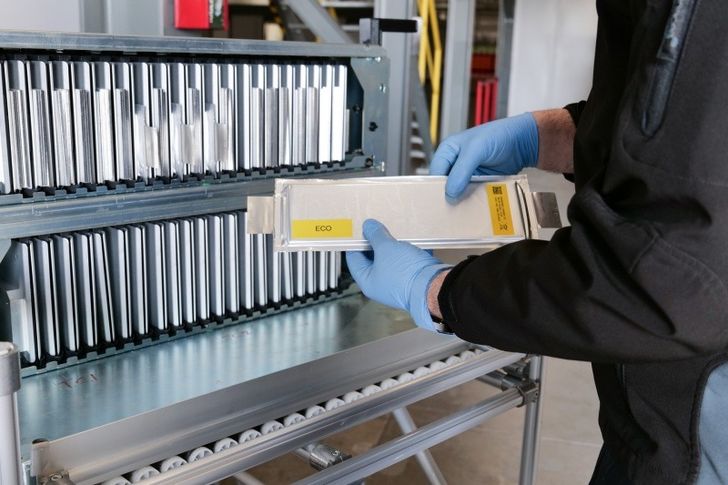
Industrial-scale tests have shown that recycled cathode materials can match the performance of virgin metals in electric vehicle (EV) battery production, according to the latest results from trials by clean technology group, Altilium.
The electrochemical testing, undertaken at the UK Battery Industrialisation Centre (UKBIC), suggests that the cells manufacturing the recycled materials demonstrated performance variation of less than one per cent compared to commercial benchmarks.
Initial formation behaviour tests also showed that Altilium’s EcoCathode material attained similar first cycle loss, impedance, and initial cycling behaviour to the commercial material. This means it retained comparable capacity after the first charge, maintained similar internal resistance, and showed stable early performance.
The pouch cells were manufactured at UKBIC’s Coventry facility using Altilium’s recycled EcoCathode NMC 811-2038 cathode active materials (CAM), produced at the company’s recycling facilities in Devon.
The process, according to Altilium, recovers over 95 per cent of critical metals from end-of-life EV batteries. The batteries are dismantled and shredded to produce a fine powder known as black mass, which is then processed into materials including lithium, cobalt, nickel, and graphite.
Commenting on the latest results, Dr Christian Marston, Altilium Co-founder and COO, said: “For the first time, we’ve demonstrated that battery grade EV cells can be manufactured at scale using recycled materials – with no compromise on quality or manufacturability. Our EcoCathodeTM technology offers a viable, low-carbon alternative to mined materials and is now proven to work in real-world battery production.”
Scaling EV battery production for future regulations
Beyond performance metrics, the trials demonstrated high manufacturability equivalency, with Altilium's EcoCathode material showing no issues throughout the entire manufacturing process and processability under similar conditions across mixing, coating formation and initial testing.
The process testing at UKBIC confirmed compatibility with typical unit operations used for commercial battery assembly, demonstrating the material could be integrated into existing production lines without modification.
Richard LeCain, UKBIC’s Chief Technology Officer, added: “We’re thrilled with the initial results of these tests. This groundbreaking project marks the beginning of a journey that could reduce the UK’s dependence on imported materials and open up a new market for recycled batteries.”
Previous analysis by Imperial College London suggested improvements in purity, morphology and electrochemical performance of Altilium's recycled CAM compared to commercially available materials, with benefits potentially including longer battery life, faster charging times and lower costs.
The manufactured cells represent the first battery cells produced in the UK that comply with upcoming EU Battery Regulations, which will require new EV batteries to contain minimum levels of recycled lithium, nickel and cobalt from 2031, with further increases in 2036.
Altilium began construction of its first at-scale EV battery recycling and refining plant in April, with the Plymouth facility aiming to recover critical battery materials from up to 24,000 EVs each year.


Get our weekly digest
resource.co article ai

How will the government and DMOs address the challenges of including glass in DRS while ensuring a level playing field across the UK?
There's no easy solution to include glass in the DRS while maintaining a level playing field. Potential approaches include a phased introduction of glass, potentially with higher deposits to reflect its logistical challenges. The government and DMOs could incentivise innovation in glass packaging design and subsidise dedicated return points for glass-handling. Exemptions for smaller businesses unable to handle glass might also be necessary. Any successful solution will likely blend several approaches. It must address the differing priorities of devolved administrations, balance environmental benefits with logistical and cost implications, and be supported by robust consumer education campaigns emphasizing the importance of glass recycling.