

The Re-Gen group has announced a £22 million recycling development in Newry, a self-funded ‘circular economy resource park’.
The proposed site covers eight acres at the Invest NI Carnbane Business Park, near to the A1.
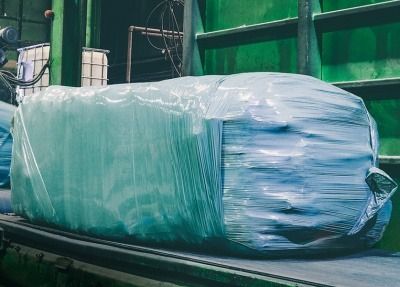
Re-Gen is mainly responsible for processing mixed dry recyclables and residual waste from local authorities in both Britain and Northern Ireland. It also dabbles in producing refuse derived fuel (RDF) and solid recovered fuel (SRF), the capacity for which it wants to expand on.
RDF lacks an official definition, which leaves it vulnerable to companies giving unclear descriptions of the compositional quality and the environmental impacts.
SRF is a fuel made from non-hazardous waste in compliance with a European standard. The producer does not have to meet this standard but is required to disclose its net calorific value, as well as the chlorine and mercury content of the fuel.
The company claims that the new facility will be able to manufacture products locally to be used in local manufacturing processes, rather than shipped and used in manufacturing processes overseas.
Re-Gen currently employs around 250 locals and claims that the new facility will create 130 jobs and boost the company’s annual contribution to the Northern Irish economy from £35 million to £60 million.
In 2017, the company invested £2 million into its Newry site to expand on its paper recycling lines.
The resource park has been proposed to Newry, Mourne and Down District Council and is in the process of a public consultation.
It shows plans for a four-storey office building that is set to turn into the new headquarters for the Re-Gen Group of companies. Two 51,000 sq ft manufacturing units are also presented, as well as a third 12,000 sq ft building associated with engineering, research and development.
If given the-go ahead, work is expected to begin in autumn 2021, to become operational in 2022.


Get our weekly digest
resource.co article ai

How will the government and DMOs address the challenges of including glass in DRS while ensuring a level playing field across the UK?
There's no easy solution to include glass in the DRS while maintaining a level playing field. Potential approaches include a phased introduction of glass, potentially with higher deposits to reflect its logistical challenges. The government and DMOs could incentivise innovation in glass packaging design and subsidise dedicated return points for glass-handling. Exemptions for smaller businesses unable to handle glass might also be necessary. Any successful solution will likely blend several approaches. It must address the differing priorities of devolved administrations, balance environmental benefits with logistical and cost implications, and be supported by robust consumer education campaigns emphasizing the importance of glass recycling.