

WRAP's latest annual report of treatment costs finds many councils have delayed decisions until government policies on Simpler Recycling and EPR are implemented.
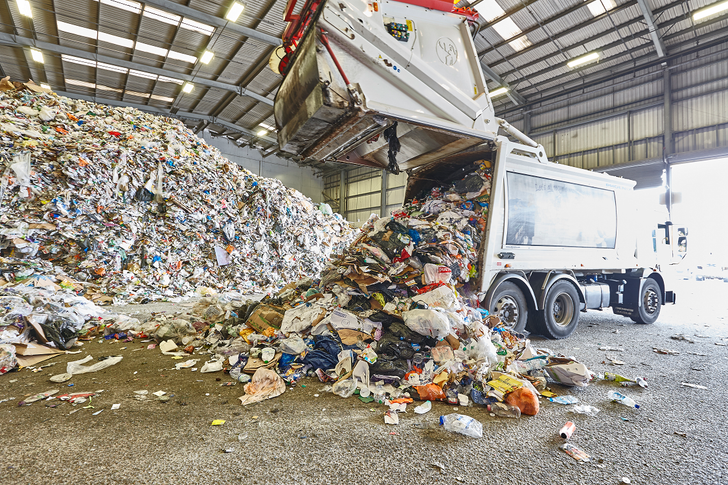
Local authorities across the UK face mounting costs for waste treatment services as policy changes and operational challenges reshape the sector, according to new findings from WRAP's eighteenth annual Gate Fees Report.
The report, which surveyed 256 local authorities representing 61 per cent of all LAs in the UK, reveals clear trends across different treatment options that reflect.
Bucking the overall trend, the median gate fee for Materials Recovery Facilities (MRFs) fell slightly to £82/tonne in 2024/25, down from £90/tonne in 2023/24. However, this remains substantially higher than pre-2020 levels of around £25/tonne, reflecting both inflationary pressures and sector-specific challenges, with the range extending from £39/tonne to £162/tonne.
WRAP found that 53 per cent of local authorities expect MRF gate fees to increase by more than five per cent over the next 12 months, with operator interviews confirming upward cost pressures across the sector (not yet accounting for the likely impact of including flexible plastics in kerbside collections from 2027 will have).
The costs reflect ongoing challenges in the sector, with contamination emerging as a key driver of operational expenses. Research shows that 48 per cent of responding local authorities stated their contamination threshold must not exceed 15 per cent of input material by weight, whilst 23 per cent operate with limits of 10 per cent or less.
Collection approach also has a bearing on costs, according to the report, with fully commingled systems recording a median gross gate fee of £86/tonne, compared to £62/tonne for twin-stream systems where glass is collected separately.
According to the annual survey, 27 per cent of local authorities now plan to change their kerbside collection approach at the next available opportunity, with 60 per cent of these planning to implement twin-stream systems. This shift, driven partly by a modification to the Simpler Recycling policy, has the potential to affect future gate fees.
In-vessel composting faces policy-driven uncertainty
In-vessel composting (IVC) gate fees showed minimal increases, with mixed food and garden waste processing costs rising to £73/tonne, up from £70/tonne in 2023/24. However, the sector faces fundamental changes as policy shifts affect material flows.
"The separation of food waste from commingled collections has had a large impact on many IVC operators, but not all, with smaller operators reporting the biggest impact," WRAP found through operator interviews.
The implementation of Simpler Recycling in England, which requires separate food waste collections, is reducing the volume of mixed organic waste available to IVC facilities. This has intensified competition for green waste, with some operators reporting downward pressure on gate fees despite rising operational costs.
Market consolidation concerns emerged from interviews, with single-site operators expressing worry that "the IVC market has the potential to become dominated by a few large companies" if current pricing pressures continue.
Anaerobic digestion costs rise as subsidies end
Anaerobic digestion (AD) gate fees for food waste increased to a median of £24/tonne in 2024/25, up from £20/tonne previously. The sector faces a fundamental transition as government subsidies for green energy end and demand for capacity grows.
"The trend for negative gate fees is not expected to continue, due to influencing factors such as rising operational costs, the end of subsidies, and increased demand for AD capacity," WRAP reports based on speaking to operators in the sector.
The survey found that five authorities still received negative gate fees (i.e. payments for delivering food waste), but this number has decreased since 2023/24. The shift reflects the ending of support schemes including Feed-in Tariffs and Renewable Heat Incentive payments.
WRAP's analysis shows regional variations are significant, with Wales recording the highest median gate fee at £40/tonne, while London authorities paid a median of £14/tonne. However, 30 per cent of contracts have initial end dates beyond 2029, suggesting operators are securing longer-term agreements to provide investment certainty.
The mandatory separate food waste collection requirements coming into effect across England by April 2026 are expected to drive increased demand for AD capacity, with some operators predicting "a demand growth for capacity of up to 70 per cent over the next decade".
Disposal costs climb
Energy from waste (EfW) gate fees increased across all categories. The median cost for standard residual waste reached £121/tonne, with fees ranging from £69/tonne to £158/tonne. Mixed loads containing bulky waste recorded the same median fee of £121/tonne.
The highest costs were recorded for bulky waste containing persistent organic pollutants (POPs) at £164/tonne, up from £140/tonne in 2023/24. For contracts commencing since April 2024, the median gate fee for bulky waste containing POPs jumped to £208/tonne, though this figure is based on a small sample size. The increases reflect recent regulatory changes affecting the handling of such materials.
Non-hazardous landfill gate fees (excluding landfill tax) increased slightly to £26/tonne. With the standard rate of landfill tax rising from £103.70/tonne to £126.15/tonne on 1 April 2025, the total cost of landfill disposal now exceeds £150/tonne in most cases.
The study found that 94 per cent of respondents deliver residual waste to landfill via transfer stations, the highest proportion among all treatment options, reflecting the need for waste consolidation to manage transport costs.
This gives readers the baseline EfW cost context before diving into the premium pricing for problematic waste streams.
Policy implementation prompts uncertainty
Across all treatment types, policy uncertainty emerged as a major cost driver. The implementation of Simpler Recycling, Extended Producer Responsibility, and separate food waste collection requirements all have a bearing on the approach taken by councils and their suppliers.
"Local authorities currently without separate food waste collections are strongly advised to engage with the market at the earliest opportunity to ensure successful service planning and mobilisation," WRAP advises, noting that 50 per cent of local authorities expect limited change to AD gate fees while AD operators predict increases.
Contract durations reveal the sector's response to policy uncertainty. For MRFs, 36 per cent of contracts expire by the end of 2025, increasing to 65 per cent by the end of 2026. This high proportion of short-term contracts "could indicate an inertia caused by local authorities waiting for policy and funding clarification before making any required service changes".


Get our weekly digest
resource.co article ai

How will the government and DMOs address the challenges of including glass in DRS while ensuring a level playing field across the UK?
There's no easy solution to include glass in the DRS while maintaining a level playing field. Potential approaches include a phased introduction of glass, potentially with higher deposits to reflect its logistical challenges. The government and DMOs could incentivise innovation in glass packaging design and subsidise dedicated return points for glass-handling. Exemptions for smaller businesses unable to handle glass might also be necessary. Any successful solution will likely blend several approaches. It must address the differing priorities of devolved administrations, balance environmental benefits with logistical and cost implications, and be supported by robust consumer education campaigns emphasizing the importance of glass recycling.