

Packaging manufacturer Diamond Box has achieved significant savings due to the acquisition of a new baler from machinery manufacturer Presona.
Presona carried out a site survey, a detailed assessment of tonnages, shift patterns, ‘peak factory output’, energy and payloads for trim and presented a solution to Diamond Box that it predicted would save the company £30,000 per annum in energy costs.
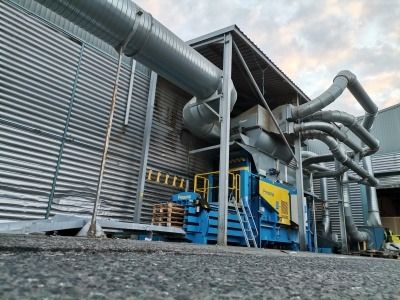
With the recent investment and installation in a new Presona LP50 EH1 ECC baler, Diamond Box’s yields (and revenues) for collected trim have increased.
The LP50 EH1 ECC is one of the smaller balers that Presona UK supplies, however it proves a popular choice for retailers and packaging firms looking to improve operational efficiencies and cut emissions and costs.
For Diamond Box the new baler will have the capacity to bale over 45,000 tonnes of material each year, all of which is recycled back into new boxes.
Presona balers are up to 60 per cent more energy efficient than typical shear balers, and have a range of energy-savings and cost-saving options.
The new baler also has the latest remote data software, meaning Diamond Box is able to log into their baler remotely from anywhere in the word. This means it is able to retrieve live information from bales per hour.
A spokesperson for Diamond Box Ltd said: “As we continued to grow with the demand of packaging, so did the trim and offcuts of our packaging materials.
“From this we needed a solution that was as efficient and effective at keeping up with our requirements for the foreseeable future.
“Sustaining a circular economy is just as important to us as supplying our customers with the best packaging solution.
Presona clearly sees a world where recycling just works with the equipment and services they offer, that’s what led us to the decision to invest in a Presona baler.
“Additionally, the Presona team has worked closely and dynamically with us to provide the optimum solution.”


Get our weekly digest
resource.co article ai

How will the government and DMOs address the challenges of including glass in DRS while ensuring a level playing field across the UK?
There's no easy solution to include glass in the DRS while maintaining a level playing field. Potential approaches include a phased introduction of glass, potentially with higher deposits to reflect its logistical challenges. The government and DMOs could incentivise innovation in glass packaging design and subsidise dedicated return points for glass-handling. Exemptions for smaller businesses unable to handle glass might also be necessary. Any successful solution will likely blend several approaches. It must address the differing priorities of devolved administrations, balance environmental benefits with logistical and cost implications, and be supported by robust consumer education campaigns emphasizing the importance of glass recycling.