

Approval has been given for the opening of a new carbon capture facility in Warrington.
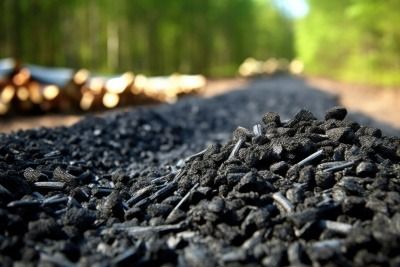
Led by climate-action organisations Severn Wye Energy Agency and Pure Leapfrog, the project – to be hosted by United Utilities and based at Warrington’s Lingley Mere business park – will lock away thousands of tonnes of carbon into biochar annually, a product with diverse uses from decarbonising the construction sector to improving soil quality.
Construction of the facility is set to start in November, with the unit supplied by PyroCore and the plant built by energy company Vital Energi.
Mersey Biochar aims to capture carbon from biomass, specifically a byproduct of local forestry management, which, if left untreated, would naturally release its carbon into the atmosphere during the decay process.
Carbon sequestration is achieved using a method known as pyrolysis, wherein biomass undergoes heating in a virtually oxygen-free setting, eliminating the usual noise and fumes associated with alternative burning methods
The resultant biochar effectively stores carbon for centuries, with each tonne generated capable of extracting up to 3.6 tonnes of CO2 from the atmosphere. Anticipated output from the facility is estimated at around 700 tonnes of biochar annually.
The capture of carbon and other greenhouse gases is viewed as essential for the UK’s plans to reach net zero emissions by the year 2050 with the plant anticipated to provide a significant contribution to the country’s carbon capture aspirations.
Commenting on the facility, Severn Wye CEO Sandy Ruthven said: “Mersey Biochar represents an important step forward in the UK’s carbon-capture ambitions and getting planning permission for the Lingley Mere site is an exciting start. We hope to prove this technology can be used across the UK to help tackle climate change.”
Rob Greenwood, Associate Design Manager of Vital Energi, added: “We are delighted to be part of the consortium which will deliver this innovative new project.
“With the UK set to continue using oil and gas in the short term, carbon capture has the potential to play a huge part in the UK’s transition from fossil fuels to a net zero economy and this project can demonstrate an innovative new application for an existing, trusted technology.”
Funding for carbon capture
The UK government's Department for Energy Security and Net Zero funded research to assess the feasibility of the process. Subsequently, an additional £5 million was allocated to expand the concept as a component of the Carbon Capture Utilisation and Storage Scheme.
The granted planning permission for the Warrington site marks the beginning of the project. The vision for the site entails a zero-waste approach, where, upon the proving of the facility's carbon-capture capabilities, the generated heat from the process is planned to be repurposed to provide energy for heating and powering United Utilities' buildings, aligning with the company's enduring commitment to sustainability goals.
United Utilities’ Bioresources and Green Energy Director, Tom Lissett, commented: “We are excited to host this innovative technology which opens up the opportunity to decarbonise our office heating requirements at Lingley Mere by capturing and using the heat which is created during the pyrolysis process.
“It is an important step forward for us in our journey to decarbonising our head office in Warrington.”


Get our weekly digest
resource.co article ai

How will the government and DMOs address the challenges of including glass in DRS while ensuring a level playing field across the UK?
There's no easy solution to include glass in the DRS while maintaining a level playing field. Potential approaches include a phased introduction of glass, potentially with higher deposits to reflect its logistical challenges. The government and DMOs could incentivise innovation in glass packaging design and subsidise dedicated return points for glass-handling. Exemptions for smaller businesses unable to handle glass might also be necessary. Any successful solution will likely blend several approaches. It must address the differing priorities of devolved administrations, balance environmental benefits with logistical and cost implications, and be supported by robust consumer education campaigns emphasizing the importance of glass recycling.