

Perrier has unveiled the first successful production of 100 per cent recycled polyethylene terephthalate (PET) sample bottles using Carbios' enzymatic recycling process.
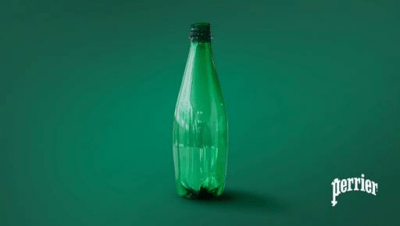
In a bid to make packaging more sustainable, Perrier has sourced solutions from stakeholders and start-ups that are working to address the problem of plastic waste.Since April 2019, Perrier has been part of a global consortium - set up initially between Carbios and L’Oreal, and now home to Nestlé Waters, PepsiCo and Suntory Beverage & Food Europe - supporting the industrialisation of the original recycling technology designed and developed by Carbios.
Carbios is a biotech company that develops biological processes to refashion the end of life of plastics and textiles, largely through the introduction of enzymes into plastic waste.
This enzymatic recycling is needed as the plastic used in PET packaging is degraded over time and requires new virgin plastic to retain its quality.
Carbios uses naturally occurring enzymes from compost heaps to break down PET plastics into their more simplified form of basic monomers: terephthalic acid and ethylene glycol.
These monomers can then be recombined to recreate PET polymer at food-grade quality.
Through this recycling process, any type of PET plastic can become a new recycled polyethylene tetraphyte (rPET) bottle, regardless of whether it is clear, opaque or complex.
This solution has the potential to extend the existing recycling loop, allowing more PET plastic to be recycled.
As part of a prototyping stage, the first Perrier 50-centilitre sample bottles have been produced at Nestlé's research and development centre in France.
Jean-Francois Briois, Head of Packaging Material Science and Environmental Sustainability for Nestlé Waters Global R&D, noted: “It is very exciting to see that the quality of the sample bottles made from 100 per cent enzymatic recycling process is meeting our quality standards.
“When we reach industrial scale, this enzymatic recycling technology will enable us to produce fully circular high quality and quantity rPET bottles and help Nestlé Waters in our journey to reduce the use of virgin plastics.”
Beyond this partnership with Carbios, the brand entered into collaboration in 2019 with three other start-ups in order to explore creative solutions and reinvent packaging, from source to end-of-life.
Two years later, the three projects, each at different stages, are all still supported by the Perrier teams.
The first project, Biotic, aims to develop a bioplastic from agricultural waste, and is currently proceeding to material tests in partnership with Nestlé’s scientific team.
The second project, Flexikeg, aims to find new eco-friendly ways of delivering water, and is currently working with Perrier teams to adapt their kegs to specific industrial standards that could be introduced into a dedicated pilot programme.
The third project, Plastiskul, focuses on the transformation of plastic into everyday objects. The company plans to open its first Plastiskul mobile micro-factory in September 2021.


Get our weekly digest
resource.co article ai

How will the government and DMOs address the challenges of including glass in DRS while ensuring a level playing field across the UK?
There's no easy solution to include glass in the DRS while maintaining a level playing field. Potential approaches include a phased introduction of glass, potentially with higher deposits to reflect its logistical challenges. The government and DMOs could incentivise innovation in glass packaging design and subsidise dedicated return points for glass-handling. Exemptions for smaller businesses unable to handle glass might also be necessary. Any successful solution will likely blend several approaches. It must address the differing priorities of devolved administrations, balance environmental benefits with logistical and cost implications, and be supported by robust consumer education campaigns emphasizing the importance of glass recycling.