

French recycling company Paprec and Scotland's largest independent waste management company Binn Group have begun development on a new £100m Energy from Waste (EfW) facility at the Binn Eco Park in Tayside.
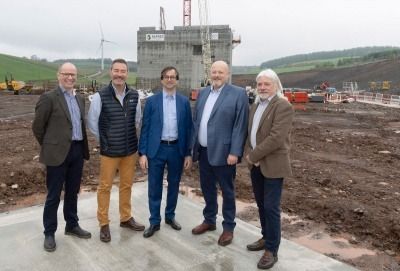
The plant, set to be operational by early 2026, will process up to 85,000 tonnes of residual waste annually, generating up to 8 MW of electricity and 17 MW of heat.
The new EfW facility, funded by Paprec and operated by the joint venture Paprec Energies Binn, will be built using Paprec's unique design combined with combustion technology developed by its exclusive partner Martin. Half of the feedstock will come from residual waste produced within the surrounding local authority area, as part of a 15-year contract awarded to Paprec by Perth and Kinross Council last year.
Sebastien Petithuguenin, CEO of Paprec Energies, commented on the project: "We're delighted to be working closely with Binn Group to bring this new, exciting project to fruition. Paprec Engineering has formidable experience in the design, construction and commissioning of EfW facilities. We have built more than 200 such plants over recent years and have been behind the construction of a third of all UK EfW facilities."
The project is expected to create 200 jobs during its construction phase and 30 long-term positions once operational.
Allan MacGregor, Binn Group CEO, added: "This new facility will be crucial in creating a cleaner solution for managing non-recyclable waste enabling businesses and local authorities to meet their legal obligations as Scotland continues its transition away from landfill waste in advance of next year's landfill ban. It will also create a clean source of energy which will benefit local businesses and our wider community."
The EfW plant is part of an investment that builds on the partnership between Paprec and Binn Group. The energy systems will also enable various low-carbon, circular economy, and controlled environment agriculture business development opportunities within the Binn Eco Park.
Perth and Kinross Council leader, Councillor Grant Laing, welcomed the project’s progress: "This is a ground-breaking project and it is fantastic to see work getting underway. The investment in the Binn Eco Park at Glenfarg will support local jobs and also create a generous Community Benefit Fund."
The Waste (Scotland) Regulations 2012 set a target requiring that no biodegradable municipal waste can be landfilled from 31 December 2025.


Get our weekly digest
resource.co article ai

How will the government and DMOs address the challenges of including glass in DRS while ensuring a level playing field across the UK?
There's no easy solution to include glass in the DRS while maintaining a level playing field. Potential approaches include a phased introduction of glass, potentially with higher deposits to reflect its logistical challenges. The government and DMOs could incentivise innovation in glass packaging design and subsidise dedicated return points for glass-handling. Exemptions for smaller businesses unable to handle glass might also be necessary. Any successful solution will likely blend several approaches. It must address the differing priorities of devolved administrations, balance environmental benefits with logistical and cost implications, and be supported by robust consumer education campaigns emphasizing the importance of glass recycling.