

Amendment regulations laid before Parliament establish provisions for closed loop recycling offsets, producer responsibility organisations, and technical corrections to the packaging EPR scheme launched in January 2025.
The UK Government yesterday (3 November) laid its Producer Responsibility Obligations (Packaging and Packaging Waste) (Amendment) Regulations 2025 before Parliament, updating the 2024 regulations.
The changes, which come into force from the start of 2026, introduce several technical changes to the packaging extended producer responsibility (EPR) scheme established under regulations laid before Parliament in October 2024 and which came into force in January 2025. The changes address operational issues identified during the scheme's first year whilst introducing provisions to support closed loop recycling systems and clarify producer obligations.
This includes a revision to the definition of fibre-based composite material to specify packaging made of paperboard or paper fibres with one or more layers of plastic that cannot be separated by hand. The regulations establish that packaging with plastic layers representing less than five per cent of material by mass can be classified as paper or board, provided producers can provide evidence.
Closed loop recycling provisions
The regs also establish a framework allowing producers operating closed loop recycling systems to offset disposal fees through collection and recycling of food grade plastic packaging directly from households.
Under the new provisions, producers can report closed loop packaging waste separately where they collect food grade plastic household packaging, send it for recycling without mixing with materials from other producers, and have evidence the waste has been recycled into food grade plastic materials or articles. Producers using these provisions must pay an additional registration charge of £2,548.
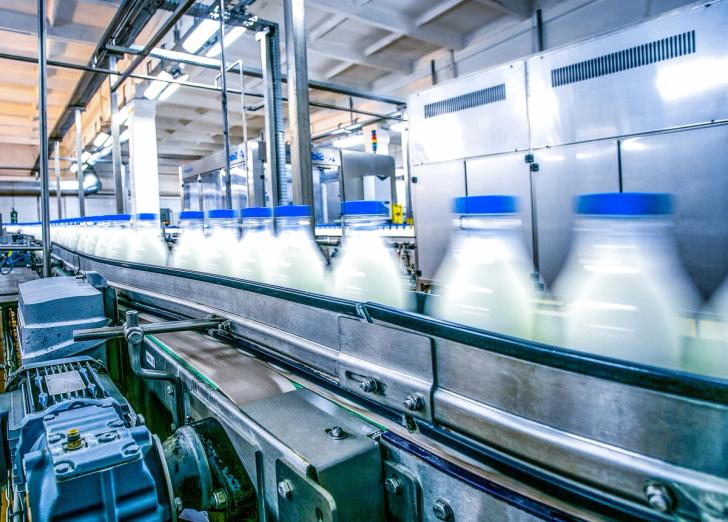
These provisions respond to concerns from food and drink businesses that the EPR scheme penalises closed loop recycling systems, where producers collect and reprocess their own packaging to make new products within the same category. The UK's established HDPE milk bottle recycling infrastructure - where dairy companies including Müller and Arla collect household milk bottles through kerbside collections and recycle them back into new milk bottles containing up to 40 per cent recycled content - represents the primary example of such systems. Industry bodies including the Food and Drink Federation have argued that such systems should receive recognition within the EPR framework to encourage circular economy practices.
Producer responsibility organisations
The amendment regulations enable the scheme administrator to appoint producer responsibility organisations (PROs) to perform functions on behalf of the scheme administrator or provide advice and recommendations.
The scheme administrator – PackUK, which launched at the start of this year – must obtain consent from the four UK nations before appointing a PRO. Appointed organisations must be not-for-profit bodies that are not charities. The regulations establish criteria for suitability assessment, including level of industry support, value for money, and performance in any previous appointments.
The regulations set out provisions for PRO appointments, conditions, extensions, variations and revocations. They establish mechanisms for transferring property, rights and liabilities from outgoing PROs to ensure continuity in scheme administration.
The government has indicated it is working with industry, including the Food and Drink Federation's PRO Steering Group, to develop a co-design process for establishing a PRO that would handle practical aspects of the EPR scheme whilst operating according to environmental outcomes set by the government.
Commenting on the regulations, Louisa Goodfellow, Policy Manager at Ecosurety said: "The amendments also ensure PackUK will be empowered to appoint a Producer Responsibility Organisation (PRO) to carry out specific functions on its behalf. This delegation allows for greater industry involvement in the administration and shaping of Extended Producer Responsibility (EPR) as it develops, helping to ensure that the system reflects practical realities. However, as the regulatory landscape continues to evolve, it will be crucial that producers receive timely and clear guidance on any changes to reporting requirements or other aspects to the system that these amendments bring about.”
Managing business changes
The amendment regulations introduce provisions addressing corporate mergers and transfers of brand or business ownership amongst producers.
Where corporate bodies merge, the resulting body must register and is treated as a large producer if any merged body was a large producer. The merged body becomes liable for producer responsibility obligations of the merged bodies for the merger year and previous years where obligations remain outstanding.
For brand or business transfers, transferees must inform the appropriate agency within 28 days and register or re-register based on adjusted turnover and packaging supply thresholds. The regulations establish formulae for calculating adjusted turnover and packaging amounts to determine whether transferees qualify as large or small producers.
Technical updates
Several technical corrections and transitional provisions for data reported in 2024 and 2025 feature in the amendment regulations.
Following initial supply by a producer, no other person except sellers becomes a producer in relation to that packaging, unless new components are added. Charities are exempted from producer obligations and disposal fees rather than from the regulations entirely.
Transitional provisions allow producers to submit amended reports for reporting periods in 2024 and 2025 to include packaging waste under the new closed loop definitions. Producers submitting such amended reports or wishing to report closed loop waste for 2026 must pay the £2,548 charge by 28 January 2026.
For the 2025 assessment year, disposal fee calculations will not account for closed loop waste offsets when recalculating fees. For the 2026 assessment year, the transitional charge paid under the amendment regulations substitutes for the additional registration charge for closed loop reporting purposes.
Exempt packaging definitions under deposit return schemes have been revised to account for low volume line exemptions, where products below specified volume thresholds are excluded from deposit scheme requirements.
The amendment regulations received consent from the Scottish Ministers, Welsh Ministers, and Northern Ireland's Department of Agriculture, Environment and Rural Affairs. Following parliamentary approval, the regulations will come into force on 1 January 2026, marking the second year of operation for the UK's reformed packaging EPR scheme.


Get our weekly digest
resource.co article ai

How will the government and DMOs address the challenges of including glass in DRS while ensuring a level playing field across the UK?
There's no easy solution to include glass in the DRS while maintaining a level playing field. Potential approaches include a phased introduction of glass, potentially with higher deposits to reflect its logistical challenges. The government and DMOs could incentivise innovation in glass packaging design and subsidise dedicated return points for glass-handling. Exemptions for smaller businesses unable to handle glass might also be necessary. Any successful solution will likely blend several approaches. It must address the differing priorities of devolved administrations, balance environmental benefits with logistical and cost implications, and be supported by robust consumer education campaigns emphasizing the importance of glass recycling.