

SPONSORED CONTENT
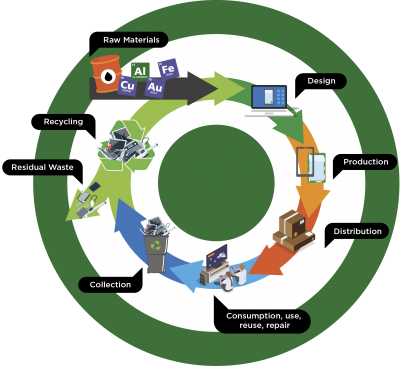
Against the backdrop of the 2022 UK WEEE collection targets being published and the UK Government consultations on the WEEE Regulations expected in the next quarter, REPIC considers how EEE (electrical and electronic equipment) placed on the market (POM) and WEEE (waste electrical and electronic equipment) collected have changed over time.
Technology and appliances are an indispensable part of our daily lives, and it could be argued that their importance has grown as a result of the COVID-19 pandemic. More people have worked, studied and spent more leisure time at home, prompting the purchase of both new and upgraded electrical and electronic appliances.
The most recent EEE and WEEE data corroborates the non-linear relationship between the sale of EEE and the WEEE disposed of through formal channels, bringing into question the efficacy of tonnage-based collection targets in measuring system success. Widening the lens to review data over the last 15 years, there are a number of trends that influence EEE going onto the market and WEEE coming off the market. Having a better understanding of these factors is important when considering future system reforms. Moreover, there is a greater understanding of people’s relationship with their electrical appliances and tech and how this impacts not only the amount of WEEE collected, but also the potential to implement circular economy principles.
What does 15 years of evidence gathering tell us?
- The performance of the economy, changes in the market, and product trends including light weighting, product size and convergence are all factors that have affected and will continue to affect EEE POM.
- When household EEE POM is compared with reported WEEE collected despite EEE POM increasing overall, the amount of WEEE collected has remained relatively stable.
- Household WEEE arising is impacted by many factors, including the EEE POM; the relationship between household demographics and product purchases; product types and weight; and market and technological factors.
- One of the significant factors that impact WEEE collection rates is how many Large Household Appliances (LHA) come back into the official system. When secondary metal prices are high, the quantity falls. Further factors such as changes to products, technology and other commodity markets also have a significant impact on the amount of WEEE collected.
- The composition of WEEE and what is being collected has changed over time.
Looking back at historical reported data shows the complexity of the WEEE system and the many different factors at play. Coupling this hard data with consumer survey results also highlights the impact the consumer has on WEEE collection and our ability to deliver a circular economy.
- When asked about acquiring EEE, although there is a good market for certain types of used appliances, for the remainder most consumers want to buy and own new products. They have concerns over the durability and safety of used products.
- For many product types, householders report that when buying a new product, they are only disposing of an old one roughly half of the time.
As we approach a consultation on the implementation of extended producer responsibility for WEEE, it highlights the importance of a well-designed system that takes into account the changing nature of EEE and WEEE, consumer attitudes and behaviour, and the influence of actors outside of the official system.
REPIC will shortly be publishing a full review of the data since the first UK WEEE Regulations came into force, presenting an analysis of trends for both EEE and WEEE, and further insights on consumer behaviour, and how this information can be used to inform future policy and further enhance the WEEE system.
To register for an advanced copy of the report, please email info@repic.co.uk with the subject line ‘An overview of EEE and WEEE during the last fifteen years’. The full essay will be available to download in April at www.repic.co.uk


Get our weekly digest
resource.co article ai

How will the government and DMOs address the challenges of including glass in DRS while ensuring a level playing field across the UK?
There's no easy solution to include glass in the DRS while maintaining a level playing field. Potential approaches include a phased introduction of glass, potentially with higher deposits to reflect its logistical challenges. The government and DMOs could incentivise innovation in glass packaging design and subsidise dedicated return points for glass-handling. Exemptions for smaller businesses unable to handle glass might also be necessary. Any successful solution will likely blend several approaches. It must address the differing priorities of devolved administrations, balance environmental benefits with logistical and cost implications, and be supported by robust consumer education campaigns emphasizing the importance of glass recycling.