

The integrated facility at Hope Farm in Sedgefield will combine existing AD operations with new pyrolysis technology to process agricultural residues and digestate into biochar, targeting commercial carbon credit generation alongside renewable energy production.
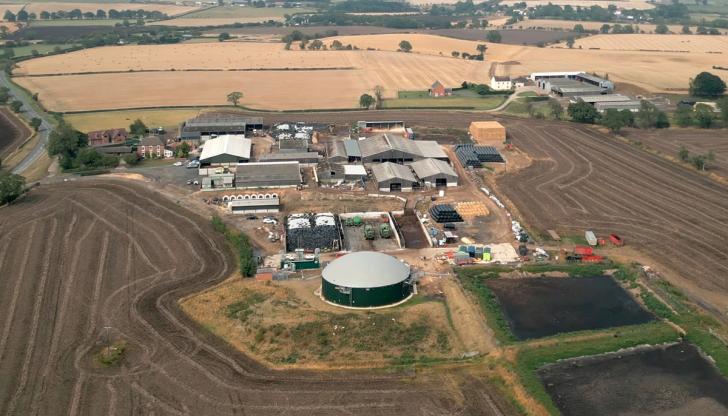
UK pyrolysis technology company Onnu has announced a partnership with ReGenEarth to develop an integrated anaerobic digestion and pyrolysis facility at a working dairy farm in Sedgefield, County Durham.
The project at Hope Farm, which supplies Arla, will expand ReGenEarth's existing anaerobic digestion facility into what the organisations describe as a multi-purpose hub for renewable energy generation and carbon removal. The site already processes cattle waste through AD, with the new installation adding dual CarboFlow pyrolysis units to convert dried digestate into biochar.
The facility aims to produce 2,266 tonnes of biochar annually alongside 2.8 MW of recoverable thermal energy, according to Onnu. The organisations report the system targets 4,300 tonnes of carbon dioxide equivalent removal, eligible for carbon credits under the Puro Earth framework.
The closed-loop process feeds agricultural residue into the anaerobic digester, with the resulting digestate dried using heat recovered from the pyrolysis process. The dried material undergoes pyrolysis to create biochar for soil amendment, whilst crop harvesting residue returns to fuel further AD operations.
Commercial deployment
The partnership follows Onnu's first commercial deployment of its CarboFlow technology last month through an agreement with Agrotech Bioenergy in Southeast Asia, where the system will process agricultural residues.
Onnu was founded in 2022 to develop modular pyrolysis technology after experiencing what the company describes as long lead times and limited returns as project developers. The CarboFlow system converts biomass feedstocks into biochar, renewable energy and carbon credits.
The Sedgefield installation forms part of ReGenEarth's £100 million Green Bond programme with RER Capital, supporting a planned nationwide rollout of integrated AD-pyrolysis sites. The programme includes enhanced feedstock provenance tracking and carbon credit pathways.
At the 3,500-acre farm, the configuration provides three operational features: full utilisation of digestate through on-site thermal conversion rather than wet land application; diversified feedstock through regional arboreal residues; and energy autonomy via heat recovery to dry digestate.
Giles Welch, CEO of Onnu, said: "This partnership demonstrates what is possible when engineering innovation meets a bold sustainability vision. Sedgefield is an ideal setting, a working dairy farm supplying Arla, proving that agriculture, carbon removal and renewable energy generation can be fully integrated in a practical, commercially viable way."
Mickey Rooney, CEO of ReGenEarth, said the organisation aims to generate "the highest count of high-quality Carbon Credits available anywhere in the world" through integrated systems combining pyrolysis with AD technology. He described the model as built on "integration" through what he termed partnerships weaving "specialised capabilities" including those of Carma, Puro, Be Zero and Marsh.
ReGenEarth reports the deployment will act as a blueprint for future integrated AD-thermal conversion projects across the UK and internationally.


Get our weekly digest
resource.co article ai

How will the government and DMOs address the challenges of including glass in DRS while ensuring a level playing field across the UK?
There's no easy solution to include glass in the DRS while maintaining a level playing field. Potential approaches include a phased introduction of glass, potentially with higher deposits to reflect its logistical challenges. The government and DMOs could incentivise innovation in glass packaging design and subsidise dedicated return points for glass-handling. Exemptions for smaller businesses unable to handle glass might also be necessary. Any successful solution will likely blend several approaches. It must address the differing priorities of devolved administrations, balance environmental benefits with logistical and cost implications, and be supported by robust consumer education campaigns emphasizing the importance of glass recycling.